Type: Dance Work / Piece · Production
Date: 10 May 1982
Context: Long-form dance theatre production by Grupo de Dança Cisne Negro
Location: Theatro São Pedro, São Paulo, Brazil
Institution / Organisation: Grupo de Dança Cisne Negro
Role: Performer
Status: Historical Record — documented
Record / Description
IRIBIRI was a long-form dance theatre production presented by Grupo de Dança Cisne Negro, with its documented premiere at Theatro São Pedro in São Paulo on 10 May 1982. For a company accustomed to programmes composed of varied choreographies, the production represented a departure towards a sustained work centred on a single subject.
The work combined theatrical action, recognisable everyday behaviour, choreographic movement and poetic or dream-like imagery. Its scenic structure developed through two principal planes: a hyperrealist plane constructed from everyday actions and a poetic plane in which images of dreams commented upon, criticised or clarified the reality of the action. As the production progressed, the two planes increasingly interacted.
The Work / Creation
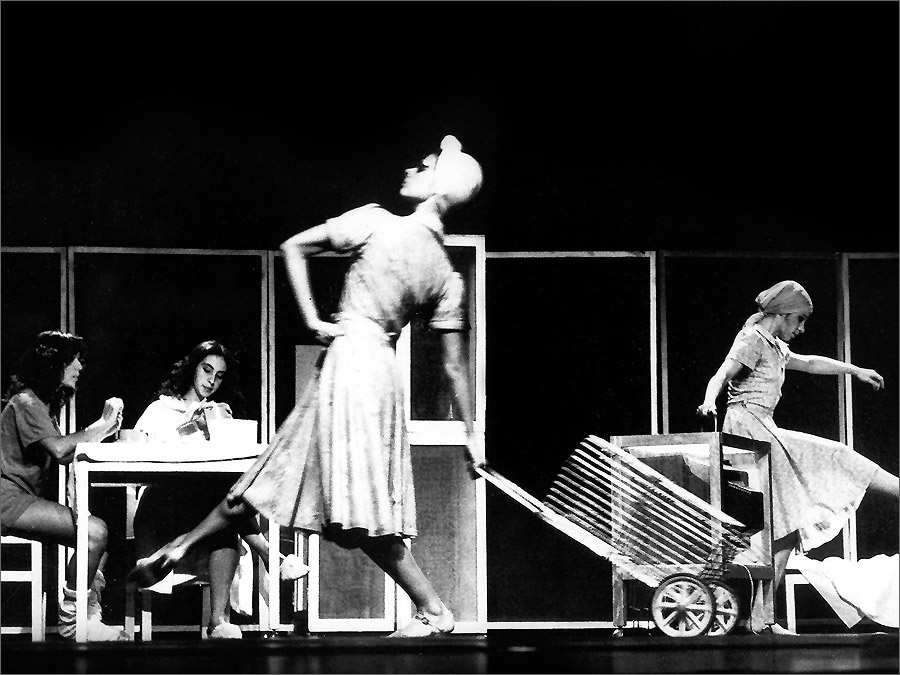
The everyday scenes included the waking of two young women, the arrangement of an apartment by two friends, a family dinner and the supper of an old woman. These ordinary situations gradually acquired a melancholic dimension, culminating in the image of the “woman of a thousand years”. The poetic or dream dimension eventually transformed the old woman into a young dancing woman.
A significant aspect of the production was the transformation of everyday physical actions into dance. The movement of the real plane was derived from ordinary behaviour, while the dream plane took those actions and transformed them into choreography. The contemporary review, for example, describes a young woman pulling a shopping cart not simply as performing an everyday action, but as dancing her way of pulling the cart.
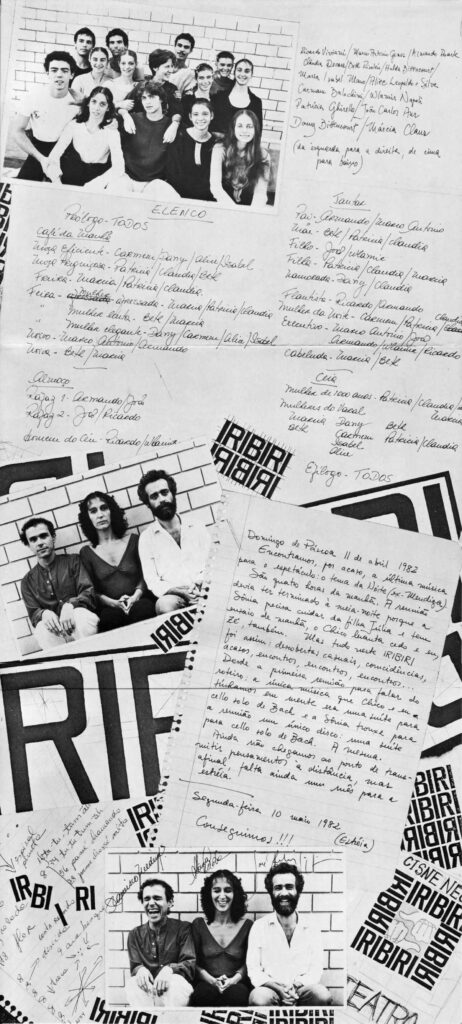
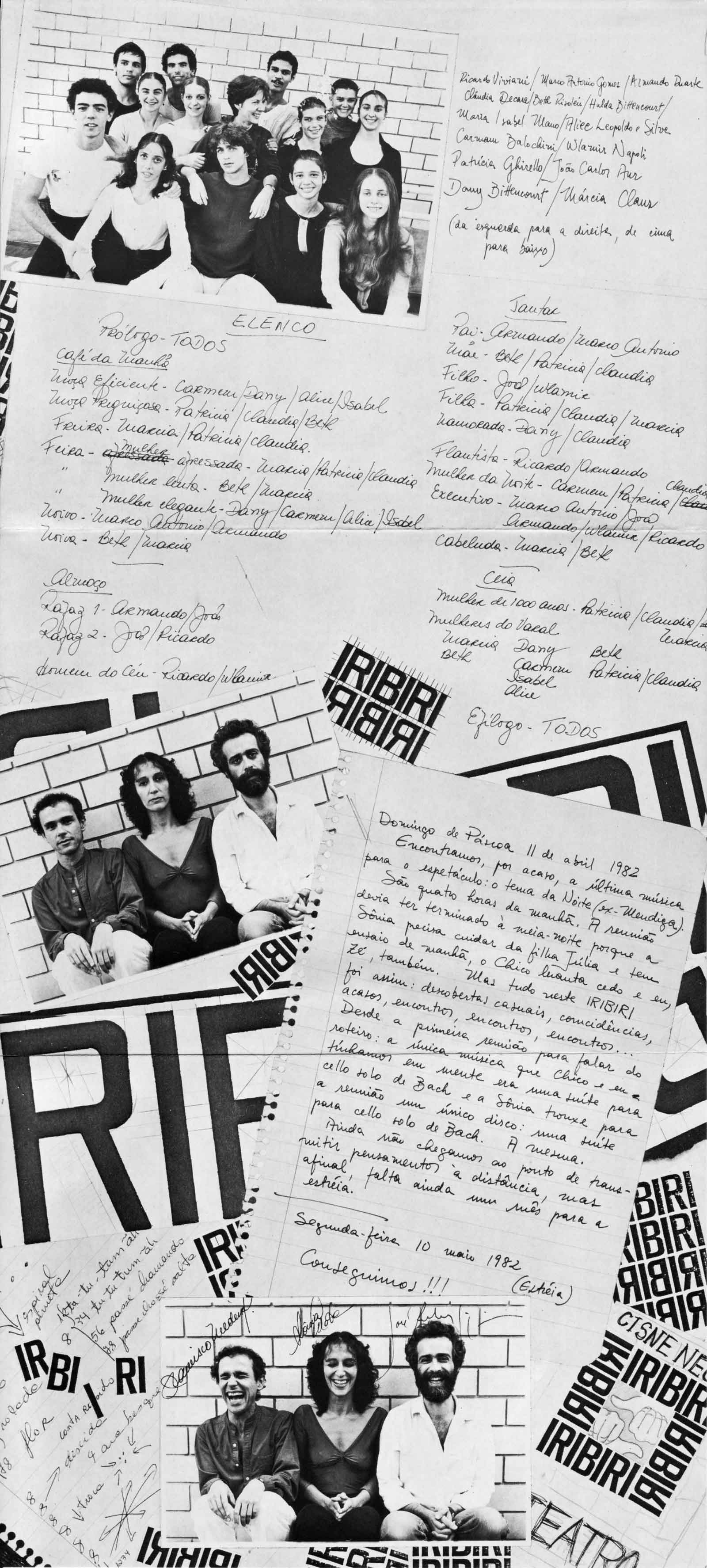
The surviving premiere programme provides a more detailed view of the internal sequence of the work. Its handwritten Elenco is not simply a list of performers: it records the scenes in sequence and the performers assigned to them, providing rare documentation of the dramaturgical and working structure of the production.
Creative Team
Roteiro original: Francisco Medeiros e José Rubens Siqueira
Direção: Francisco Medeiros
Coreografia: Sonia Mota
Cenário e figurinos: José Rubens Siqueira
Músicas: Bach, Vivaldi, Haendel
Seleção musical: Francisco Medeiros, José Rubens Siqueira, Sonia Mota e Flávia Calabi
Sonoplastia: Flávia Calabi
Iluminação: Francisco Medeiros e José Rubens Siqueira
Produção: Grupo de Dança Cisne Negro
Elenco / Scene Sequence
The surviving handwritten premiere-programme notes record the following sequence of scenes and performer allocations. Slashes have been retained because the document records the performers associated with each scene rather than presenting a conventional final cast list.
Prólogo — TODOS
Café da manhã
Novo freguês — Carmem / Dany / Alice / Isabel
Novo freguês — Patrícia / Cláudio / Bêk
Freira — Ricardo / Patrícia / Cláudio
Fica apressado — Ricardo / Patrícia / Cláudio
Mulher lenta — Bêk / Ricardo
Mulher elegante — Dany / Carmem / Alice / Isabel
Trio — Marco Antonio / Armando
Trio — Bêk / Ricardo
Almoço
Zaga 1 — Armando / João
Zaga 2 — João / Ricardo
Homen do Céu — Ricardo / Wlamir
Jantar
Pai — Armando / Marco Antonio
Mãe — Bêk / Patrícia / Cláudio
Filho — João / Wlamir
Filha — Patrícia / Cláudio / Ricardo
Namorada — Dany / Cláudio
Flautista — Ricardo / Armando
Mulher da Noite — Carmem / Patrícia / Cláudio
Executivo — Marco Antonio / João / Armando / Wlamir / Ricardo
Cabeludo — Ricardo / Bêk
Céu
Mulher de 100 anos — Patrícia / Cláudio / [parte ilegível]
Mulheres do local — Ricardo / Bêk / Dany / Carmem / Isabel / Alice / Patrícia / Cláudio
Epílogo — TODOS
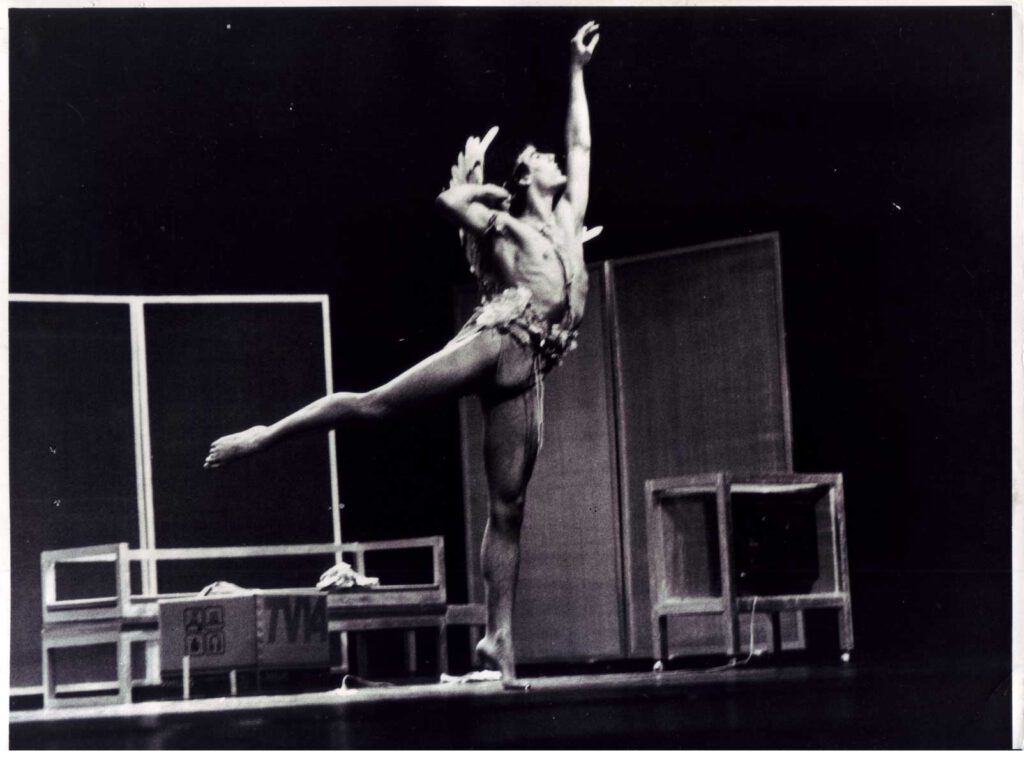
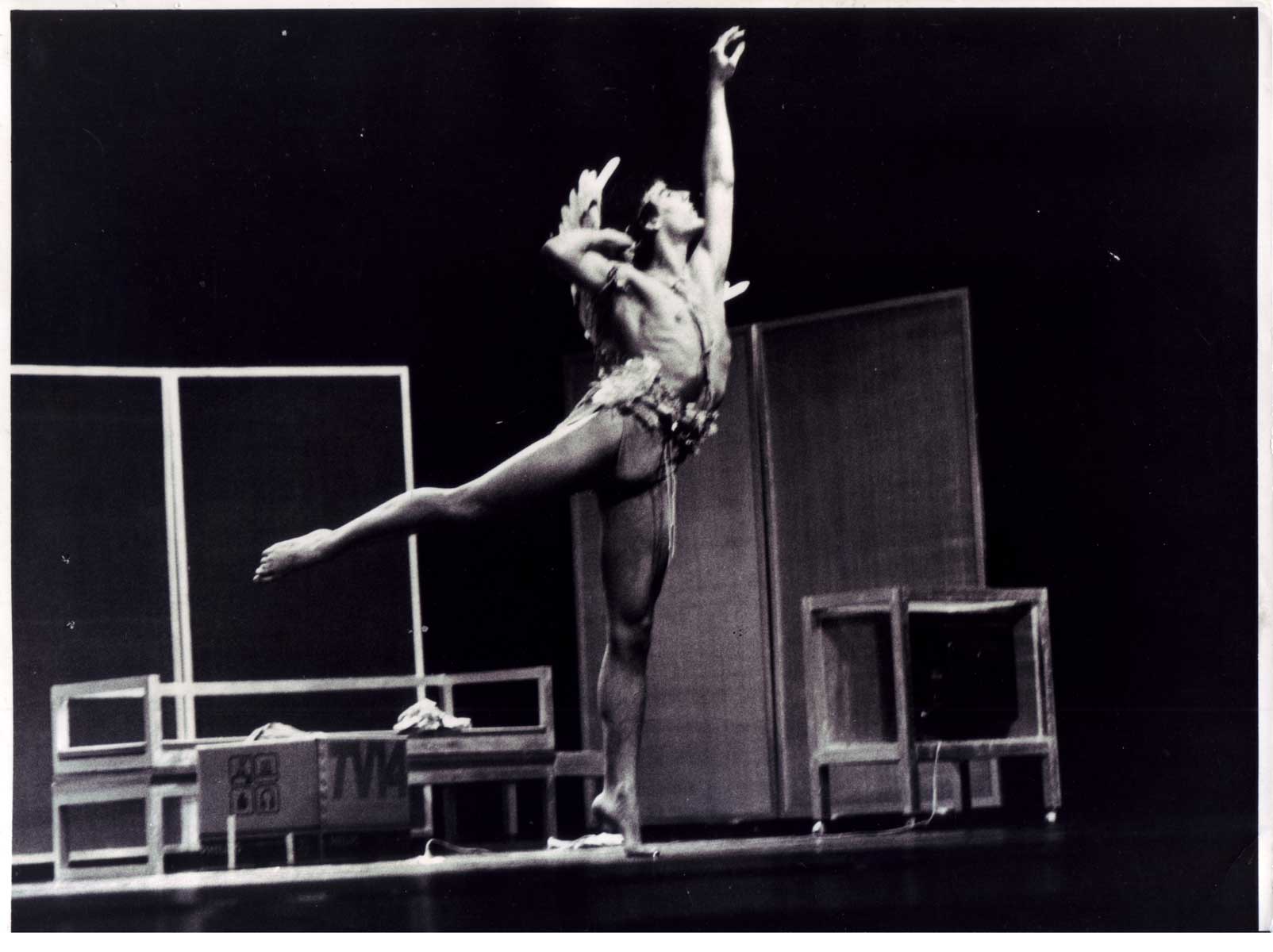
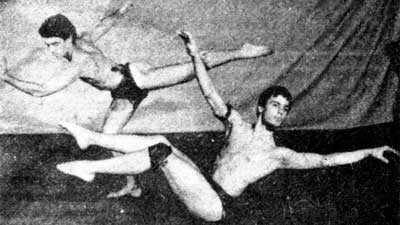
The scene sequence provides a more precise archival context for the surviving photographs. In particular, the Café da manhã sequence corresponds to the everyday domestic material in which two young women are awakened, while the surviving photograph of Ricardo in arabesque belongs to O Homem do Céu, the poetic/dream section represented in the programme material. The image documents a technically demanding solo moment and preserves an important example of the company’s and Sônia Mota’s choreographic and technical capabilities.

Photograph / Cast Identification
The handwritten identification accompanying the cast photograph reads, from left to right and from top to bottom:
Ricardo Viviani / Marco Antonio Gomes / Armando Duarte
Claudia Decara / Bêk Risoléu / Hulda Bittencourt
Maria Isabel Mano / Alice Leopoldo e Silva
Carmem Balochini / Wlamir Napoli
Patrícia Ghirello / João Carlos Aur
Dany Bittencourt / Márcia Claus
The official Cisne Negro record confirms Dany Bittencourt as the correct spelling of the name. It also identifies Hulda Bittencourt as the founder and long-standing artistic director of the company and Dany as her daughter. The handwritten photograph identification is therefore retained as documentary evidence rather than treated as a formal production credit.
Production and Technical Credits
Grupo de Dança Cisne Negro
Relações Públicas: Eliete Brancato
Coordenação Geral: Hulda Bittencourt
Fotos: João Caldas
Máscaras e Adereços: José Rubens Siqueira
Execução dos Figurinos: Dora M. Gomes e Elione de D. Monge
Execução do cenário: José Vicente Peres e Antonio Nunes Oliveira
Luz e Som: Cisnesom
Operador de luz e Eletricista: Marcos Antonio Barbosa
Operador de som: Dorotéia Barbosa
Acknowledgements
Antonio Carlos Maciel, Antonio Carios Menezes, Luís Américo Medeiros, Luiz Cavalcanti Pessoa, Companhia Industrial Pernambucana, Márcio Goldfarb (Marisa Lojas Varejistas Ltda.), Jet-tours, Fábrica de Lenços Safira Ltda., Clube Alto dos Pinheiros, Troi S.A., Hevea indústria de Plásticos Ltda., Philips do Brasil Ltda., Marcos Bertoni, Chloé Siqueira, Guillermo van Domseiaar, José Luís Brancato, Iacov Hillel, Riwka Schwarz, Zaida Périgo
Performance / Presentation
820510 — Teatro São Pedro
The surviving record documents the premiere of IRIBIRI at Theatro São Pedro on 10 May 1982. The handwritten premiere-programme notes conclude with the entry “Segunda-feira 10 maio 1982 (Estreia)”, followed by the handwritten celebration “Conseguimos!!!”
Reception / Critical Documentation
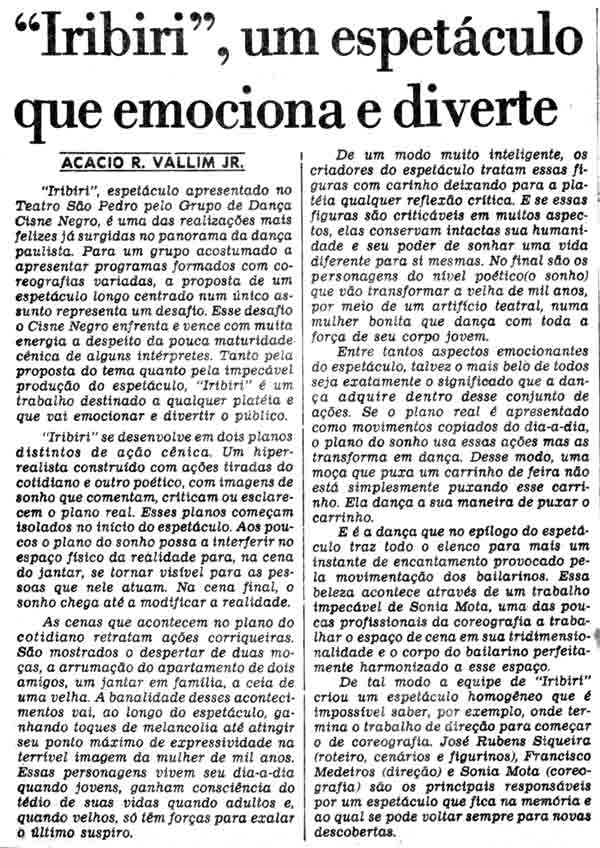
“IRIBIRI um espetáculo que emociona e diverte”
ACACIO R. VALLIM JR.
O Estado de São Paulo — 28 Maio 1982
A contemporary review by Acacio R. Vallim Jr. described IRIBIRI as one of the most successful productions to emerge in the São Paulo dance scene. It emphasised the challenge of creating a long-form work around a single subject, the combination of hyperrealist everyday action with poetic dream imagery, and the transformation of ordinary physical actions into dance.
The review also highlighted the work of Sônia Mota in relation to the three-dimensional use of stage space and the relationship between the dancer’s body and that space, while identifying Francisco Medeiros, José Rubens Siqueira and Sônia Mota as central to the production’s creation.
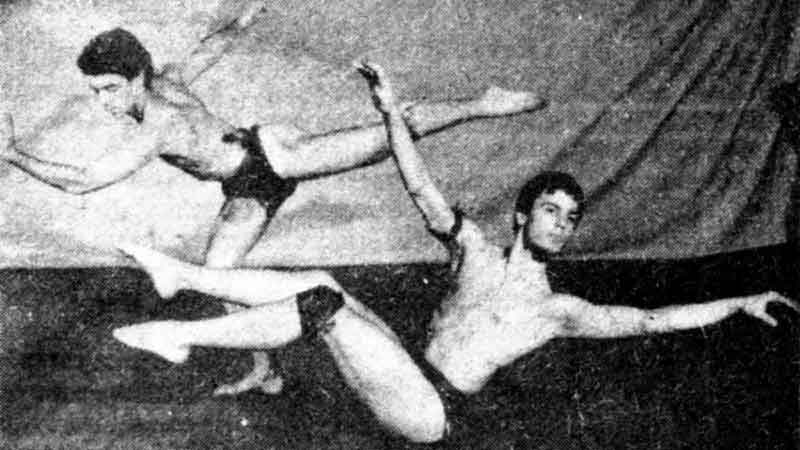
The complete review, its surviving image documentation and transcription are preserved separately as IRIBIRI — Review Acacio R. Vallim Jr..
Research / Development Context
A contemporary article in Visão, dated 5 April 1982 and written by Rui Fontana Lopez, documents IRIBIRI during its preparation approximately one month before the documented premiere. The article records the production as a new artistic experiment for Grupo de Dança Cisne Negro and describes the company moving beyond its established format of programmes composed of separate choreographies towards a long-form work based on an enredo and roteiro.
The article records the collaboration of theatre director Francisco Medeiros, choreographer Sônia Mota, José Rubens Siqueira and composer Flávia Calabi in the development of the new production. Medeiros describes the intended exploration of two interconnected worlds: everyday life and individualism, and the projections, desires and fantasies carried within people. The article also records the planned contrast between Baroque music and incidental music by Flávia Calabi, supporting contrasting choreographic languages by Sônia Mota, with José Rubens Siqueira developing the visual conception.
The source also provides evidence of the rehearsal process and the professional conditions of the company at the time. It records intensive daily rehearsals leading towards the May premiere and describes a production structure supported through official funds, monetary donations and donations of materials, while the dancers combined performance-related income with teaching or other professional activities.
The complete article transcription and its documentary context are preserved separately as Visão — Rui Fontana Lopez — O Cisne Negro e sua ‘rentrée’.
Premiere Programme / Development Notes
The surviving premiere programme contains several handwritten pages documenting the final development of IRIBIRI. One page records the scene sequence and performer allocations described above. Another, dated Domingo de Páscoa — 11 de abril 1982, records a late-night working meeting concerning the music and development of the production.
The note records that the group found, almost by chance, the final music for the Noite section, identified there in relation to the theme of the “Noite”. It describes the meeting as continuing until approximately four in the morning and mentions Sônia’s daughter Júlia in connection with her need to leave because of the following day’s schedule.
The writer then reflects on the way the production had developed through “descobertas, casuais, coincidências, acasos, encontros”, describing discovery, coincidence and encounters as characteristic of the making of IRIBIRI. This is valuable primary evidence of the collaborative and exploratory nature of the creative process.
The same note records that, from the first meeting concerning the roteiro, Ricardo and Francisco Medeiros (“Chico”) had been thinking about a Bach suite for solo cello. Sônia subsequently brought a record containing a Bach solo cello suite to the meeting. The coincidence between the music already being considered and the record she brought is recorded as part of the development process.
The Bach cello suite became part of the Epílogo. Its presence in the final work is particularly significant in relation to the technical and choreographic demands of the closing section and to the company’s ability to translate the musical structure into highly developed movement.
The note concludes with the premiere entry: “Segunda-feira 10 maio 1982 (Estreia)”, followed by “Conseguimos!!!”
Ricardo Viviani and the Development of IRIBIRI
Ricardo Viviani’s formal credit in the production remains Performer. The surviving handwritten working notes nevertheless place him repeatedly within the scene structure and close to the principal creative process. His name appears across numerous scenes, including the Freira, Mulher lenta, Zaga, Filha, Flautista, Executivo, Cabeludo and O Homem do Céu material, as well as in the final ensemble.
The notes also place Ricardo in direct working proximity to Francisco Medeiros and Sônia Mota during the development of the production, particularly in relation to the musical process documented in the 11 April 1982 note. This does not change the formal authorship or production credits, but it provides evidence of a more substantial creative working relationship than the simple category of “performer” alone conveys.
According to Ricardo Viviani’s recollection, Hulda Bittencourt brought him into Grupo de Dança Cisne Negro specifically in connection with IRIBIRI. Hulda was an energetic and accomplished figure in São Paulo’s dance scene, and Ricardo recalls that his experimental and avant-garde ideas, following his recent experience at the Jacob’s Pillow Dance Festival, were part of the context for his invitation. A surviving recommendation letter dated 14 April 1982 from Liz Thomson and Bessie Schönberg provides documentary context for his Jacob’s Pillow experience and belongs with the primary-source record of this period.
This recollection is retained as Ricardo’s personal account rather than presented as an independently established fact. The surviving working documents, however, provide independent evidence that his role within the production extended across numerous scenes and that he participated directly in discussions at the centre of the production’s development.
Relationship
IRIBIRI was produced by and presented through Grupo de Dança Cisne Negro, with Ricardo Viviani participating as a performer. The production is directly related to the archival record for Cisne Negro Dança.
The surviving April 1982 note also mentions Júlia, Sônia Mota’s daughter, in connection with the demanding rehearsal schedule. Ricardo later collaborated with Júlia in a separate commissioned project during the football World Cup in Brazil, creating Carnaval da Dorotéia in Frankfurt, an intervention presenting different Brazilian Carnival cultures and the continental scale of Brazil to young people and schools. Surviving photographs and a flyer documenting the Frankfurt project are preserved in the archive as Carnaval da Dorotéia.
The 5 April 1982 Visão article is directly related to this production record as contemporary pre-premiere documentation. It provides evidence of the development and rehearsal of the work before its documented premiere on 10 May 1982 and is preserved separately as Visão — Rui Fontana Lopez — O Cisne Negro e sua ‘rentrée’.
The contemporary review is preserved as a separate Reception / Critical Documentation record: IRIBIRI — Review Acacio R. Vallim Jr.
Primary Source / Documentation
The production record is supported by surviving photographic documentation, a script, a souvenir programme, the premiere programme with handwritten development notes, programme/poster/flyer material and contemporary press documentation.
The surviving premiere programme is particularly important because it preserves both formal production information and working-process material. Its handwritten pages provide scene sequence, performer allocations, development notes, musical decisions and a dated account of the final weeks before the premiere.
The 5 April 1982 Visão article provides contemporary evidence concerning the development of the production before its premiere. It establishes a contemporary chronology for the rehearsal process and documents the artistic intentions, collaborators and working conditions surrounding the creation of IRIBIRI.
The 14 April 1982 recommendation letter from Liz Thomson and Bessie Schönberg provides additional primary-source documentation concerning Ricardo Viviani’s recent Jacob’s Pillow experience immediately before the IRIBIRI period.
Archival Material
19810131 — script, 19820405 — Visão article, 19820411 — handwritten development note concerning music and the final stages of creation, 19820414 — recommendation letter from Liz Thomson and Bessie Schönberg concerning Ricardo Viviani’s Jacob’s Pillow experience, 19820427 — souvenir programme, 19820510 — premiere programme with handwritten scene sequence, performer allocations and development notes; poster; flyer, 19820526 — contemporary review, 19820405 — Visão article, “Companhia — Um novo passo — O Cisne Negro e sua ‘rentrée’.”, by Rui Fontana Lopez; pre-premiere documentation of the development of IRIBIRI. Preserved separately as archival record Visão — Rui Fontana Lopez — O Cisne Negro e sua ‘rentrée’.
Archival Image References
The following legacy image and document references are retained from the original record for future migration. Their current availability is not assumed; the files can be moved to the current media structure while preserving their archival identification.
Principal photograph:
8205iribiri01m.jpg
Current principal photograph:
1982_8205iribiri01M-1024×766.jpg — Ricardo Viviani performing O Homem do Céu
Original programme:
programscaninsideM.jpg
IRIBIRI logo / programme image:
82iribirilogo.gif

O Estado de São Paulo logo:
estadao.png

Review scan:
820528estadaoS.jpg
Review thumbnail:
820528estadaoT.jpg
Review image referenced in the earlier record:
820526iribirireviewestadaoS.jpg
Jacob’s Pillow recommendation letter:
1982_0414pillowrecommendation.jpg

Contribution / Significance
IRIBIRI documents an important stage in Ricardo Viviani’s professional work with Grupo de Dança Cisne Negro and in the company’s development of long-form dance theatre. The production integrated dance, theatrical action, everyday movement and poetic imagery, and brought choreography, direction, dramaturgical conception, scenography, costumes, music and performance into a sustained single work.
The newly documented premiere-programme material significantly strengthens the historical record. It preserves not only the final sequence of scenes and performer allocations but also evidence of how the work was being constructed, discussed and resolved in the weeks immediately before its premiere.
For Ricardo Viviani, the material provides unusually detailed evidence of his participation in the work. While his formal credit remains performer, his repeated presence across the scene structure, his involvement in the musical discussions documented in the April note and his recollection of being brought into the company specifically for this production place him within an important working network surrounding the creation of IRIBIRI.
Assessment / Relevance
This record provides documentary evidence of Ricardo Viviani’s participation in a substantial early-1980s production and preserves the wider network of artists, technicians, producers and collaborators involved in the work. The surviving documentation connects the production with pre-premiere reporting, detailed working notes and contemporary critical reception.
The combination of formal programme credits, scene-by-scene handwritten allocations, rehearsal/development notes, photographs and contemporary press material makes IRIBIRI one of the more extensively reconstructable productions in this period of the archive.
Post Scriptum
September 2026: This record was substantially revised following examination of the surviving premiere programme and its handwritten notes. The new material establishes the scene sequence, confirms additional name spellings and provides direct evidence of the final stages of the production’s development. The formal production credits have been retained separately from the working notes.
Keywords
IRIBIRI; Grupo de Dança Cisne Negro; Ricardo Viviani; Sônia Mota; Sonia Mota; Francisco Medeiros; José Rubens Siqueira; Flávia Calabi; Hulda Bittencourt; Dany Bittencourt; Rui Fontana Lopez; Visão; São Paulo dance; Theatro São Pedro; 1982; dance theatre; choreography; performance; Brazilian dance; rehearsal; production development; O Homem do Céu; Jacob’s Pillow.
External Links
Cisne Negro Dança
Internal Links
Cisne Negro Dança
IRIBIRI — Review Acacio R. Vallim Jr.
Visão — Rui Fontana Lopez — O Cisne Negro e sua ‘rentrée’
Carnaval da Dorotéia
Archival Note: This page forms part of an ongoing personal archive documenting Ricardo Viviani’s professional work and activities over more than four decades. Names and other personal information appear where relevant to the documented work or collaboration. If you believe that information concerning you has been published incorrectly or should be reconsidered, please contact me.
Eu gostaria de voltar a conversar com o Ricardo.
Lembra de mim?
Bjs