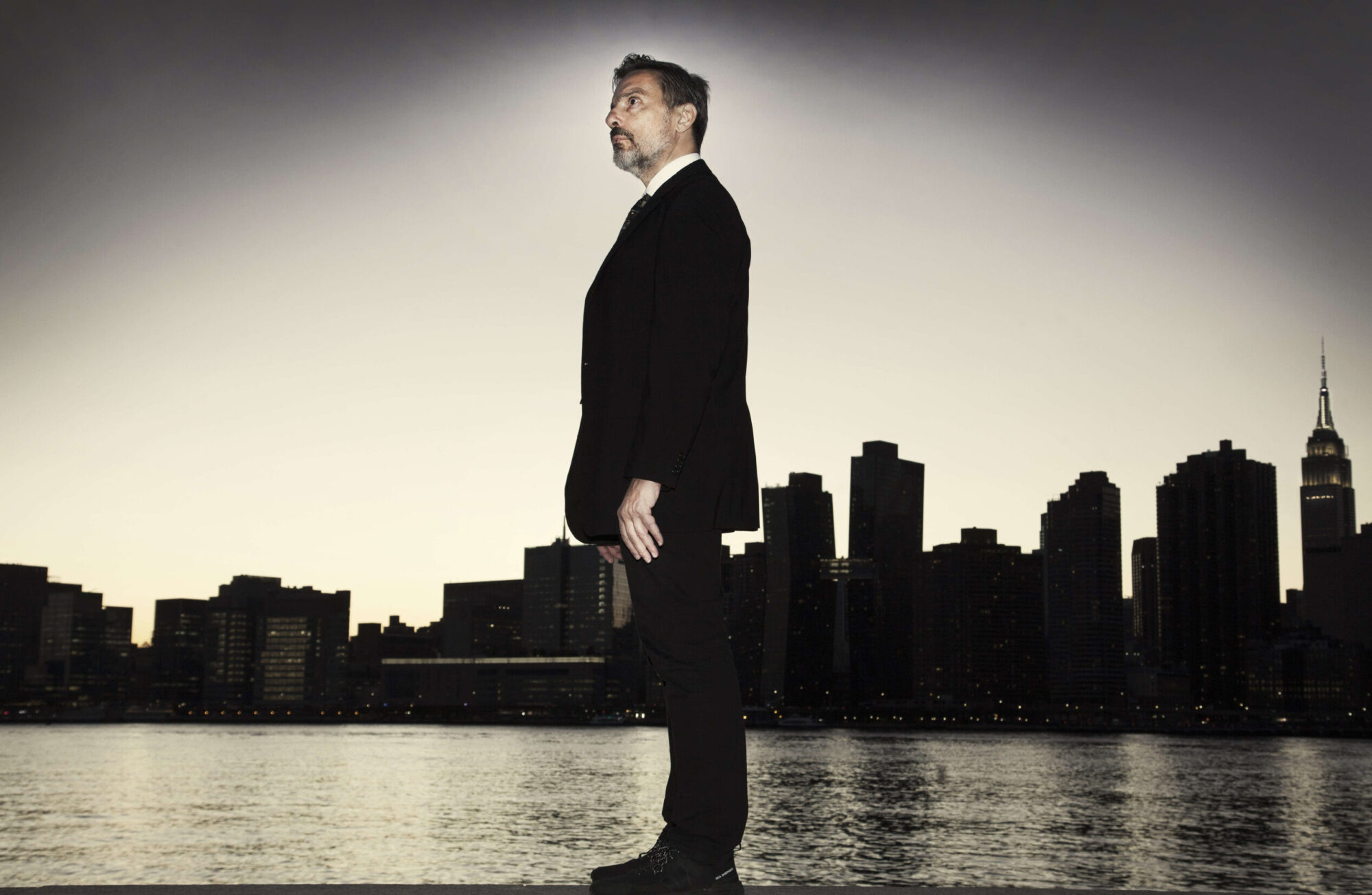
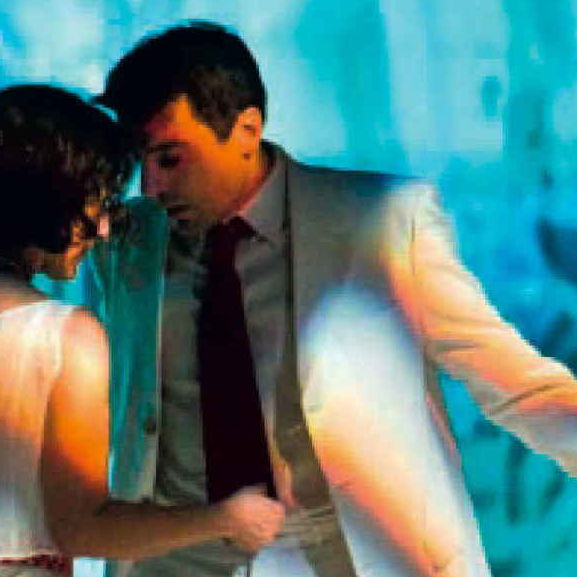
Ricardo Viviani is a choreographer, Oral Historian, researcher and mentor whose work connects dance practice, dance heritage, Oral History and cultural institutions. Based in Wuppertal, Germany, he has worked for more than four decades across Brazil, the United States and Europe as a dancer, choreographer, teacher, dance educator and researcher.
Born in São Paulo in 1960, Viviani began his dance training in Brazil in the late 1970s. In 1979 he performed in Três Ensaios (e o resto), choreographed by Sônia Mota for Grupo Andança and presented at the XV Bienal de São Paulo. During the early years of his career he also worked with Grupo Marzipan and developed his own choreographic work, including Danúbio Azul and Seis Histórias de Amor. His early artistic network connected dance, theatre, music, visual culture and alternative performance spaces, and included collaborations with artists such as Sônia Mota and Ismael Ivo. Works from this period include Três Ensaios, Danúbio Azul, Lili Marlene and Serious Talk / Relações Interpessoais.
His training developed across several fields. He studied at the Joffrey Ballet School in New York, Theater Direction at the University of São Paulo, and Cultural Sciences at the FernUniversität in Hagen. His subsequent career across Brazil, the United States and Europe encompassed performance, choreography, teaching and dance education, as well as choreography for opera, operetta, musical theatre and theatre.
As a performer and choreographer, Viviani has worked across a wide range of artistic contexts. His performance career includes work with companies and artists in Brazil, the United States and Germany, including Cisne Negro, Balé da Cidade de São Paulo and Tanztheater Ismael Ivo at the Nationaltheater Weimar. His independent choreographic work includes Serious Talk, Virtual DADA, Gods Prey, Le Sacre Du Poisson, Eroberung Des Atlantik and Quaadriduuo.
In German music theatre, his choreographic work includes productions such as Das Wundertheater, L’Enfant et les Sortilèges, Die lustige Witwe, Street Scene, My Fair Lady, Im weißen Rössl, Die Comedian Harmonists and Gegen die Wand. Contemporary reviews document different aspects of this work, including the relationship between choreography, music, theatrical composition and the psychological or social dimensions of the productions.
At Theater Hagen, Viviani developed a substantial body of choreographic work across different theatrical genres, including opera, operetta, musical theatre and productions for children and families. His archive documents a recurring involvement with the theatre’s Märchen zur Weihnachtszeit, including Der gestiefelte Kater, Rumpelstilzchen, Schneewittchen und die 7 Zwerge, Rotkäppchen, Hänsel und Gretel, Die Prinzessin auf der Erbse, Der Froschkönig, Kalif Storch and König Drosselbart. These productions formed part of the wider range of his choreographic work while bringing him into sustained contact with children, families and school audiences.
Alongside his theatrical work, Viviani developed a significant educational practice connecting dance, visual art, museums and schools. In Kleve, his collaborations with Museum Kurhaus Kleve, Karl Kisters Realschule and the NRW programme Kultur und Schule brought dance and choreographic practice directly into encounters with artworks and exhibitions. From 2009 onward, students worked with artists and artworks including Ettore Spalletti, Ewald Mataré and, later, Carl Andre, developing responses through movement, spatial perception and performance.
This work was concerned not simply with teaching dance, but with using the body as a means of encountering and understanding art. In the Carl & children / Tanzprojekt zu Carl Andre project, this approach was articulated through ideas of bodily and spatial perception, somatic thinking, sensory experience and problem-solving through movement. The project was subsequently documented as an Endrundenteilnehmer in the 2011/2012 Kinder zum Olymp! competition, with Karl Kisters Realschule and Ricardo Viviani identified as project partners. His pedagogical development during this period also included continuing education associated with Kultur und Schule and pedagogical seminars at the Landesmusikakademie NRW.
The Kleve work forms an important early example of Viviani’s interest in activating knowledge through dance and in bringing embodied experience into institutional and educational contexts. It connects his choreographic practice with questions of perception, learning and the transmission of artistic experience that would become increasingly important in his later work with archives, Oral History and cultural heritage.
His work with young audiences also extended beyond the theatre and museum context. Carnaval da Dorotéia — Tanzen mit Dorothee, developed in Frankfurt in 2014, introduced children to Brazilian Carnival traditions from different regions through movement, music, storytelling and participation. The project combined choreographic practice with cultural education and represents another application of an already established interest in using dance to transmit embodied and cultural knowledge.
His work has increasingly explored the relationship between dance practice, memory and knowledge. For ten years, he worked as an Oral Historian at the Pina Bausch Foundation in Wuppertal, where he developed and conducted Oral History interviews with dancers and other professionals involved in Tanztheater and related artistic practices. Since 2016, he has conducted approximately seventy interviews, creating a multilingual and multi-generational body of material in which personal testimony can be considered alongside photographs, programmes, video, documents and other archival sources.
This research asks how knowledge developed through dance can be articulated without separating bodily and social experience from the artistic work itself. His Oral History practice pays attention not only to spoken testimony, but also to gesture, demonstration, pauses, breath, movement, memory and the circumstances in which recollections are produced. In this way, the interview becomes both a documentary encounter and a way of approaching forms of knowledge that may otherwise remain difficult to articulate.
Viviani has presented this work internationally through lectures, workshops, conferences and publications. In 2022, he co-authored Sharing the Material is Sharing the Knowledge, published in the Jahrbuch TanzForschung by transcript.
In 2025, he led an Oral History project for dance heritage at the National Art Museum of Ukraine in Kyiv. Together with Daryna Yakymova and Viktor Ruban, he developed the Protocol for Archiving Dance, presented in Kyiv in 2025. The protocol addresses metadata, documentation, Oral History and reconstruction, proposing ways in which museum records can accommodate testimony and embodied knowledge alongside physical objects and conventional documentation.
This work extended his Oral History practice into a broader institutional question: how can ephemeral artistic practices such as dance enter museum and heritage structures without reducing them to objects alone? The question connects documentation, memory, embodied knowledge and institutional practice, and continues Viviani’s longer engagement with the relationship between dance and cultural memory.
His current work focuses on Activating Archives: bringing embodied knowledge, dance heritage and archival material into artistic and educational practice. He is interested in emerging Knowledge Technologies and in exploring what remains particular to human embodied experience while creating new connections between artists, archives, researchers and cultural institutions. His practice moves between past knowledge and tuning to the present, documentation and activation for desirable futures, and between the preservation of knowledge and the possibility of generating new forms of artistic and educational experience from it.