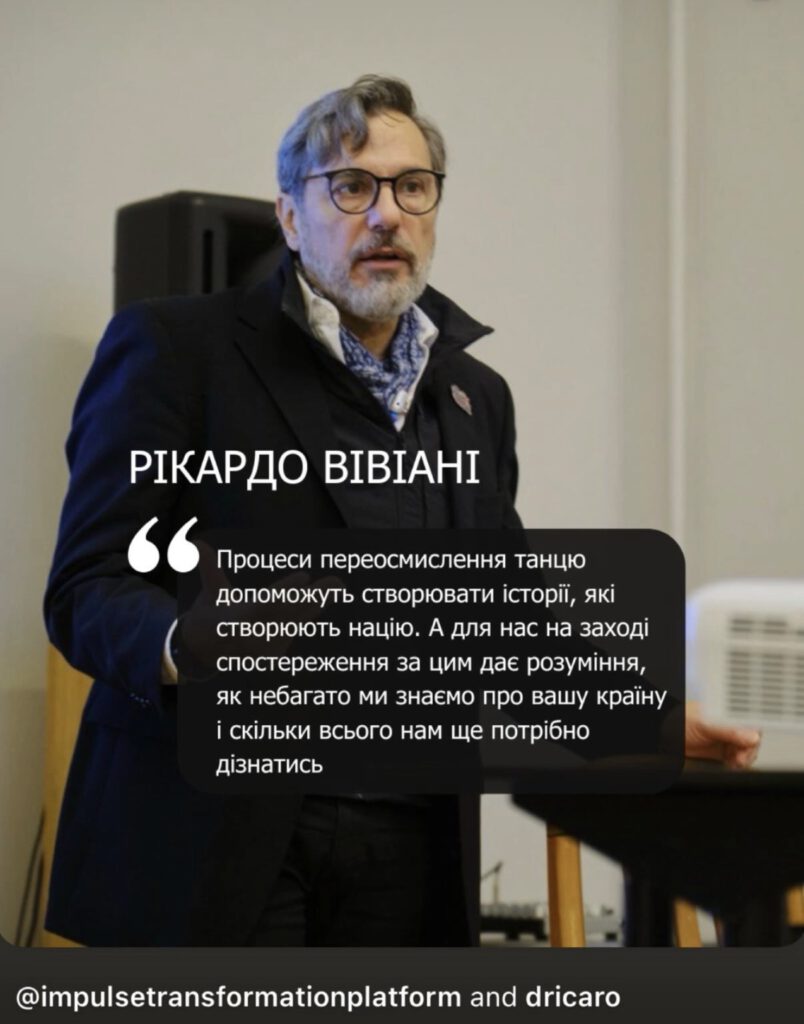
“Dance heritage will help us collect the stories that reflect this nation. Coming to Ukraine from the West made me realise how little I knew about the country and how much there still is for us to learn.”
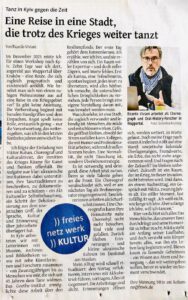
A journey to a city that continues to dance despite the war
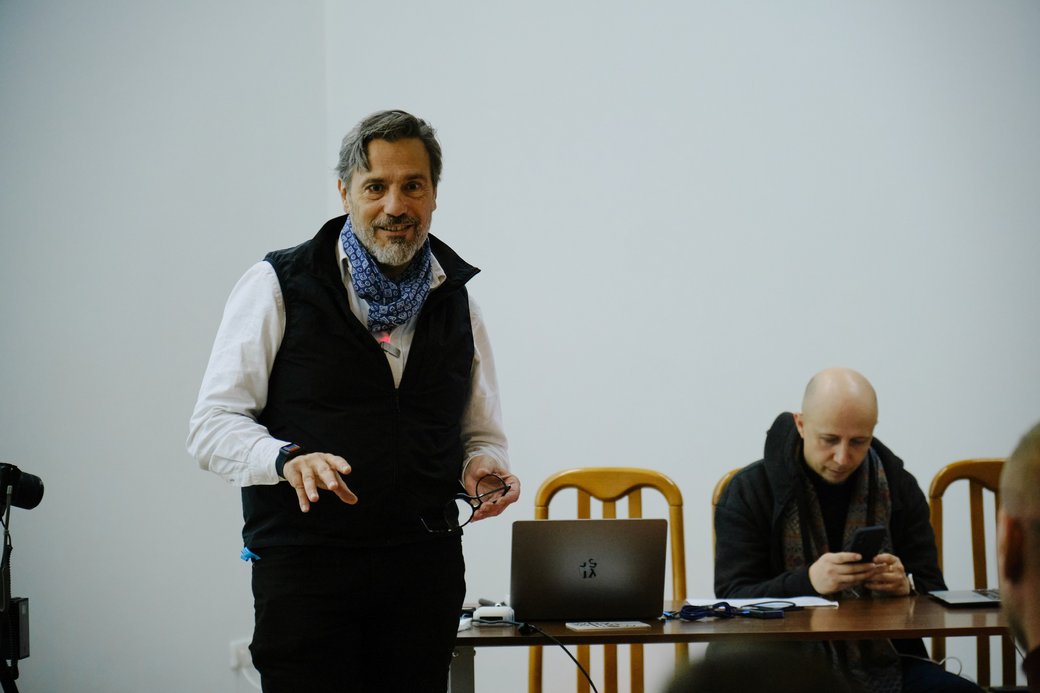
In December 2025, I traveled to Kyiv for a workshop. I spent ten days there, having traveled from Wuppertal via Kraków – a route that felt both pragmatic and existential. How does one prepare for a journey to a war zone from the comfort of a quiet living room? There are no instructions. Preparation begins with mundane tasks and packing. Fear plays no role, surprisingly enough – only the responsibility to pass on what I have developed over the past fifteen years. I accepted the invitation of Viktor Ruban, choreographer and cultural activist, who keeps spaces open for art and thought amidst the war. The task was clear: to support Ukrainian institutions in describing, documenting, and protecting their dance traditions – an act of cultural self-assertion, a step towards decolonization from the Soviet grip that had overlaid language, culture, and memory for decades.
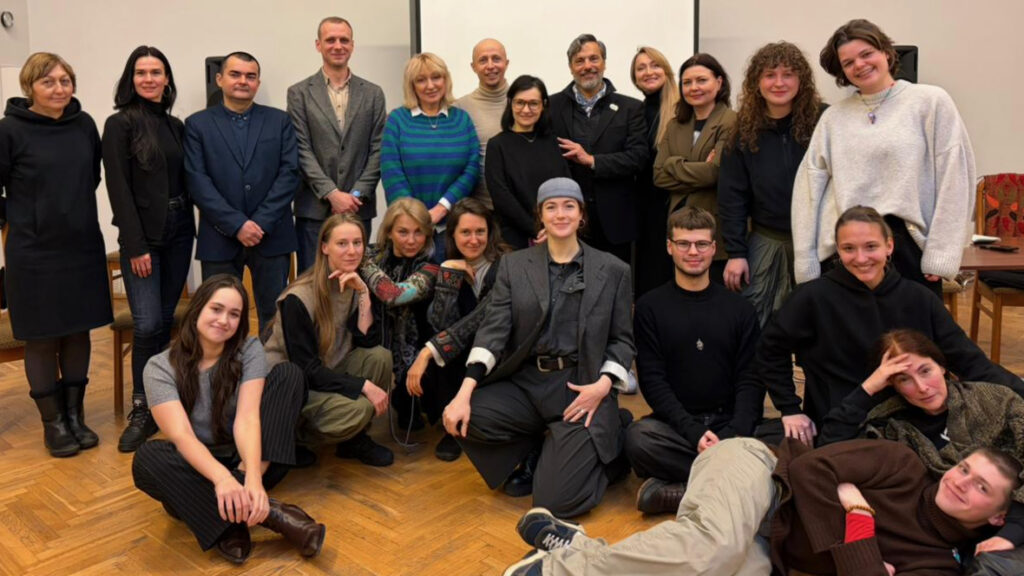
In Kyiv, we collaborated with directors of museums, archives, and libraries, as well as with ten artists and researchers—from twenty-somethings to people like myself who have dedicated themselves to dance for 45 years. The Goethe-Institut made this work possible through its Resilience Fund. The first day is dedicated to getting to know each other. I explain who I am, and they tell me about themselves. A room brimming with expertise—and yet filled with hesitation, because words fail us. Only when Karina, one of the participants, spontaneously begins translating each word does everything become audible. I try to understand the different urgency. Each person brings their own idea of what needs to be preserved.
What I’m experiencing is a city that is both wounded and alive. People who seem tired yet determined. Cafes that remain open even though the power might go out. Colleagues who work with humor and professionalism while sirens wail outside. A normality that isn’t an illusion, but a survival strategy.
It is necessary and urgent to do this work now. So many talented people are going to the front. A choreographer says goodbye because he is being drafted as a drone operator the next day. Dance teachers are working as snipers. One choreographer can no longer visit her hometowns near Chornobyl. And many have fallen. What remains are memories – and small Ukrainian flags at the memorial on Maidan Square.
My daily routine quickly becomes ritualized: reflecting on the previous day, conducting interviews on battery power, giving presentations. Everything is in the present. The workdays are packed. Memories surface, are sorted, put into words. But my question about a children’s song hits a wall: Soviet colonial overlays, foreign words, a legacy no longer embraced. And questions about the future? They remain untouched. The future is a space that cannot be entered in war, in this invasion. And then, one afternoon, a conversation with Nikita, twenty years old. A quiet moment, almost accidental. He says: “I don’t know how long I’ll live. But as long as I live, I want to dance.”
Here, everything converges: the human element that permeates our dance and makes its humanity visible. Nikita is at the beginning of his career, and yet his body already understands everything that will accompany him throughout his life. This almost unfathomable secret—a knowledge born of breath and movement—that we want to pass on before it vanishes again in the moment.
I work with artists, dance companies, universities, archives and cultural institutions, bringing together experience as a dancer and choreographer with many years of research, teaching and Oral History work.
Universities & cultural institutions Lectures, seminars, workshops, research and artistic inquiry
Dance companies & ensembles Mentoring, dramaturgical and artistic consultation, composition and creative processes
Independent choreographers & artists Composition, choreography, mentoring and archival strategies
Type: Press Conference · Video Transcript Summary Date: 23 December 2025 Context: Presentation of the results and future plans of Oral History for Dance Heritage Location: Ukrainian Crisis Media Center, Kyiv, Ukraine Subject: Developing a museum protocol for archiving dance Related Workshop:Oral History for Dance Heritage, 1–6 December 2025
Speakers:
Viktor Ruban
Daryna Yakymova
Ricardo Viviani and representatives of Ukrainian museum and dance institutions, as referred to during the press conference
Press Conference: Oral History for Dance Heritage
This page presents an English summary of the transcript of a publicly available video recording of a press conference held by the Ukrainian Crisis Media Center. The conference presented the results of the Oral History for Dance Heritage project and discussed the next steps following the December 2025 workshop at the National Art Museum of Ukraine (NAMU).
The conference focused particularly on the development of a protocol through which dance could be documented and incorporated into a museum collection. Project curator Viktor Ruban described the work as part of the broader DancePlan Ukraine initiative and as a pilot approach to preserving performative arts through the integration of oral testimony, embodied knowledge and contextual information.
According to Ruban, the protocol responds to the difficulty of preserving dance through conventional museum practices. Dance is not only a performance event but also a social and cultural practice whose histories may disappear when documentation is absent. He emphasized the need to preserve testimonies, archival evidence and research in order to strengthen historical continuity and the visibility of Ukrainian dance.
Daryna Yakymova, curator at NAMU, presented the newly developed three-part protocol for archiving dance:
Metadata — title, authorship, performance history, dance category, format, structure, participants, documentation such as video, photography and audio, and material elements including costumes and props.
Oral History Archive — interviews with performers, choreographers, scenographers, musicians and other contributors, creating a multidisciplinary body of embodied and contextual knowledge.
Reconstruction Protocol — guidelines for preserving essential elements of a dance work, identifying variable components, and documenting rights, licences and technical requirements relevant to future re-performance.
Yakymova explained that museums traditionally work through the preservation of material objects, while dance presents the additional challenge of preserving an ephemeral artistic form. Within the project, Oral History provided a method for extending the museum record beyond physical objects and for incorporating the knowledge and experience of the people who created and performed the work.
The press conference also emphasized the importance of Ricardo Viviani’s experience with Oral History at the Pina Bausch Foundation. His decade of work with dance practitioners was presented as an important reference for adapting Oral History to the Ukrainian context and to the specific requirements of dance heritage.
The speakers described the need for a systematic and accessible structure through which dance could be documented, researched and, where appropriate, reconstructed. In this framework, museum collection, Oral History, archival documentation and future artistic transmission become interconnected rather than separate activities.
The press conference therefore documents a concrete institutional development following the December workshop: the work moved from methodological experimentation toward the formulation of a protocol intended to allow dance to enter a museum collection as a form of cultural heritage.
Archival Material:
Video recording of the press conference; transcript summary; documentation relating to the Oral History for Dance Heritage workshop; material concerning the development of the NAMU dance-archiving protocol.
Oral History Intensive Workshop Team — Kyiv, December 2025
Type: Workshop · Oral History / Dance Heritage Date: 1–6 December 2025 Context:Oral History for Dance Heritage Location: National Art Museum of Ukraine, Kyiv, Ukraine Role: Workshop Leader · Oral Historian · Choreographer Duration: Six-day intensive Participants: Dance researchers and museum professionals from Ukraine Translator: Karina Solka Organisers: Impulse Transformation Platform · Goethe-Institut Ukraine · National Art Museum of Ukraine Status: Historical Record
Oral History for Dance Heritage was a six-day intensive in Kyiv exploring how Oral History can contribute to the documentation, preservation and activation of dance heritage.
The workshop brought together dance researchers and museum professionals to consider the particular challenges of documenting an ephemeral art form. It connected artistic experience, Oral History, cultural memory and museum practice within the Ukrainian context.
The Workshop
The intensive drew on more than a decade of Viviani’s work as an Oral Historian in the performing arts, together with his experience as a dancer and choreographer.
A central concern was the relationship between spoken testimony and the knowledge carried through dance. Oral History can make aspects of experience, memory and artistic lineage visible and narratable, while recognising that embodied knowledge cannot be fully contained in words. The transmission of dance heritage also takes place through embodied practice, relationships and forms of knowledge that may remain only partially articulated.
The workshop therefore approached dance heritage as both documentary material and living cultural knowledge. Questions of memory, testimony, documentation, preservation and future access were considered in relation to the specific conditions of dance and to the Ukrainian cultural context.
Kyiv and the Ukrainian Context
The workshop took place during a period in which questions of cultural memory, heritage and continuity have particular significance in Ukraine. The encounter brought international Oral History experience into dialogue with Ukrainian dance researchers, museum professionals and practitioners working within conditions shaped by war, displacement and cultural transformation.
The exchange also highlighted the importance of recognising dance as part of cultural history rather than treating it solely as an ephemeral performance practice.
From Workshop to Collaborative Work
The intensive formed part of a wider collaborative process concerned with the development of approaches to documenting and preserving dance heritage in Ukraine. This process contributed to the Protocol for Archiving Dance, developed in Kyiv in 2025 by Daryna Yakymova, Viktor Ruban and Ricardo Viviani.
The resulting work addresses the relationship between documentary records, Oral History, embodied knowledge and the continuing life of dance heritage. Further methodological and working materials remain part of the associated research archive.
Archival Material
Primary and related sources:
Official invitation dated 24 November 2025; workshop documentation; presentation materials; Oral History interviews conducted in Kyiv; Protocol for Archiving Dance, Kyiv 2025; related project documentation.
Ricardo Viviani and Viktor Ruban. Photo: Solomiia Kozolup / Suspilne Kultura
Type: Press Report · English Summary Date: 15 December 2025 Context:Oral History for Dance Heritage, National Art Museum of Ukraine (NAMU), Kyiv Author: Maria Kabatsii Publication:Suspilne Kultura Subject: Archiving Ukrainian Dance Heritage
Press Report: How NAMU Works on Archiving Ukrainian Dance
This page presents an English summary of a report by Maria Kabatsii, published by Suspilne Kultura. The journalist attended one day of the six-day intensive Oral History for Dance Heritage at the National Art Museum of Ukraine (NAMU) in Kyiv and its concluding round table. Her report documents how dance researchers, practitioners, museum workers and historians were working to develop approaches to preserving and archiving Ukrainian dance heritage. The report focuses particularly on the adaptation of Oral History to dance and on the institutional challenges involved in bringing an ephemeral art form into museum and archival practice.
The project, Oral History for Dance Heritage, was organized by the Impulse Transformation Platform with support from the Goethe-Institut in Ukraine and in partnership with NAMU. According to the report, Ricardo Viviani was invited as a lecturer and Oral History specialist from the Pina Bausch Foundation, and researchers from different Ukrainian cities worked together with museum specialists to adapt the method to the Ukrainian dance context.
Kabatsii’s report emphasizes the difficulty of documenting dance through conventional verbal or archival means. Viviani describes the challenge as creating ways to talk about dance and to help practitioners express the depth of their knowledge. The article places this question within a wider discussion of the relationship between embodied experience, memory and the documentation of dance.
The report also describes gaps in the documentation of Ukrainian dance. Historian Taras Samchuk points to dance as a comparatively neglected research field, while curator and project initiator Viktor Ruban discusses the loss of experimental dance histories that were not documented and therefore remained primarily in personal memories and private archives. The article connects these gaps with broader questions of cultural memory and identity in Ukraine.
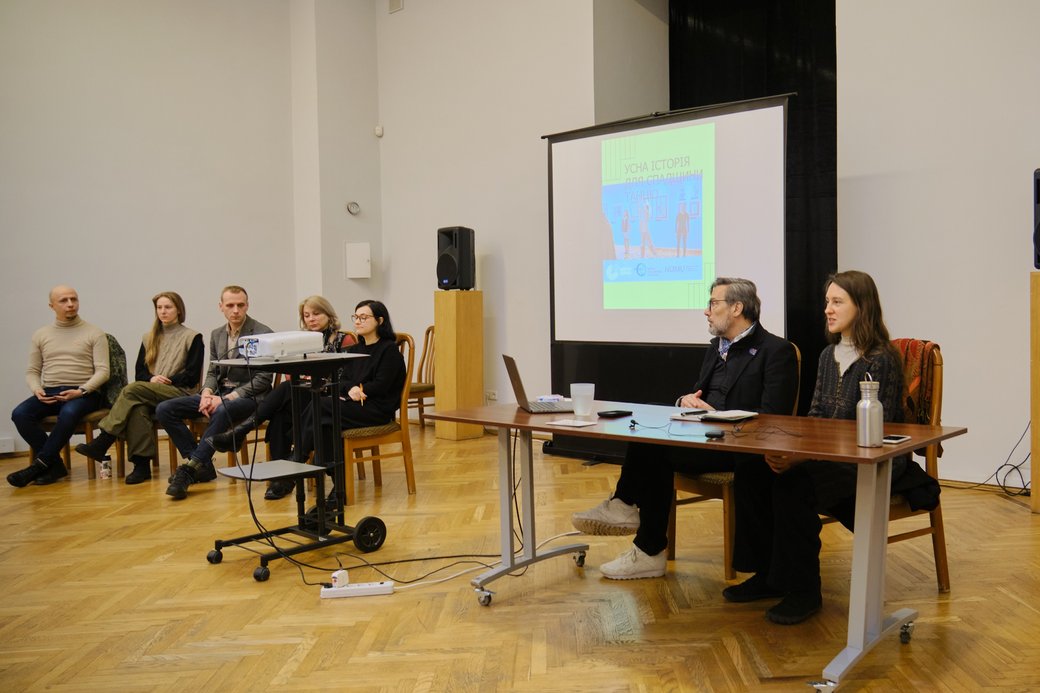
Final round table at NAMU. From left: Viktor Ruban, Khrystyna-Maria Slobodyaniuk, Taras Samchuk, Liudmyla Mova, Daryna Yakymova, Ricardo Viviani and Karina Soika. Photo: Solomiia Kozolup / Suspilne Kultura
The article places the workshop within NAMU’s recent efforts to make dance visible as an artistic medium in its own right. It refers to the museum’s earlier project “Dance in the War Zone?”, which brought contemporary dance into the museum and established a basis for subsequent collaboration between the institution and dance researchers.
Daryna Yakymova. Photo: Flora Borovyk / Suspilne Kultura
A central point in the report is the development of museum approaches for preserving dance. Daryna Yakymova explains that NAMU intends to develop storage protocols for an ephemeral art form and identifies Oral History as a method that could help document and archive this heritage. She also describes the lack of specialists with specific knowledge of dance history, terminology and archival requirements within museum institutions.
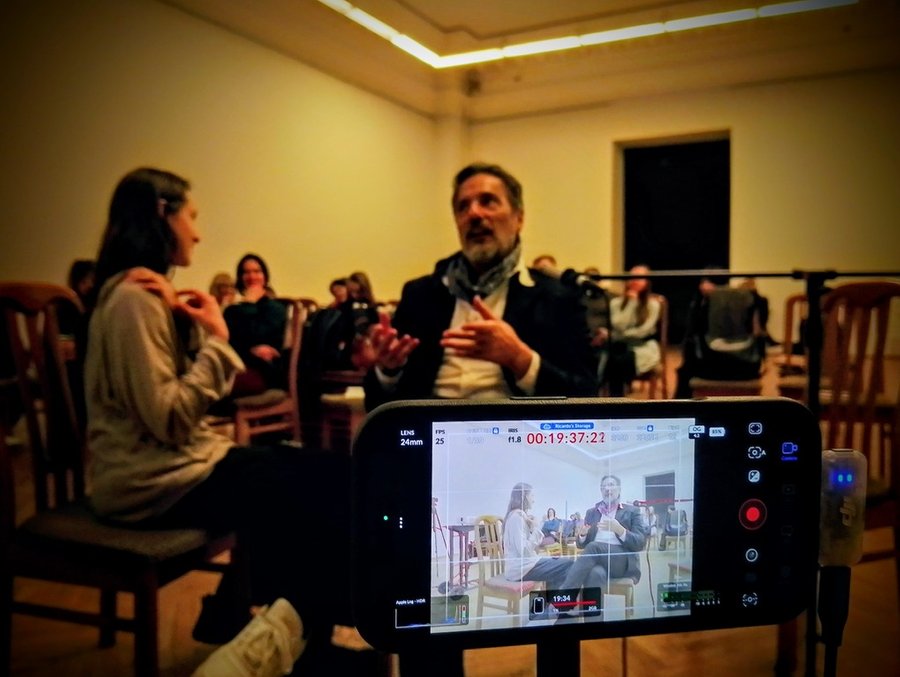
Interview recording training with Ricardo Viviani. Photo: Flora Borovyk / Suspilne Kultura
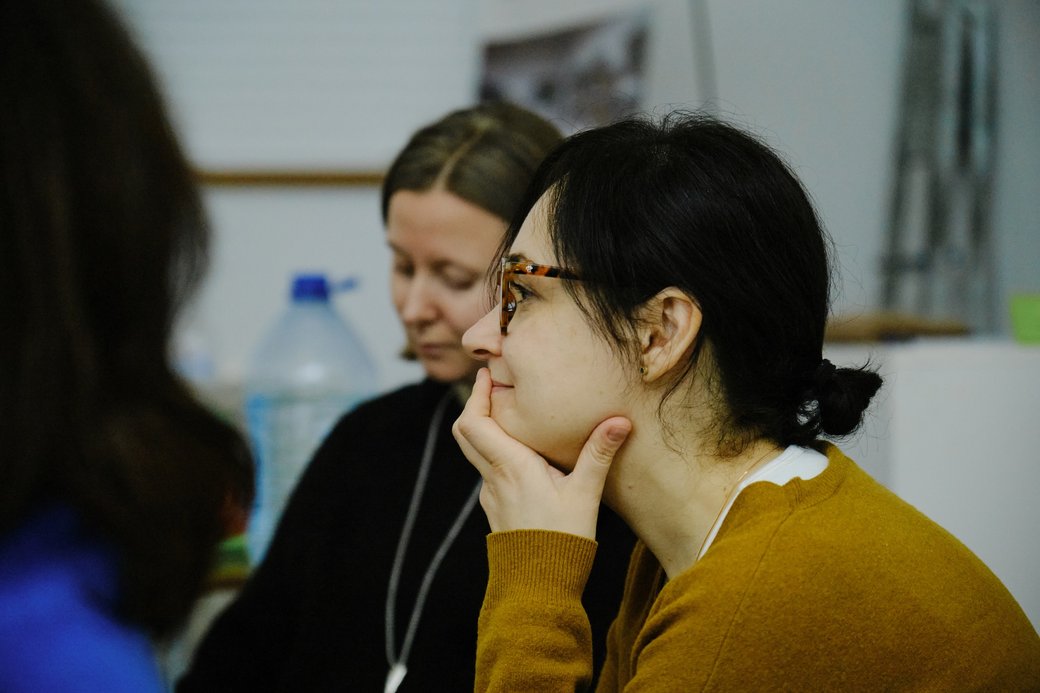
The report also documents practical interview training during the workshop. Alongside the methodological discussion, participants considered the practical conditions of recording and preserving oral histories and the institutional resources required to maintain a digital archive. Viviani identifies institutional support and digital infrastructure as significant challenges and stresses the need to distinguish the documentation of dance history from the process of creating dance itself.
The article concludes by connecting the preservation of Ukrainian dance with cultural memory and identity. It presents the attempt to archive dance as relevant not only within Ukraine but also internationally, because documenting Ukrainian dance can make histories and practices that remain insufficiently known accessible to wider audiences.
Archival Material:
Press article; press photographs; workshop documentation; interview-training documentation; related project material concerning Oral History for Dance Heritage and the archiving of Ukrainian dance.
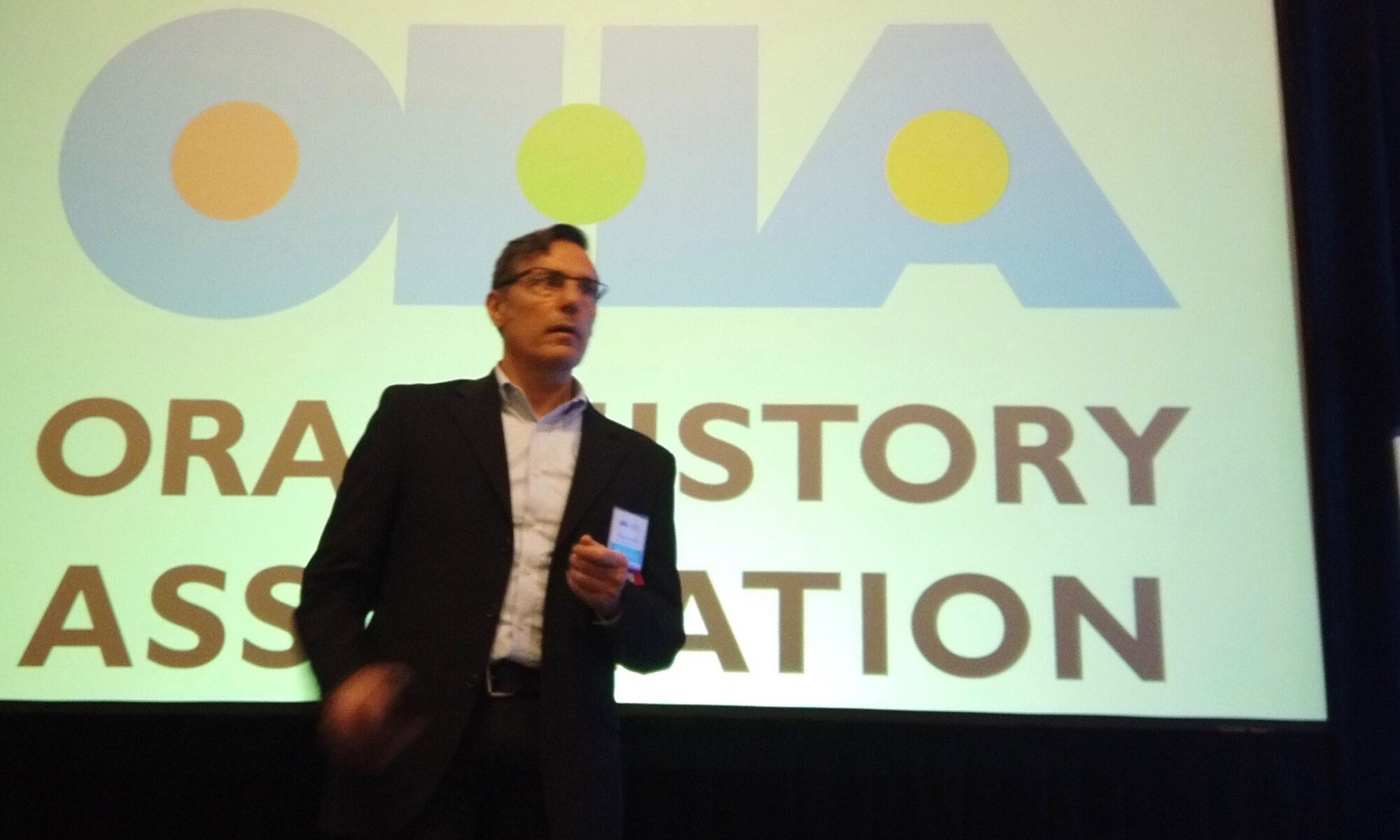
International Oral History Association Conference 16-19 September 2025
Re-Thinking Oral History
Beyond Words: Crafting Oral Histories in Dance and the Arts
Visual Presentation by Ricardo Viviani 18th of September 2025 11:00
Knowledge that is not documented often faces the risk of being forgotten. With the rise of Large Language Models (LLMs), knowledge that is primarily non-logocentric —knowledge that doesn’t rely on words or traditional text— risks falling behind in the rapidly evolving digital landscape. In fields like the performing arts, particularly in theatrical dance (the focus ofmy oral history community), the processes of decision-making, contextualization, and articulating non-logocentric knowledge into oral histories require specific skills. These skills can be shared and expanded, especially within communities like theatrical dance, which transcend national borders and foster deep, personal communication and skill exchange over decades. In this presentation, I will share my approach to creating oral histories indance, which often reflect broader transnational social and politicaldevelopments from the 1940s to the present. My methodology aims toarticulate this knowledge and create transnational legacy maps that preserveand highlight the richness of non-logocentric knowledge.
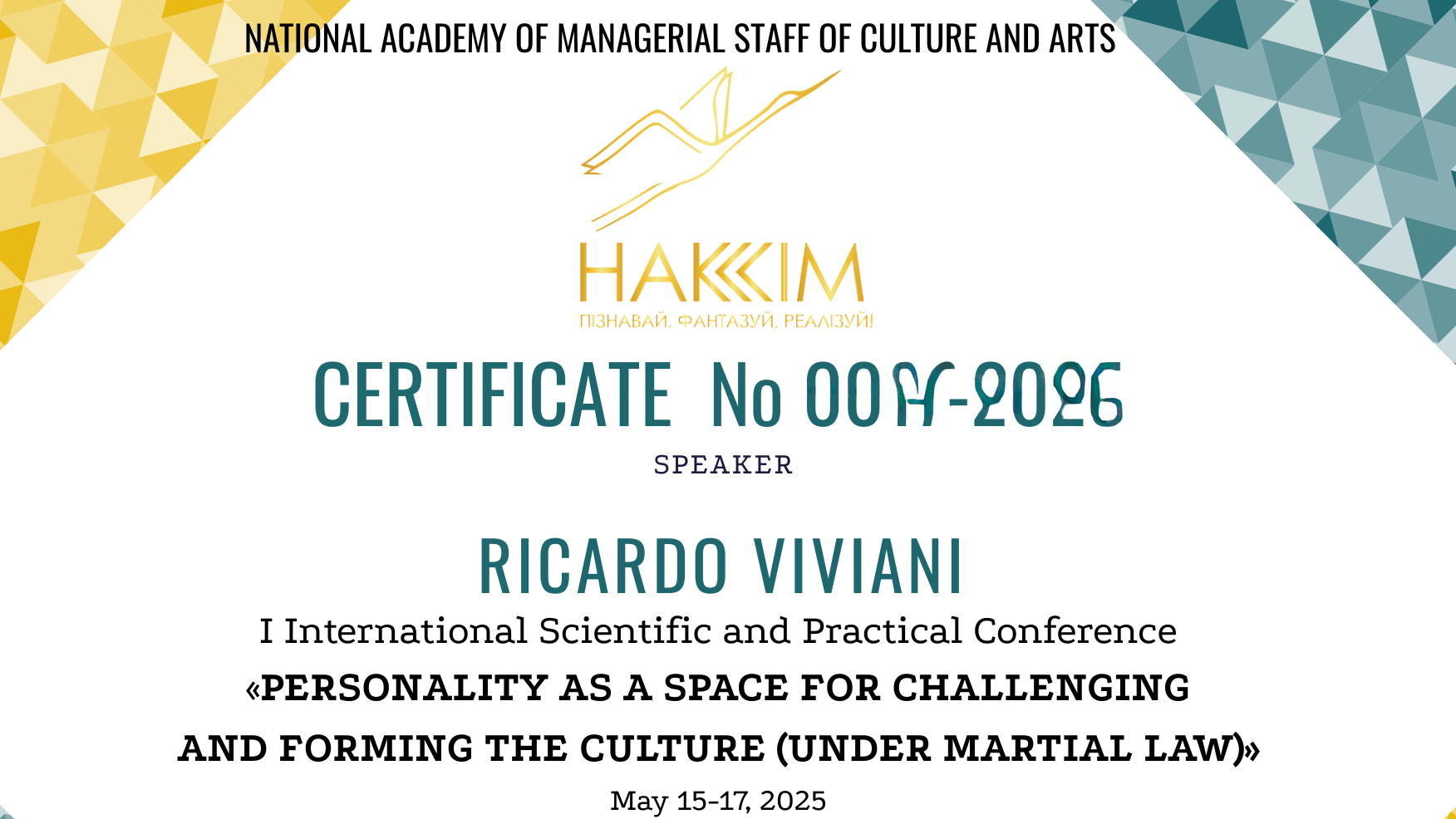
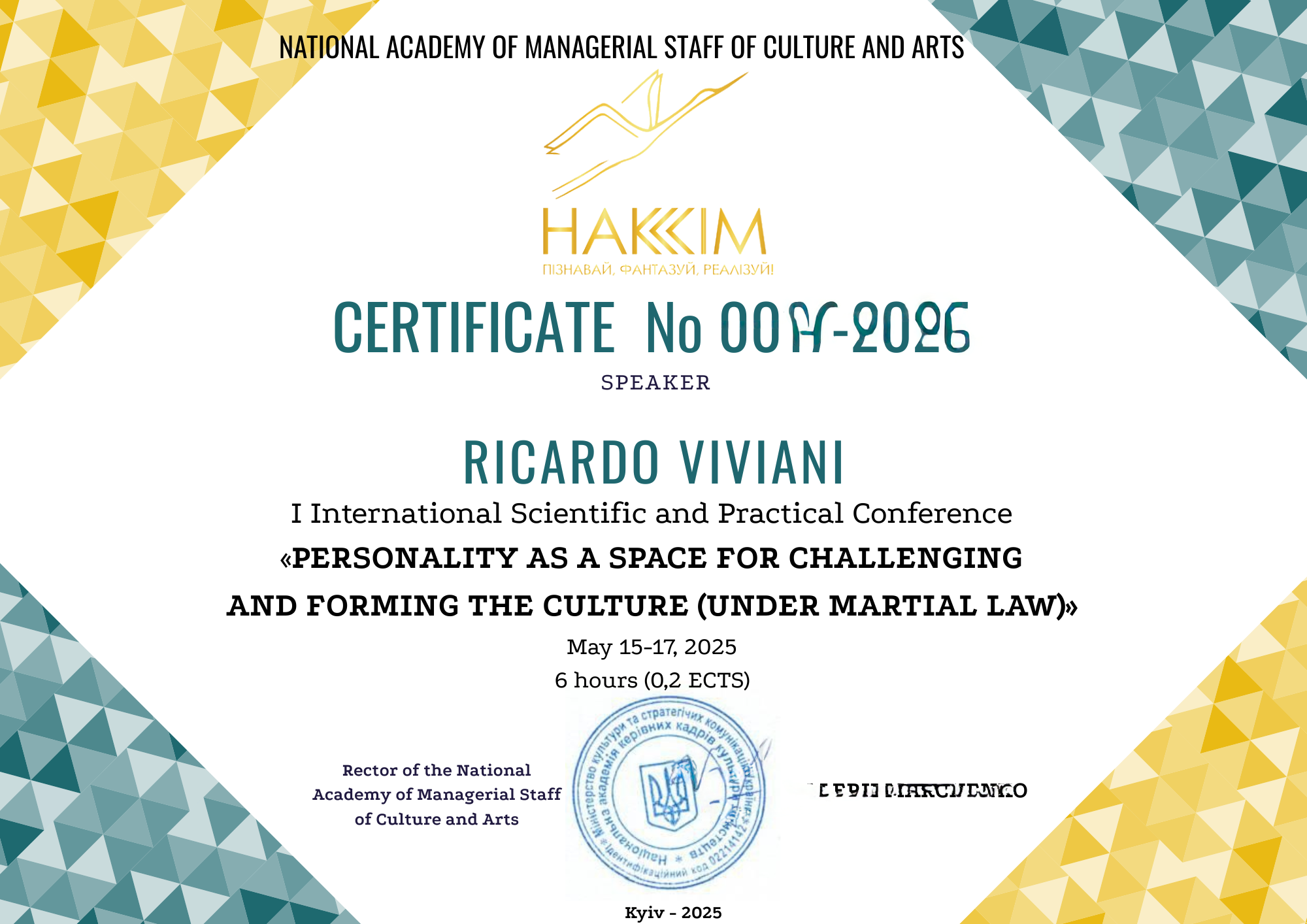
Type: Presentation · Online Contribution Title: The Injustice of Being Silenced Date: 15–17 May 2025 Context: I International Scientific and Practical Conference Personality as a Space for Challenging and Forming the Culture (under Martial Law) Location: National Academy of Managerial Staff of Culture and Arts, Kyiv, Ukraine Organizer: Impulse Transformation Platform Role: Presenter · Researcher
The Injustice of Being Silenced examines the relationship between artistic formation, personal value systems and the social and political environments in which artists come of age. The presentation draws on Ricardo Viviani’s experience both as a dance artist and as an Oral Historian working with life histories of dancers and other practitioners.
The presentation begins from the observation that artistic expression may register aspects of a person’s historical and social experience before those experiences can be fully analyzed or consciously articulated. Dance, theatre, music and performance can therefore provide traces of lived histories that exceed what can later be expressed verbally.
Viviani connects this observation to his own artistic formation during the Brazilian Military Regime (1964–1985), when dance, music and theatre developed forms of expression shaped by political constraint and resistance. The presentation considers comparable situations in other cultural contexts, including Ireland, Germany and the Balkans, where artists worked under political and social pressure.
A central concept is the idea of “anti-biographies”. Viviani uses this term for sequences of events in a person’s biography that become meaningfully contextualized through questioning and the construction of narrative. In this sense, the interview does not simply reproduce a biography already known; it can bring relationships between experience, context and value into articulation. The process has an affinity with oral traditions, in which knowledge is transmitted in forms responsive to the needs and circumstances of the present.
The presentation also considers the relationship between embodied and verbal knowledge. While Oral History is transmitted through the voices of living individuals, artistic works may embody a broader spectrum of lived experience that cannot always be directly articulated in words. Artistic expression can therefore become an additional source through which personal and collective histories may be approached.
The accompanying research notes develop these questions through case studies including Ballet Stagium and the Dzi Croquettes under the Brazilian Military Regime, as well as examples concerning divided Germany, Ireland, the Yugoslav Wars and other situations in which artistic expression developed under political or social duress. These examples examine how cultural agents developed forms, vocabularies and practices capable of expressing experiences that could not always be stated directly.
The presentation connects these observations to Viviani’s broader practice as a choreographer and Oral Historian. His personal history is not treated only as biographical information, but also as part of the perspective through which research questions are formed and artistic expression is understood.
Archival Material:
Conference abstract; presentation notes; presentation material; related research and bibliographic notes; documentation of the online contribution.