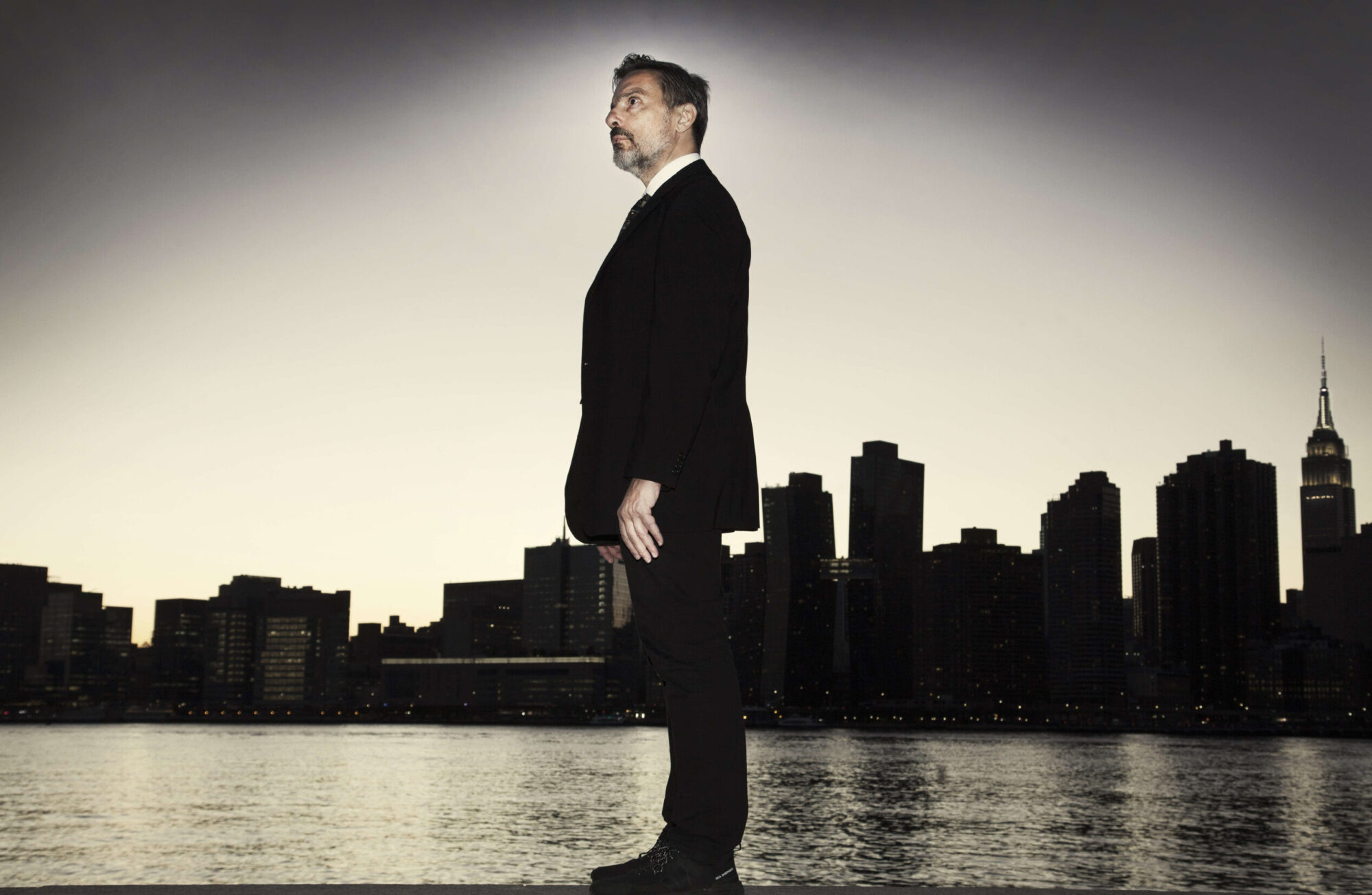
Type: Production · Presentation · Dance Education
Date: 12 June 2014 — documented premiere
Time-span: 2014
Location: Casa do Brasil · Frankfurt Hauptbahnhof, Frankfurt am Main, Germany
Context: Brazilian Carnival · cultural education · young audiences · 2014 FIFA World Cup
Role: Choreographer · Director · Dance Educator
Participants: Julia Mota Carvalho — Dorotéia · dance dramaturgy
Status: Historical record · documented from surviving project material
Record / Description
Carnaval da Dorotéia — Tanzen mit Dorothee was a dance-education and cultural presentation for children introducing Brazilian Carnival through movement, music and regional cultural references.
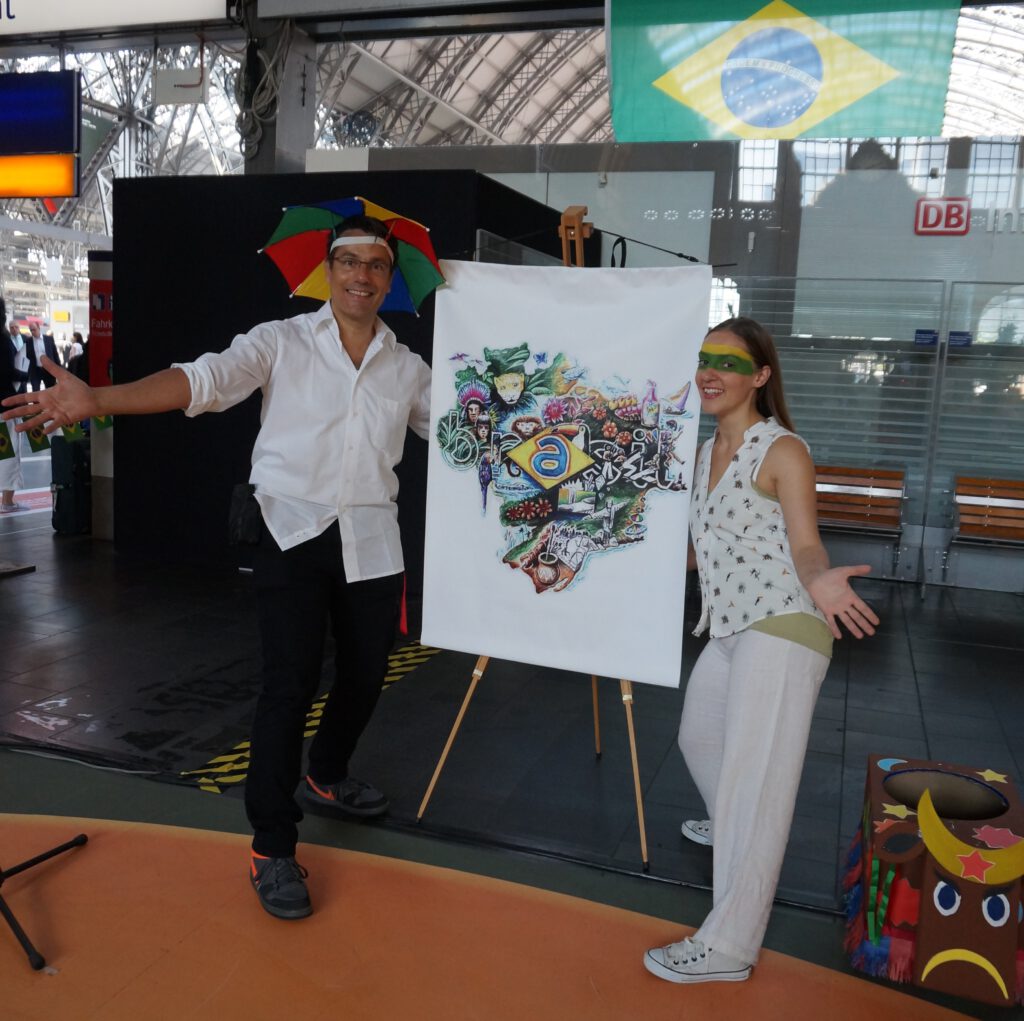
The surviving project exposition documents the premiere at Casa do Brasil, Frankfurt Hauptbahnhof, on 12 June 2014. The project was conceived for children and their parents and combined an introduction to Brazilian Carnival with practical dance and movement activities.
The surviving material describes Brazilian Carnival through examples from different regions of the country. The programme connected the activities to the atmosphere surrounding the 2014 FIFA World Cup in Brazil and referred specifically to Salvador, Fortaleza and Recife and to forms of Carnival and popular dance associated with those places.
The project was conceived not simply as a performance but as an encounter in which children could experience Brazilian culture through their own bodies, music and movement.
The Work / Creation
The project exposition identifies Ricardo Viviani as choreographer and describes the format as a one-hour pedagogical encounter with three principal stages:
Introduction — approximately 15 minutes. Dorotéia welcomes the children, introduces Brazilian Carnival, plays music and demonstrates dance movements. A playful geographical association connects Brazilian regions and cities with different Carnival traditions.
Dance and movement — approximately 30–40 minutes. The children participate in free movement, coordination and rhythm exercises, spatial work and basic dance movements. A simple choreographic structure develops into a more open and festive Carnival section.
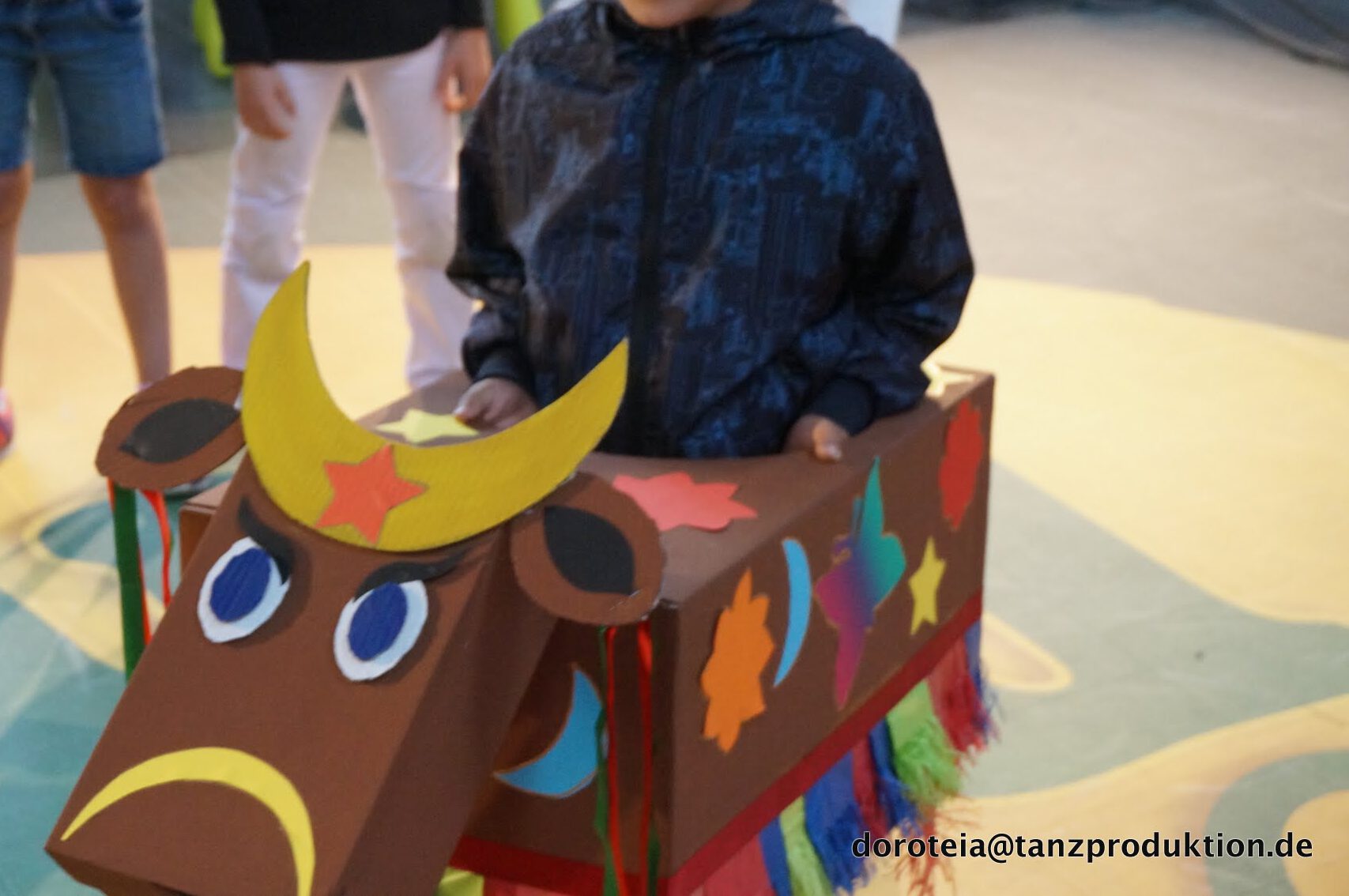
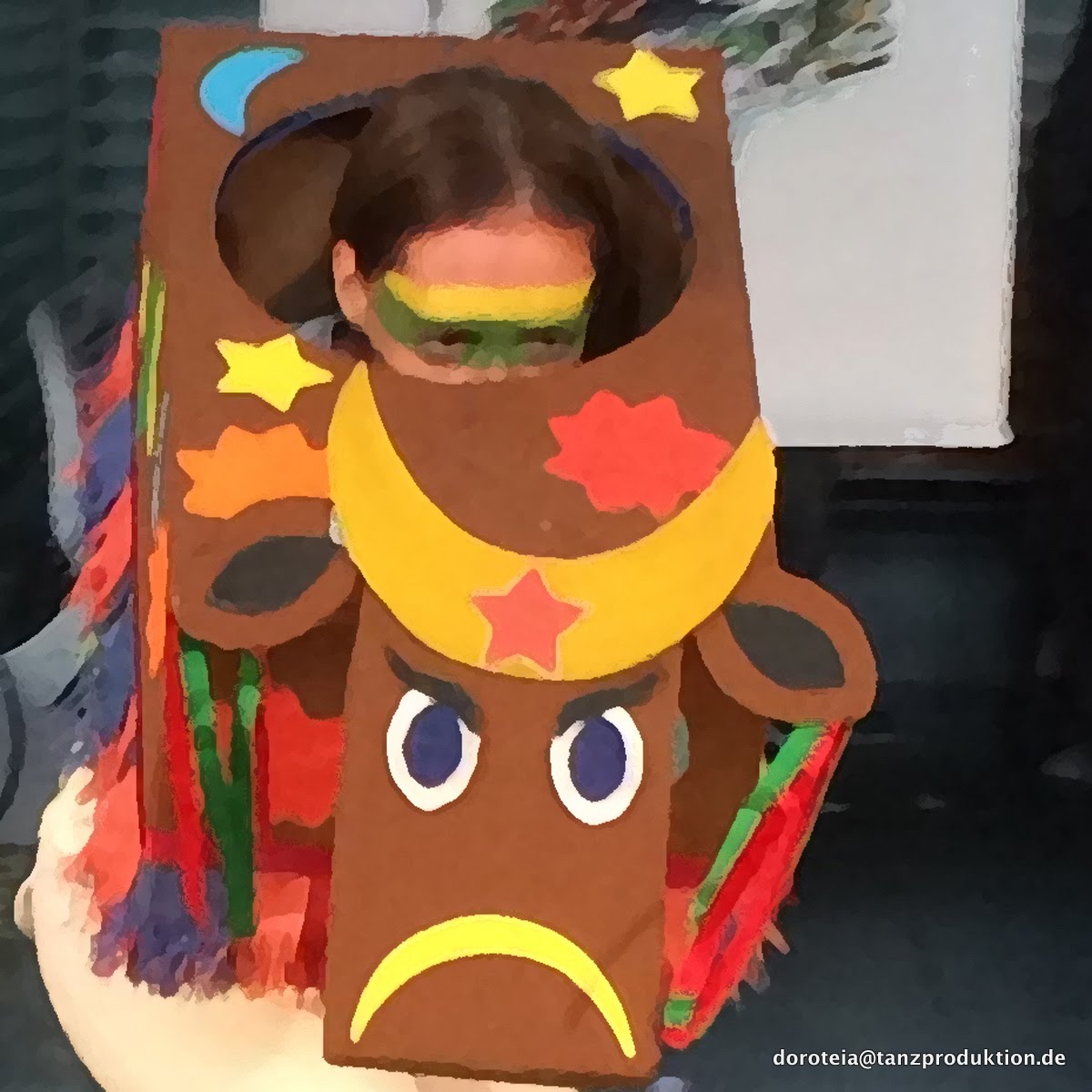
Reflection. The concluding section combines photographs, movement and conversation about Brazil, Carnival and the places introduced during the activity. The surviving exposition refers specifically to a Bumba-meu-boi element in this concluding context.
Production
The surviving production documentation credits Ricardo Viviani with concept, choreography and pedagogical execution. The project also identifies Julia Mota Carvalho as Dorotéia and as a dance dramaturgical collaborator.
Ricardo’s archival recollection describes the project as a commissioned intervention connected with the Brazilian cultural programme in Frankfurt during the 2014 World Cup. The precise commissioning organisation is not named here because it has not yet been independently established from the surviving documentation.
Contracts, invoices and other managerial or administrative documents relating to the production are preserved privately and are not reproduced on this public archival page.
Dance Education
Carnaval da Dorotéia continues a documented strand of Ricardo Viviani’s practice connecting professional dance, cultural education and work with young audiences.
An earlier documented example is Carl & children / Tanzprojekt zu Carl Andre, developed with the Karl Kisters Realschule in Kleve. The surviving Kinder zum Olymp! certificate identifies the project as an Endrundenteilnehmer of the 2011/2012 competition „Schulen kooperieren mit Kultur“, in the category Tanz for Klassen 5–9, with Ricardo Viviani identified as Tänzer und Choreograph.
This Kleve work is independently corroborated by the NRW Kultur und Schule project documentation, which records Ricardo Viviani as the artist for Klever Klangnacht at Karl Kisters Realschule Kleve-Kellen during the 2011/2012 school year. Museum Kurhaus Kleve also documents the Karl Kisters Realschule’s participation in the Schule Kunst Museum network and student dance performances connected with the Carl Andre exhibition.
The Kleve work is retained here as relevant background to Viviani’s established practice with schools, dance education and young people. A fuller archival account of the Karl Kisters Realschule, Kleve and Museum Kurhaus collaborations will be documented separately.
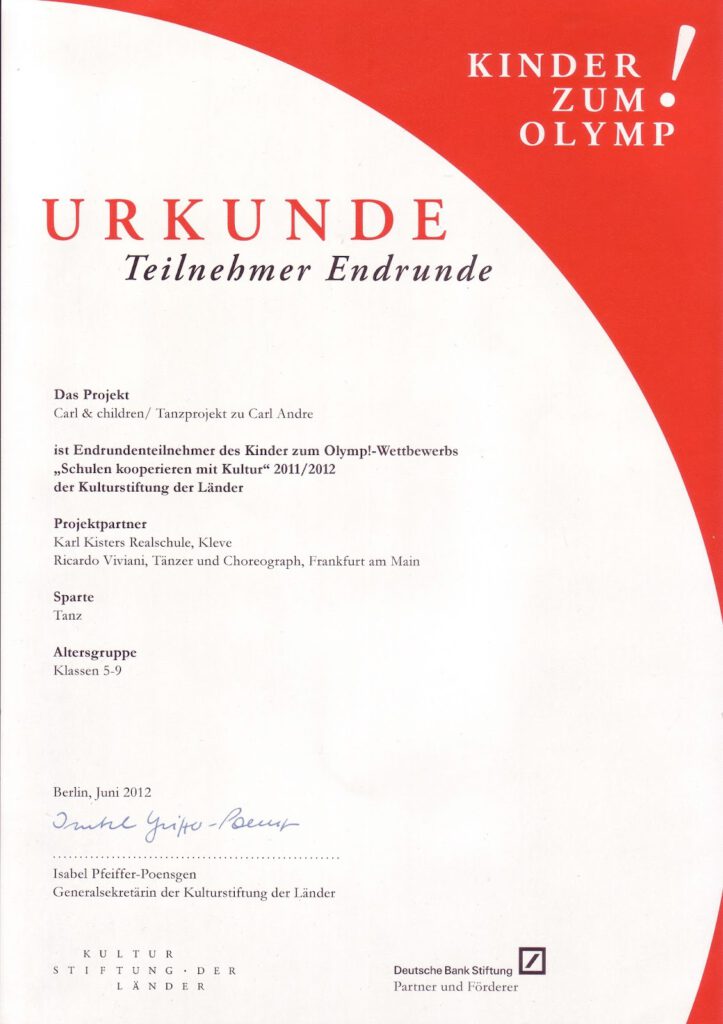
Tanzprojekt zu Carl Andre as an Endrundenteilnehmer, 2011/2012.
Activity / Event
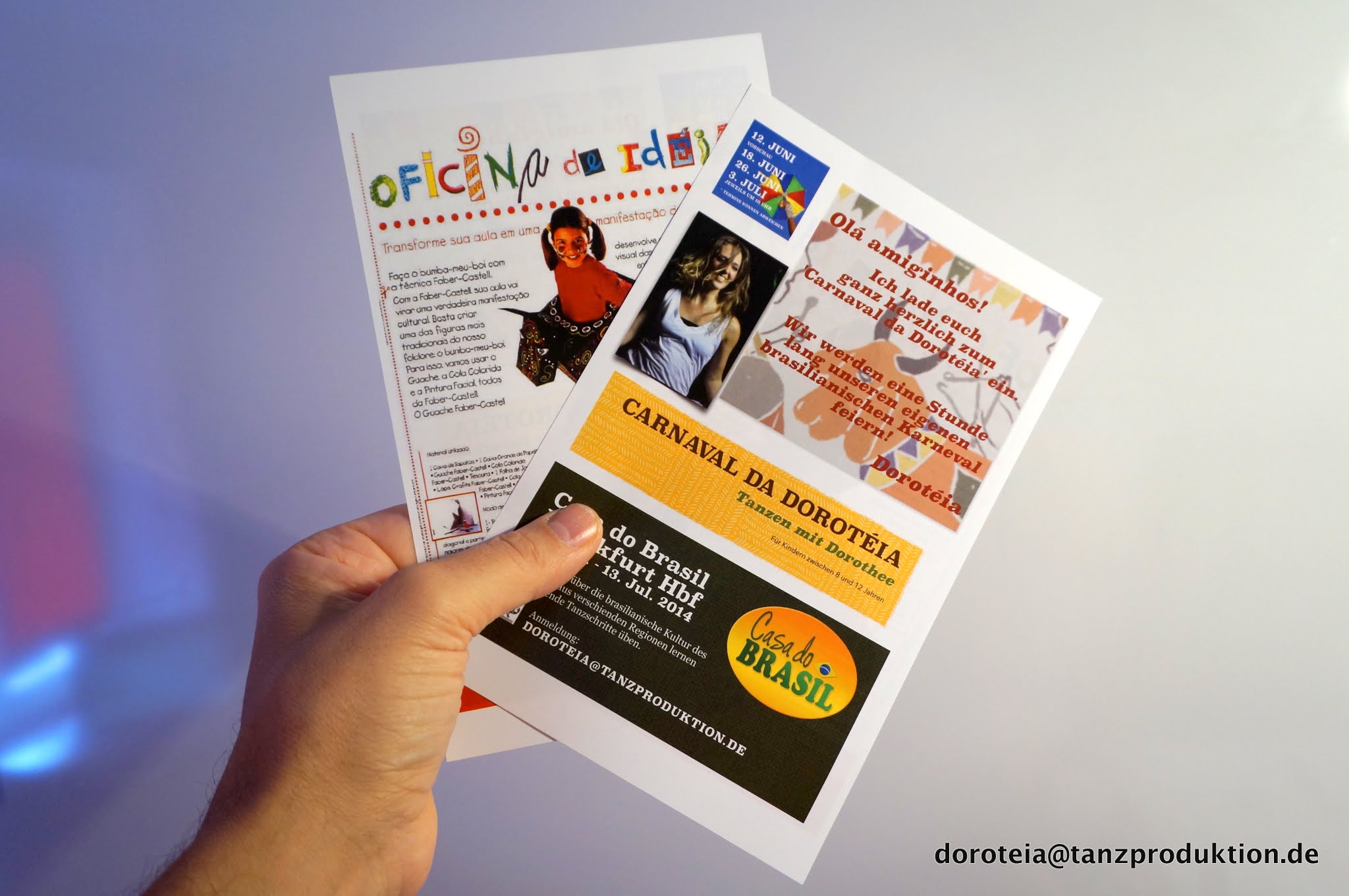
The surviving flyer documents a public presentation at Casa do Brasil, Frankfurt Hauptbahnhof, with the date 13 July 2014. The project exposition, however, identifies 12 June 2014 as the premiere. The two dates are therefore preserved as separate documentary references rather than reconciled by assumption.
The flyer also gives a different target age range from the project exposition: it addresses children aged 8–12, while the exposition describes the project as intended for children aged 5–12. Both formulations are retained as evidence from their respective documents.
Primary Source / Documentation
The principal surviving documentation consists of the project exposition Carnaval da Dorotéia — Tanzen mit Dorothee, version 3, dated 15 January 2015; the promotional flyer; surviving photographs; the promotional video; and associated project records.
The exposition provides the principal documentary account of the project’s concept, pedagogical structure, team and intended audience. The flyer provides independent documentary evidence for a public presentation and preserves a different date and age specification.
The surviving visual material is retained as archival evidence. Where children appear, public derivatives should be reduced, cropped or otherwise prepared so that children are not reasonably identifiable. Original documentary files remain preserved separately as archival masters.
Personal Reflection
I later collaborated with Júlia in a commission during the football World Cup in Brazil to create an occupation in the Frankfurt train station in Germany to present Brazil through its different Carnival cultures and give the continental dimension of the country. It was called Carnaval da Dorotéia for young people and schools. Many pictures survive and a flyer describing the intervention to recruit school classes. [from IRIBIRI recollections]
This recollection is preserved as Ricardo Viviani’s retrospective account and is distinguished from the independent documentary evidence contained in the surviving project material.
Relationship
Carnaval da Dorotéia is related to Ricardo Viviani’s broader work in dance education and with young audiences, including documented projects developed with schools in Kleve. The relationship to the Karl Kisters Realschule and the Museum Kurhaus Kleve will be developed more fully in the relevant archival records rather than duplicated here.
Place / Context
Casa do Brasil, Frankfurt Hauptbahnhof formed the documented institutional and spatial setting for the project. The Frankfurt Hauptbahnhof context was particularly relevant to the project’s public-facing cultural approach: Brazilian Carnival was presented in a major railway environment during the period of the 2014 World Cup.
The surviving project documentation should be read primarily as evidence of a cultural-educational intervention rather than as a conventional stage production.
Contribution / Significance
The project is significant within Ricardo Viviani’s practice because it brought together choreography, dance education, cultural mediation and young audiences in a public setting.
Its distinctive contribution was to approach Brazilian Carnival through embodied experience: children encountered regional cultural references through music, rhythm, movement and participation rather than through information alone.
Assessment / Relevance
Carnaval da Dorotéia documents an intersection between Viviani’s Brazilian cultural background, his professional choreographic practice and his continuing work in dance education.
The surviving documentation also demonstrates a form of cultural presentation in which dance functions simultaneously as artistic practice, educational medium and means of intercultural encounter.
Archival Material
Surviving material includes: Project exposition: Carnaval da Dorotéia — Tanzen mit Dorothee, version 3, 15 January 2015, Promotional flyer for Casa do Brasil, Frankfurt Hauptbahnhof, Photographic documentation from 2014, Promotional video, Private contracts, invoices and administrative project records, retained but not reproduced publicly.
Keywords
Carnaval da Dorotéia · Tanzen mit Dorothee · Brazilian Carnival · dance education · Dance Educator · young audiences · children · cultural education · Frankfurt · Frankfurt Hauptbahnhof · Casa do Brasil · 2014 FIFA World Cup · Brazilian culture · Bumba-meu-boi · Frevo · Salvador · Fortaleza · Recife · Julia Mota Carvalho · Ricardo Viviani
External Links
Journal Frankfurt — Casa do Brasil
Facebook — surviving video documentation
Tanzen macht Schlau — Carnaval da Dorotéia
performing:group
Internal Links
IRIBIRI
Três Ensaios
Archival Note
This record distinguishes documentary evidence, external documentation and Ricardo Viviani’s retrospective recollection. Dates, audience descriptions and other details are retained according to their respective surviving sources where discrepancies occur. Later discoveries, corrections or additional documentation should be added through a dated Post Scriptum rather than silently altering the historical record.