Type: Production · Dance / Computer Art / Performance
Date: 11 December 1984; related documentation and presentations extend into 1984
Context: Experimental dance integrating choreography, computer technology, generated visual material and live performance
Location: Circo Escola Picadeiro, Parque do Povo, São Paulo; additional presentation at Praça Benedito Calixto
Organisation: Ricardo Viviani / independent production
Role: Choreographer · Performer · Researcher · Producer
Participants: Ricardo Viviani · Renata Melo
Technology: Microdigital computer equipment
Status: Historical production record reconstructed from surviving primary documentation, photographs and archival recollection
Record / Description
Danças Novas e uma Usada belongs to an early period in Ricardo Viviani’s work in which choreography, performance, experimental composition and computer technology began to intersect.
The surviving press release identifies the presentation as taking place on 11 December 1984 at 20:30 at the Circo Escola Picadeiro, Parque do Povo, São Paulo, near the Jardim bridge. The document presents Viviani as a dancer and choreographer and describes an artistic practice concerned with developing new forms of dance through experimentation and research.
The programme included a series of solos and a duet performed by Ricardo Viviani and Renata Melo. The release specifically identifies Uma Usada as the solo Danúbio Azul, which had premiered in 1982, while Relações Interpessoais is described as a work in which dance and computer technology interact.
The computer was not simply an object placed onstage. According to the surviving release, Relações Interpessoais used computers and monitors as part of the logic of the performance: data generated through the system determined aspects of the relationship and sequence of the dancers’ actions.
The Work / Creation
Danças Novas e uma Usada should be understood as a production framework rather than simply the title of a single choreography. The surviving document presents a group of works that brought together existing repertoire and new experiments.
The most technologically distinctive component was Relações Interpessoais, described in the release as an integration of computer and dance. A computer-generated or computer-determined system became part of the choreographic structure, with data used to determine the relationship between the dancers and the sequence of events.
The release also identifies Uma Usada as Danúbio Azul, a solo that had premiered in 1982. This establishes an important relationship between the earlier solo repertoire and the new computer-oriented research.
Activity / Event
Documented presentation: 11 December 1984, 20:30, Circo Escola Picadeiro, Parque do Povo, São Paulo.
The surviving press release gives the venue and location as the Circo Escola Picadeiro at Parque do Povo, near the Jardim bridge. This supersedes the previously uncertain venue information in the archive.
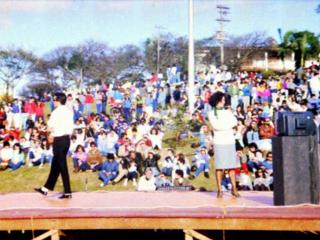
An additional presentation is recalled at Praça Benedito Calixto. The surviving performance photograph provides visual evidence of Ricardo Viviani and Renata Melo performing outdoors before an audience. The photographic record is particularly significant because Viviani’s studio address, printed on the surviving release, was also at Praça Benedito Calixto.
Production
The production combined choreography, performance, computer equipment, sound, text and visual experimentation.
The surviving release states that the computer equipment was provided by Microdigital Computadores. The release describes a stage environment containing four monitors and three computers. The equipment therefore formed part of the performance environment and choreographic conception rather than functioning solely as technical support.
The surviving computer equipment is still held in Ricardo Viviani’s archive. These machines constitute important physical evidence of the technological environment in which this work was developed and should eventually be documented as archival objects, including their models, configuration and surviving software or media where identifiable.
Intellectual Production
The production represents an early form of artistic research in which computer technology was treated as a compositional partner in dance rather than simply as a recording or administrative tool.
The surviving release describes the computer system as contributing data that determined relationships and sequences within the performance. This provides direct evidence of an attempt to translate computational processes into choreographic structure.
The work is therefore relevant to the history of Viviani’s research into new dance forms, as well as to the broader intersection of dance, experimental performance and early personal-computer culture in Brazil.
Primary Source / Documentation
The principal primary source for this record is a surviving thermal-paper press release / artistic information document associated with the production. Its typography, 8-bit graphics and physical format are themselves part of the production history.
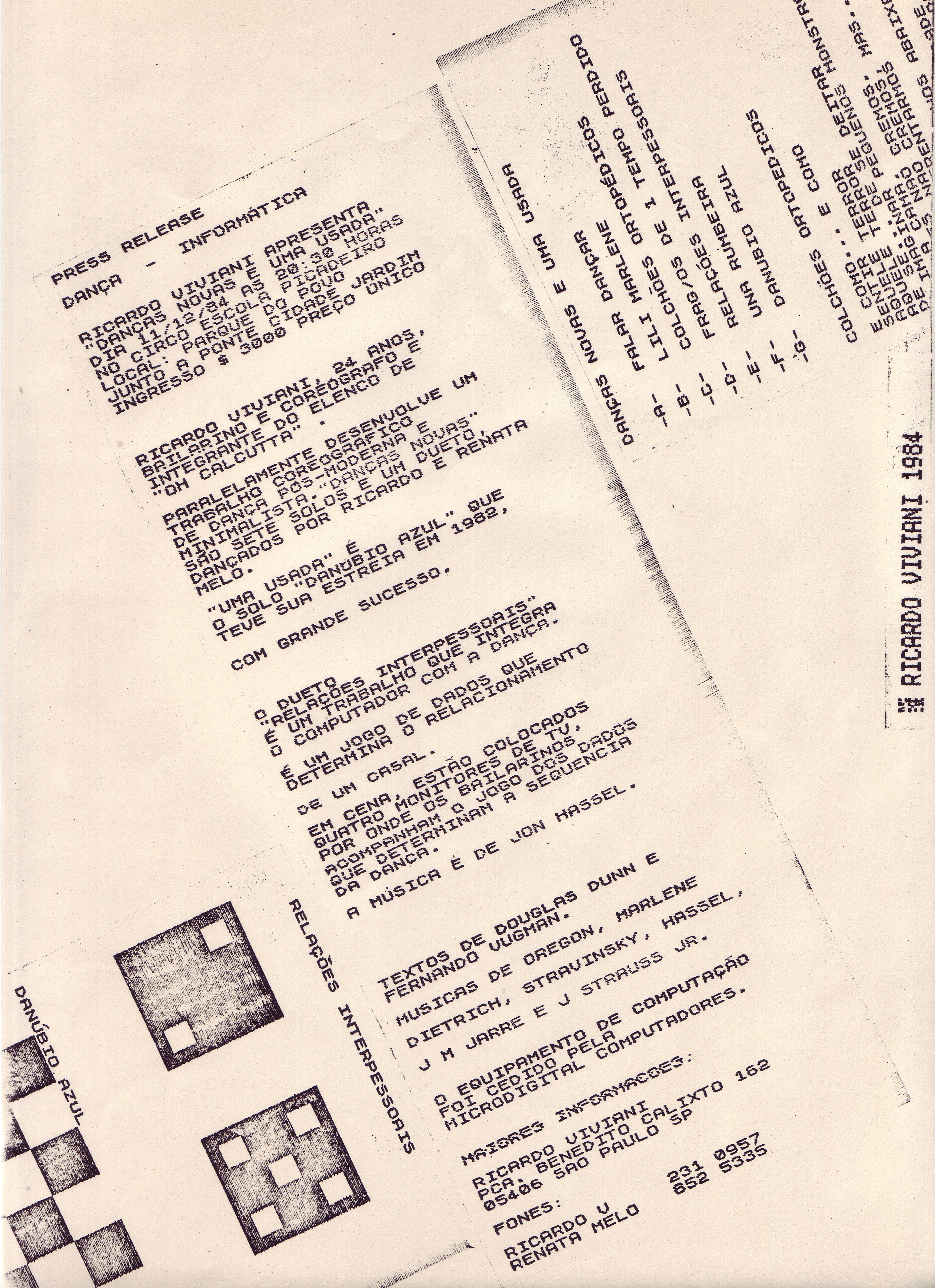
The document is particularly important because it preserves information that would otherwise be difficult to reconstruct: the documented venue, date and time; the relationship between the existing and new works; the participation of Renata Melo; the use of computers and monitors within the performance; the musical and textual credits; the equipment provider; and Ricardo Viviani’s studio address.
The 8-bit graphics are not treated here as incidental decoration. They form part of the surviving visual language of the project and provide evidence of the connection between the graphic, technological and choreographic aspects of the work.
Research
This record contributes to a larger chronology of Ricardo Viviani’s experimentation during the early and mid-1980s.
The surviving documentation establishes a connection between the 1982 Danúbio Azul, the 1984 presentation documented by the press release, and subsequent work involving Relações Interpessoais / Serious Talk and Colchões Ortopédicos.
The relationship between the different dates and presentations should remain historically explicit rather than being reduced to a single creation date. The archive currently contains evidence from 1983 and 1984, including the press release, performance photography and later documentation. Further examination of surviving papers, computers, photographs and other materials may refine the chronology.
Relationship
Relações Interpessoais is particularly important to the genealogy of this production. The surviving documentation establishes the Portuguese title, while later documentation identifies Serious Talk as its English title. These should be treated as two titles for the same work, not as separate choreographies.
The computer-based research documented here also connects directly with the later development and presentation of Viviani’s work in New York and with the technological and graphic experiments visible in the surviving 1984 documentation.
This production should therefore be read as part of a continuing line of investigation rather than as an isolated event.
Place / Context
The documented venue was Circo Escola Picadeiro, Parque do Povo, São Paulo.
The archive also contains photographic evidence of an outdoor presentation at Praça Benedito Calixto. This location has particular significance because Ricardo Viviani’s studio was situated at Praça Benedito Calixto 162, the address printed on the surviving release. The studio was not simply an administrative address: it was a place where Viviani lived, rehearsed and gave dance classes.
The proximity between studio, rehearsal activity, teaching and public presentation forms an important part of the working context of this period. The Praça therefore represents both a geographic and an artistic context for the production.
Personal Reflection
This work belongs to a period when the computer itself became part of the artistic investigation. The surviving machines, the early computer graphics and the performance documentation preserve a moment when technology was being explored directly through dance and choreography.
Archival Material
- Surviving thermal-paper press release / artistic information document
- 8-bit graphics incorporated into the surviving printed document
- Surviving computers used in the production
- Performance photograph of Ricardo Viviani and Renata Melo at Praça Benedito Calixto
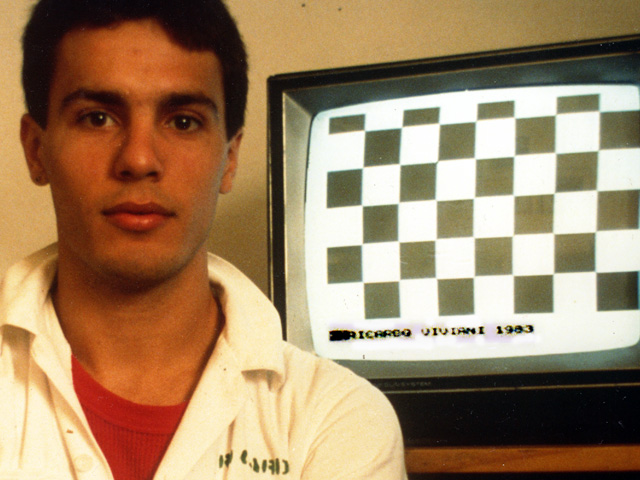
- Production-related photographs and computer-art images
- Printed studio address and contact information contained in the original release
Post Scriptum
05 September 2026: Examination of the surviving press release has corrected and strengthened the production record. The documented presentation is at Circo Escola Picadeiro, Parque do Povo, São Paulo, on 11 December 1984 at 20:30. The document also identifies Microdigital Computadores as the provider of the computer equipment.
The same document provides direct evidence that computers and monitors formed part of the performance structure of Relações Interpessoais, and that the production employed an identifiable 8-bit graphic language. A surviving photograph additionally documents a presentation involving Ricardo Viviani and Renata Melo at Praça Benedito Calixto.
Contribution / Significance
Danças Novas e uma Usada is significant within Ricardo Viviani’s archive because it documents an early and unusually direct encounter between dance and computer technology.
The surviving evidence shows that computing was incorporated into the artistic process itself: computers, monitors and data formed part of the performance environment and contributed to the organisation of choreographic relationships and sequences.
The production also preserves an important visual and material record of early computer-art experimentation in the context of Brazilian independent dance. The 8-bit graphics, thermal-paper documentation and surviving machines together provide evidence of an artistic practice developing across choreography, technology, graphic design and live performance.
Assessment / Relevance
The record is supported by a surviving primary document and photographic evidence, while some aspects of the chronology remain open to further archival research. The documented Circo Escola Picadeiro presentation should be distinguished from the additional Praça Benedito Calixto presentation, which is supported by photographic evidence and recollection.
The surviving computers should be considered significant archival objects and may provide further evidence concerning the technical system used in the production. Future examination may establish the specific models, software, peripherals and method by which computer-generated data entered the choreographic process.
Keywords
Danças Novas e uma Usada · Ricardo Viviani · Renata Melo · Relações Interpessoais · Serious Talk · Danúbio Azul · dance · choreography · computer art · computer dance · 8-bit graphics · Microdigital · São Paulo · Parque do Povo · Circo Escola Picadeiro · Praça Benedito Calixto · experimental dance · artistic research · technology · 1983 · 1984
Internal Links
1983/84 Press Release — Danças Novas e uma Usada
Performance at Praça Benedito Calixto — Ricardo Viviani and Renata Melo
Colchões Ortopédicos — Dance Concert 1988
Blue Danube @ DanceSpace NYC 1986
Archival Note: This page forms part of an ongoing personal archive documenting Ricardo Viviani’s professional work and activities over more than four decades. Names and other personal information appear where relevant to the documented work or collaboration. If you believe that information concerning you has been published incorrectly or should be reconsidered, please contact me.