Voices from Kyiv – Script

An evening to immerse in the vibrant dance culture of Ukraine

Stimmen aus Kyiv

Wie Tanz Menschen in Kriegszeiten zusammenhält.

Am 8. Oktober lädt die Insel zu einem Abend, der zeigt, wie Bewegung und Gesang Gemeinschaft stiften, selbst wenn die Welt um einen herum zerbricht.

Ricardo Viviani berichtet von seiner zehntägigen Arbeit in Kyiv im Dezember 2025: einer Stadt, die im Ausnahmezustand weiter tanzt und singt – und damit ihre eigene kulturelle Kontinuität verteidigt. Videoausschnitte, Gespräche und Erinnerungen formen eine verkörperte Oral History, in der Tanz als Wissensträger, als Archiv und als Widerstandskraft erscheint.

Der Abend gibt einen Einblick in jene Momente, in denen Tanz und Gesang Menschen zusammenhalten: in Schutzräumen, auf improvisierten Bühnen, im Museum mit Notstrom. Begegnungen mit Künstlerinnen, Archivleiterinnen und jungen Tänzern eröffnen ein neues Verständnis von Tanz als immateriellem Erbe – und zeigen, warum diese Arbeit gerade jetzt notwendig ist.

Ein Abend über menschliche Resilienz, Körpergedächtnis und die Kraft von Tanz und Gesang, Humanität zu bewahren.

Ricardo Viviani arbeitet als Choreograph und Oral‑History‑Forscher in Wuppertal; seine Interviews im Pina‑Bausch‑Archiv, seine dokumentarischen Arbeiten und seine Texte erkunden die flüchtige Verbindung zwischen Körper und Vermächtnis. Der Countertenor Vladyslav Shkapurupilo, Gewinner des Willy‑Caron‑Awards 2026, bringt eine junge ukrainische Stimme in den Abend ein.


About the Project

Dance is memory in motion.

When a dance disappears, it is not only a performance that is lost. Knowledge disappears with it: ways of moving, teaching, creating, gathering, celebrating, resisting and belonging. Some of that knowledge remains in archives. Much of it remains in people.

This is the starting point of Oral History for Dance Heritage, a project developed with Ukrainian artists, researchers and museum professionals in Kyiv. The work asks a simple but difficult question: how can dance become part of cultural heritage when so much of it is carried by living bodies and memories?

I came to this project through many decades of dancing, choreography, teaching and research, followed by ten years of Oral History work at the Pina Bausch Foundation. There I had the opportunity to develop, test and mature my practice in an important archival environment in my field, working with dancers and other professionals involved in Tanztheater.

But the Ukrainian project is not simply an application of that experience. It is a meeting with another dance culture and another history.

Dance has many faces. There are works created for the stage, but also social dances, traditional dances, street and club practices, dance in schools, music videos, contemporary projects, community work and many other forms. Each carries knowledge about the people and societies in which it exists. Much of this history is poorly documented, scattered among private collections, memories and personal archives.

During my stay in Kyiv, I conducted interviews with people whose experiences form part of this living history. These conversations became part of the larger process of thinking about how Ukrainian dance might be documented, preserved and brought into museum and heritage practice.

The National Art Museum of Ukraine has since begun developing protocols for taking dance into its collection. This is an important step: not only preserving objects about dance, but creating ways for the knowledge and histories surrounding dance to enter an institution traditionally built around material works.

Why It Matters

Preserving cultural memory can seem secondary in times of war. I believe it is not.

Culture is part of how people recognize themselves, remember where they come from and imagine what comes next. To document dance is therefore not simply to preserve performances. It is to preserve human experience and the many ways people have moved through history.

The Kyiv Material

During my ten-day stay in Kyiv in December 2025, I conducted Oral History interviews with artists and other professionals involved in Ukrainian dance and its cultural context. The interviews form part of the documentary material behind Voices from Kyiv.

The evening brings selected voices together with moving images and excerpts from my report on the project. The intention is to allow the testimonies to be encountered alongside the dance itself, rather than treating the interviews as explanations of it.

Lullabies

Ukrainian lullabies form a further part of the evening. Performed by Ukrainian countertenor Vladyslav Shkarupilo, the songs introduce another form of cultural transmission: voice, memory, childhood and the passing of experience between generations.

The lullabies are not presented as an illustration of the dance material. They offer another way into Ukrainian culture through a form of knowledge carried by voice and transmitted across generations.

An Evening in Three Voices

Report — an extended account of the project and its questions.

Oral History — excerpts from interviews conducted in Kyiv, accompanied by dance footage.

Song — Ukrainian lullabies performed live, bringing another dimension of cultural memory into the room.

Together, these elements create an evening in which Ukrainian dance culture can be encountered through testimony, movement and song.

Archival Material:
Project report; Oral History interviews conducted in Kyiv; video excerpts; photographs and archival documentation; presentation material; Ukrainian lullabies.


Continue reading “Voices from Kyiv – Script”
Stimmen aus Kyiv

Eine Veranstaltung im Rahmen von Stimmen aus Kyiv

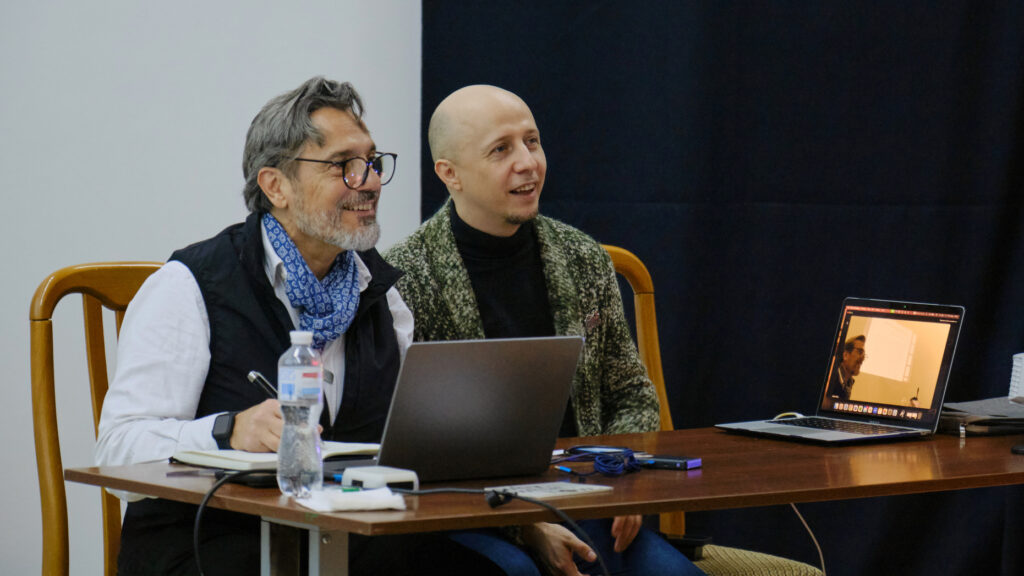
Two men sitting in a desk with open laptops
Ricardo Viviani und Viktor Ruban – Foto: Solomiia Kozolup solomika.art@gmail.com

Stimmen aus Kyiv

Wie Tanz Menschen in Kriegszeiten zusammenhält.

8. Oktober 2026 · INSEL Wuppertal

Am 8. Oktober lädt die Insel zu einem Abend, der zeigt, wie Bewegung und Gesang Gemeinschaft stiften, selbst wenn die Welt um einen herum zerbricht.

Ricardo Viviani berichtet von seiner zehntägigen Arbeit in Kyiv im Dezember 2025: einer Stadt, die im Ausnahmezustand weiter tanzt und singt – und damit ihre eigene kulturelle Kontinuität verteidigt. Videoausschnitte, Gespräche und Erinnerungen formen eine verkörperte Oral History, in der Tanz als Wissensträger, als Archiv und als Widerstandskraft erscheint.

Der Abend gibt einen Einblick in jene Momente, in denen Tanz und Gesang Menschen zusammenhalten: in Schutzräumen, auf improvisierten Bühnen, im Museum mit Notstrom. Begegnungen mit Künstlerinnen, Archivleiterinnen und jungen Tänzern eröffnen ein neues Verständnis von Tanz als immateriellem Erbe – und zeigen, warum diese Arbeit gerade jetzt notwendig ist.

Ein Abend über menschliche Resilienz, Körpergedächtnis und die Kraft von Tanz und Gesang, Humanität zu bewahren.

Ricardo Viviani arbeitet als Choreograph und Oral‑History‑Forscher in Wuppertal; seine Interviews im Pina‑Bausch‑Archiv, seine dokumentarischen Arbeiten und seine Texte erkunden die flüchtige Verbindung zwischen Körper und Vermächtnis. Der Countertenor Vladyslav Shkapurupilo, Gewinner des Willy‑Caron‑Awards 2026, bringt eine junge ukrainische Stimme in den Abend ein.


Weitere Informationen zum Projekt und zur Dokumentation des Abends finden sich im Archiv-Eintrag „Voices from Kyiv“.

Finding Your Own Voice – Workshop

Visual organization of archival dance material
Archival material as a source for observation and artistic creation

Type: Workshop Proposal · Heritage / Artistic Practice
Status: Available for booking
Context: Dance archives, heritage projects, artistic education and training
Role: Workshop Leader · Artist · Methodological Mentor


Look at the archives. Find what moves you in it. Create.

This workshop begins with an encounter with dance heritage. Archival photographs, documents, costumes, gestures and other visual traces are approached not only as historical evidence, but as material for observation and artistic inquiry.

Participants look for elements that can be understood through dance: posture, gesture, rhythm, space, relationship, atmosphere, or movement quality. These observations can then become impulses for their own movement vocabulary and creative work.

“Your Voice” has two related meanings. It can mean finding words for what one sees, experiences and wants to communicate. It can also mean finding a movement vocabulary through which personal concerns can be expressed.

The workshop therefore moves between seeing, articulating, moving and creating. Historical material is not reproduced as an answer; it becomes a starting point for contemporary work.

Drawing on Ricardo Viviani’s experience as a choreographer, educator and Oral Historian, the workshop combines artistic practice with archival observation. Exercises, discussion, feedback and creative assignments allow participants to test what they discover through the body as well as through language.

The format can be adapted to universities, dance schools, artistic training programmes, archives, museums and heritage projects. It may be developed around a particular collection, local history or thematic archive.

Archival Material:
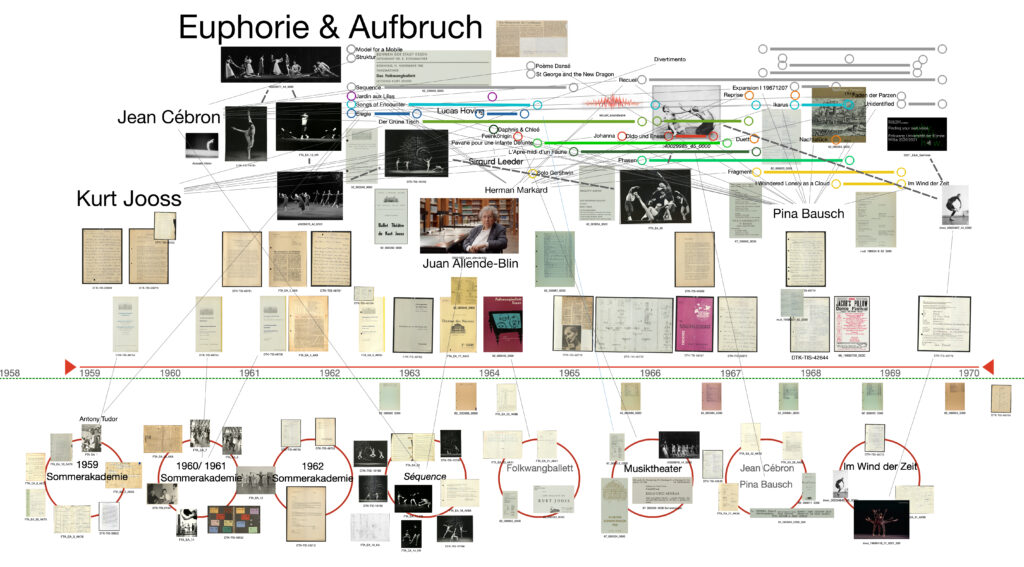
Workshop proposal; related visual-history material; examples from Euphorie und Aufbruch; selected archival images and documents used as artistic impulses.


Continue reading “Finding Your Own Voice – Workshop”

Embodied Knowledge Articulated – Reflections on 10 Years of Oral History Collection

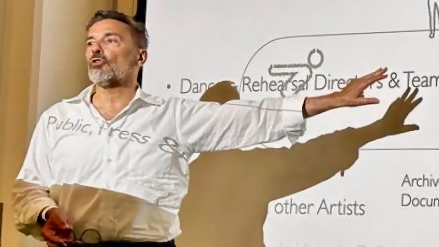
Ricardo Viviani — Photo: Barbara Kaufmann

Type: Presentation
Date: 26 June 2026
Context: International Conference Pina Bausch – From Ritual to Romance, Bergische Universität Wuppertal
Institution: Pina Bausch Foundation
Role: Presenter / Researcher

Speakers / Moderation:
Ricardo Viviani
Isabelle Charnavel
Laura Wiemer — Moderator


Embodied Knowledge Articulated
Reflections on Ten Years of Oral History Collection of the Pina Bausch Archives

This presentation reflected on ten years of Oral History work at the Pina Bausch Archives and on the experiences accumulated through working with dancers and collaborators of Tanztheater. The material considered how oral testimony can bring aspects of artistic experience, memory and professional life into historical documentation.

Drawing on approximately seventy interviews, the presentation addressed questions arising from the documentation of dance as a lived and embodied practice. It considered testimonies in relation to artistic processes, formation, cultural encounters and personal histories, and examined what such accounts can contribute to the understanding of Tanztheater.

The contribution was presented within the conference section Epistemologies and Forms, placing the experience of a long-term Oral History collection in dialogue with other approaches to knowledge in and through dance.

Archival Material:
Presentation material; conference documentation; presentation photograph; related Oral History documentation.


Continue reading “Embodied Knowledge Articulated – Reflections on 10 Years of Oral History Collection”

Embodied Personality – at II Personality as a Space for Challenge and Formation of Culture Conference

Type: Presentation
Date: 5 May 2026
Context: II International Scientific and Practical Conference “Personality as a Space for Challenge and Formation of Culture”
Location: Kyiv, Ukraine
Institution / Organisation: National University of Physical Education and Sport of Ukraine (NUPESU)
Role: Presenter
Status: Conference Abstract / Public Record


Embodied Personality in the National Cultural Space This presentation examines how embodied personality functions as a national cultural space in which values, memories, and artistic genealogies are formed and transmitted. Drawing on my practice as a dance artist and oral historian, I consider how verbal historical records can emerge from non-logocentric, embodied processes, and how such approaches reveal relationships between subjectivity, social environments, and cultural memory.

Continue reading “Embodied Personality – at II Personality as a Space for Challenge and Formation of Culture Conference”

Work with me

I work with artists, dance companies, universities, archives and cultural institutions, bringing together experience as a dancer and choreographer with many years of research, teaching and Oral History work.

Universities & cultural institutions
Lectures, seminars, workshops, research and artistic inquiry

Dance companies & ensembles
Mentoring, dramaturgical and artistic consultation, composition and creative processes

Independent choreographers & artists
Composition, choreography, mentoring and archival strategies

Archives & heritage organisations
Oral History, project design, documentation and activating archives

Cultural organisations
Research, writing, documentation and embodied knowledge

You may be looking for someone who can:

  • give a lecture on Oral History and dance
  • teach composition or choreography
  • provide an outside eye during a creative process
  • develop an Oral History or dance-heritage project
  • connect archival material with artistic practice
  • work with embodied knowledge and its documentation
  • bring practical experience of dance into research and institutional contexts
  • work internationally across languages and cultures

My work is particularly suited to projects that need to move between practice, research, heritage and artistic creation.

Tell me about your institution, company or project, what you are looking for, and where you are based. I work internationally in English, German, Portuguese and Italian.

Invite me to speak
Invite me to teach / mentor
Discuss an oral-history, heritage or research project

Kyiv Press Conference

Type: Press Conference · Video Transcript Summary
Date: 23 December 2025
Context: Presentation of the results and future plans of Oral History for Dance Heritage
Location: Ukrainian Crisis Media Center, Kyiv, Ukraine
Subject: Developing a museum protocol for archiving dance
Related Workshop: Oral History for Dance Heritage, 1–6 December 2025

Speakers:
Viktor Ruban
Daryna Yakymova
Ricardo Viviani and representatives of Ukrainian museum and dance institutions, as referred to during the press conference


Press Conference: Oral History for Dance Heritage

This page presents an English summary of the transcript of a publicly available video recording of a press conference held by the Ukrainian Crisis Media Center. The conference presented the results of the Oral History for Dance Heritage project and discussed the next steps following the December 2025 workshop at the National Art Museum of Ukraine (NAMU).

The conference focused particularly on the development of a protocol through which dance could be documented and incorporated into a museum collection. Project curator Viktor Ruban described the work as part of the broader DancePlan Ukraine initiative and as a pilot approach to preserving performative arts through the integration of oral testimony, embodied knowledge and contextual information.

According to Ruban, the protocol responds to the difficulty of preserving dance through conventional museum practices. Dance is not only a performance event but also a social and cultural practice whose histories may disappear when documentation is absent. He emphasized the need to preserve testimonies, archival evidence and research in order to strengthen historical continuity and the visibility of Ukrainian dance.

Daryna Yakymova, curator at NAMU, presented the newly developed three-part protocol for archiving dance:

  1. Metadata — title, authorship, performance history, dance category, format, structure, participants, documentation such as video, photography and audio, and material elements including costumes and props.
  2. Oral History Archive — interviews with performers, choreographers, scenographers, musicians and other contributors, creating a multidisciplinary body of embodied and contextual knowledge.
  3. Reconstruction Protocol — guidelines for preserving essential elements of a dance work, identifying variable components, and documenting rights, licences and technical requirements relevant to future re-performance.

Yakymova explained that museums traditionally work through the preservation of material objects, while dance presents the additional challenge of preserving an ephemeral artistic form. Within the project, Oral History provided a method for extending the museum record beyond physical objects and for incorporating the knowledge and experience of the people who created and performed the work.

The press conference also emphasized the importance of Ricardo Viviani’s experience with Oral History at the Pina Bausch Foundation. His decade of work with dance practitioners was presented as an important reference for adapting Oral History to the Ukrainian context and to the specific requirements of dance heritage.

The speakers described the need for a systematic and accessible structure through which dance could be documented, researched and, where appropriate, reconstructed. In this framework, museum collection, Oral History, archival documentation and future artistic transmission become interconnected rather than separate activities.

The press conference therefore documents a concrete institutional development following the December workshop: the work moved from methodological experimentation toward the formulation of a protocol intended to allow dance to enter a museum collection as a form of cultural heritage.

Archival Material:
Video recording of the press conference; transcript summary; documentation relating to the Oral History for Dance Heritage workshop; material concerning the development of the NAMU dance-archiving protocol.


Continue reading “Kyiv Press Conference”