Voices from Kyiv – Script

An evening to immerse in the vibrant dance culture of Ukraine

Stimmen aus Kyiv

Wie Tanz Menschen in Kriegszeiten zusammenhält.

Am 8. Oktober lädt die Insel zu einem Abend, der zeigt, wie Bewegung und Gesang Gemeinschaft stiften, selbst wenn die Welt um einen herum zerbricht.

Ricardo Viviani berichtet von seiner zehntägigen Arbeit in Kyiv im Dezember 2025: einer Stadt, die im Ausnahmezustand weiter tanzt und singt – und damit ihre eigene kulturelle Kontinuität verteidigt. Videoausschnitte, Gespräche und Erinnerungen formen eine verkörperte Oral History, in der Tanz als Wissensträger, als Archiv und als Widerstandskraft erscheint.

Der Abend gibt einen Einblick in jene Momente, in denen Tanz und Gesang Menschen zusammenhalten: in Schutzräumen, auf improvisierten Bühnen, im Museum mit Notstrom. Begegnungen mit Künstlerinnen, Archivleiterinnen und jungen Tänzern eröffnen ein neues Verständnis von Tanz als immateriellem Erbe – und zeigen, warum diese Arbeit gerade jetzt notwendig ist.

Ein Abend über menschliche Resilienz, Körpergedächtnis und die Kraft von Tanz und Gesang, Humanität zu bewahren.

Ricardo Viviani arbeitet als Choreograph und Oral‑History‑Forscher in Wuppertal; seine Interviews im Pina‑Bausch‑Archiv, seine dokumentarischen Arbeiten und seine Texte erkunden die flüchtige Verbindung zwischen Körper und Vermächtnis. Der Countertenor Vladyslav Shkapurupilo, Gewinner des Willy‑Caron‑Awards 2026, bringt eine junge ukrainische Stimme in den Abend ein.


About the Project

Dance is memory in motion.

When a dance disappears, it is not only a performance that is lost. Knowledge disappears with it: ways of moving, teaching, creating, gathering, celebrating, resisting and belonging. Some of that knowledge remains in archives. Much of it remains in people.

This is the starting point of Oral History for Dance Heritage, a project developed with Ukrainian artists, researchers and museum professionals in Kyiv. The work asks a simple but difficult question: how can dance become part of cultural heritage when so much of it is carried by living bodies and memories?

I came to this project through many decades of dancing, choreography, teaching and research, followed by ten years of Oral History work at the Pina Bausch Foundation. There I had the opportunity to develop, test and mature my practice in an important archival environment in my field, working with dancers and other professionals involved in Tanztheater.

But the Ukrainian project is not simply an application of that experience. It is a meeting with another dance culture and another history.

Dance has many faces. There are works created for the stage, but also social dances, traditional dances, street and club practices, dance in schools, music videos, contemporary projects, community work and many other forms. Each carries knowledge about the people and societies in which it exists. Much of this history is poorly documented, scattered among private collections, memories and personal archives.

During my stay in Kyiv, I conducted interviews with people whose experiences form part of this living history. These conversations became part of the larger process of thinking about how Ukrainian dance might be documented, preserved and brought into museum and heritage practice.

The National Art Museum of Ukraine has since begun developing protocols for taking dance into its collection. This is an important step: not only preserving objects about dance, but creating ways for the knowledge and histories surrounding dance to enter an institution traditionally built around material works.

Why It Matters

Preserving cultural memory can seem secondary in times of war. I believe it is not.

Culture is part of how people recognize themselves, remember where they come from and imagine what comes next. To document dance is therefore not simply to preserve performances. It is to preserve human experience and the many ways people have moved through history.

The Kyiv Material

During my ten-day stay in Kyiv in December 2025, I conducted Oral History interviews with artists and other professionals involved in Ukrainian dance and its cultural context. The interviews form part of the documentary material behind Voices from Kyiv.

The evening brings selected voices together with moving images and excerpts from my report on the project. The intention is to allow the testimonies to be encountered alongside the dance itself, rather than treating the interviews as explanations of it.

Lullabies

Ukrainian lullabies form a further part of the evening. Performed by Ukrainian countertenor Vladyslav Shkarupilo, the songs introduce another form of cultural transmission: voice, memory, childhood and the passing of experience between generations.

The lullabies are not presented as an illustration of the dance material. They offer another way into Ukrainian culture through a form of knowledge carried by voice and transmitted across generations.

An Evening in Three Voices

Report — an extended account of the project and its questions.

Oral History — excerpts from interviews conducted in Kyiv, accompanied by dance footage.

Song — Ukrainian lullabies performed live, bringing another dimension of cultural memory into the room.

Together, these elements create an evening in which Ukrainian dance culture can be encountered through testimony, movement and song.

Archival Material:
Project report; Oral History interviews conducted in Kyiv; video excerpts; photographs and archival documentation; presentation material; Ukrainian lullabies.


Continue reading “Voices from Kyiv – Script”
Stimmen aus Kyiv

Eine Veranstaltung im Rahmen von Stimmen aus Kyiv

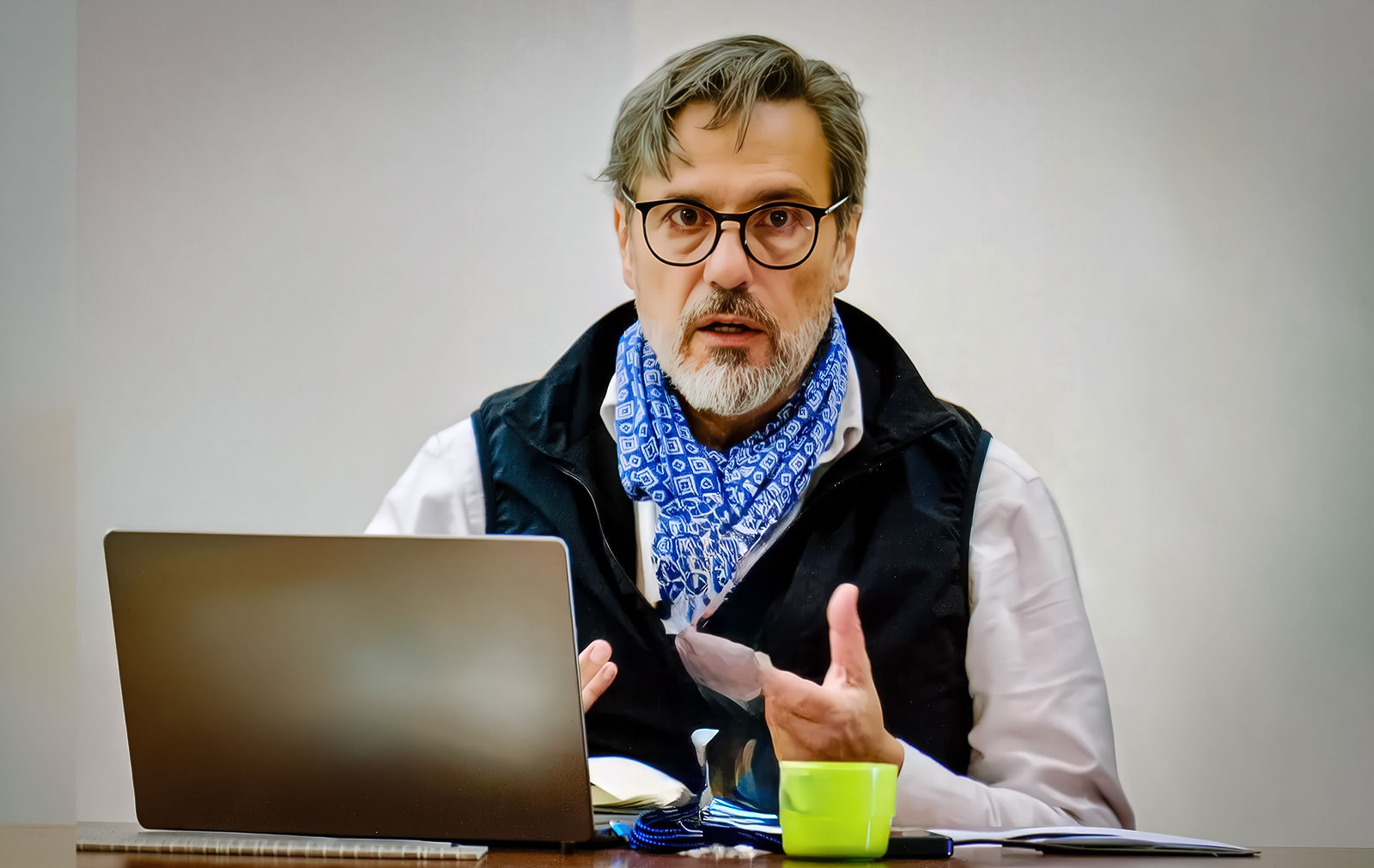
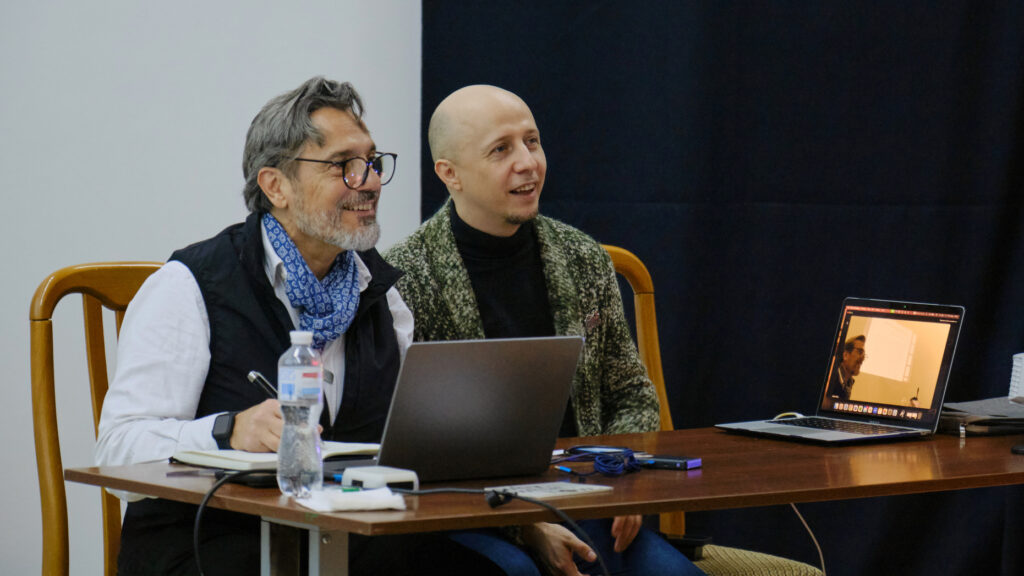
Two men sitting in a desk with open laptops
Ricardo Viviani und Viktor Ruban – Foto: Solomiia Kozolup solomika.art@gmail.com

Stimmen aus Kyiv

Wie Tanz Menschen in Kriegszeiten zusammenhält.

8. Oktober 2026 · INSEL Wuppertal

Am 8. Oktober lädt die Insel zu einem Abend, der zeigt, wie Bewegung und Gesang Gemeinschaft stiften, selbst wenn die Welt um einen herum zerbricht.

Ricardo Viviani berichtet von seiner zehntägigen Arbeit in Kyiv im Dezember 2025: einer Stadt, die im Ausnahmezustand weiter tanzt und singt – und damit ihre eigene kulturelle Kontinuität verteidigt. Videoausschnitte, Gespräche und Erinnerungen formen eine verkörperte Oral History, in der Tanz als Wissensträger, als Archiv und als Widerstandskraft erscheint.

Der Abend gibt einen Einblick in jene Momente, in denen Tanz und Gesang Menschen zusammenhalten: in Schutzräumen, auf improvisierten Bühnen, im Museum mit Notstrom. Begegnungen mit Künstlerinnen, Archivleiterinnen und jungen Tänzern eröffnen ein neues Verständnis von Tanz als immateriellem Erbe – und zeigen, warum diese Arbeit gerade jetzt notwendig ist.

Ein Abend über menschliche Resilienz, Körpergedächtnis und die Kraft von Tanz und Gesang, Humanität zu bewahren.

Ricardo Viviani arbeitet als Choreograph und Oral‑History‑Forscher in Wuppertal; seine Interviews im Pina‑Bausch‑Archiv, seine dokumentarischen Arbeiten und seine Texte erkunden die flüchtige Verbindung zwischen Körper und Vermächtnis. Der Countertenor Vladyslav Shkapurupilo, Gewinner des Willy‑Caron‑Awards 2026, bringt eine junge ukrainische Stimme in den Abend ein.


Weitere Informationen zum Projekt und zur Dokumentation des Abends finden sich im Archiv-Eintrag „Voices from Kyiv“.

Finding Your Own Voice – Workshop

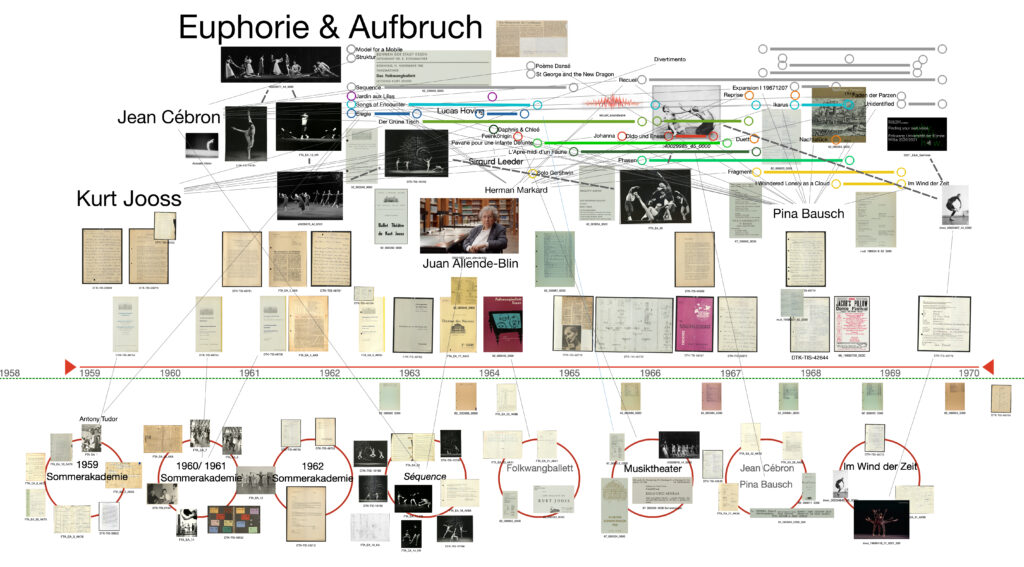
Visual organization of archival dance material
Archival material as a source for observation and artistic creation

Type: Workshop Proposal · Heritage / Artistic Practice
Status: Available for booking
Context: Dance archives, heritage projects, artistic education and training
Role: Workshop Leader · Artist · Methodological Mentor


Look at the archives. Find what moves you in it. Create.

This workshop begins with an encounter with dance heritage. Archival photographs, documents, costumes, gestures and other visual traces are approached not only as historical evidence, but as material for observation and artistic inquiry.

Participants look for elements that can be understood through dance: posture, gesture, rhythm, space, relationship, atmosphere, or movement quality. These observations can then become impulses for their own movement vocabulary and creative work.

“Your Voice” has two related meanings. It can mean finding words for what one sees, experiences and wants to communicate. It can also mean finding a movement vocabulary through which personal concerns can be expressed.

The workshop therefore moves between seeing, articulating, moving and creating. Historical material is not reproduced as an answer; it becomes a starting point for contemporary work.

Drawing on Ricardo Viviani’s experience as a choreographer, educator and Oral Historian, the workshop combines artistic practice with archival observation. Exercises, discussion, feedback and creative assignments allow participants to test what they discover through the body as well as through language.

The format can be adapted to universities, dance schools, artistic training programmes, archives, museums and heritage projects. It may be developed around a particular collection, local history or thematic archive.

Archival Material:
Workshop proposal; related visual-history material; examples from Euphorie und Aufbruch; selected archival images and documents used as artistic impulses.


Continue reading “Finding Your Own Voice – Workshop”

Embodied Knowledge Articulated – Reflections on 10 Years of Oral History Collection

Ricardo Viviani — Photo: Barbara Kaufmann

Type: Presentation
Date: 26 June 2026
Context: International Conference Pina Bausch – From Ritual to Romance, Bergische Universität Wuppertal
Institution: Pina Bausch Foundation
Role: Presenter / Researcher

Speakers / Moderation:
Ricardo Viviani
Isabelle Charnavel
Laura Wiemer — Moderator


Embodied Knowledge Articulated
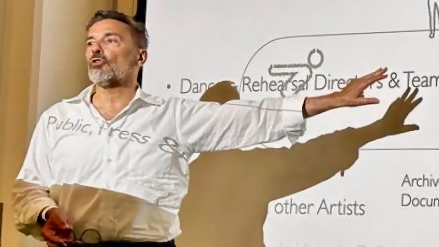
Reflections on Ten Years of Oral History Collection of the Pina Bausch Archives

This presentation reflected on ten years of Oral History work at the Pina Bausch Archives and on the experiences accumulated through working with dancers and collaborators of Tanztheater. The material considered how oral testimony can bring aspects of artistic experience, memory and professional life into historical documentation.

Drawing on approximately seventy interviews, the presentation addressed questions arising from the documentation of dance as a lived and embodied practice. It considered testimonies in relation to artistic processes, formation, cultural encounters and personal histories, and examined what such accounts can contribute to the understanding of Tanztheater.

The contribution was presented within the conference section Epistemologies and Forms, placing the experience of a long-term Oral History collection in dialogue with other approaches to knowledge in and through dance.

Archival Material:
Presentation material; conference documentation; presentation photograph; related Oral History documentation.


Continue reading “Embodied Knowledge Articulated – Reflections on 10 Years of Oral History Collection”

Embodied Personality – at II Personality as a Space for Challenge and Formation of Culture Conference

Type: Presentation
Date: 5 May 2026
Context: II International Scientific and Practical Conference “Personality as a Space for Challenge and Formation of Culture”
Location: Kyiv, Ukraine
Institution / Organisation: National University of Physical Education and Sport of Ukraine (NUPESU)
Role: Presenter
Status: Conference Abstract / Public Record


Embodied Personality in the National Cultural Space This presentation examines how embodied personality functions as a national cultural space in which values, memories, and artistic genealogies are formed and transmitted. Drawing on my practice as a dance artist and oral historian, I consider how verbal historical records can emerge from non-logocentric, embodied processes, and how such approaches reveal relationships between subjectivity, social environments, and cultural memory.

Continue reading “Embodied Personality – at II Personality as a Space for Challenge and Formation of Culture Conference”

Journey to Kyiv

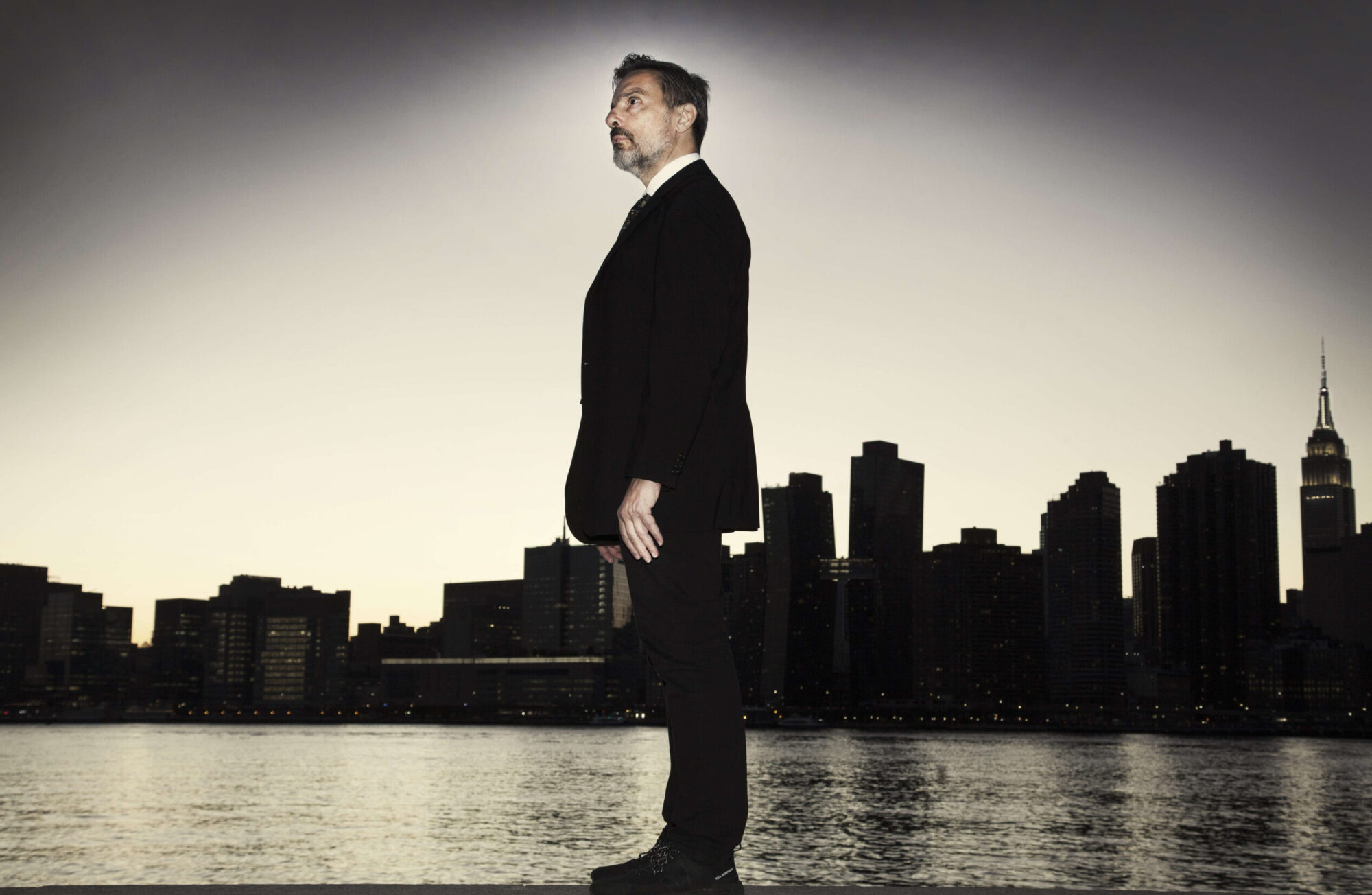
portrait of Ricardo in December 2025

Ricardo Viviani – Foto: Solomiia Kozolup

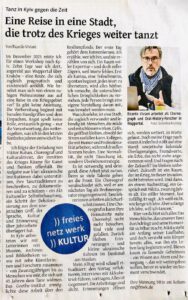
Dancing against time in Kyiv

A journey to a city that continues to dance despite the war


In December 2025, I traveled to Kyiv for a workshop. I spent ten days there, having traveled from Wuppertal via Kraków – a route that felt both pragmatic and existential. How does one prepare for a journey to a war zone from the comfort of a quiet living room? There are no instructions. Preparation begins with mundane tasks and packing. Fear plays no role, surprisingly enough – only the responsibility to pass on what I have developed over the past fifteen years.
I accepted the invitation of Viktor Ruban, choreographer and cultural activist, who keeps spaces open for art and thought amidst the war. The task was clear: to support Ukrainian institutions in describing, documenting, and protecting their dance traditions – an act of cultural self-assertion, a step towards decolonization from the Soviet grip that had overlaid language, culture, and memory for decades.

In Kyiv, we collaborated with directors of museums, archives, and libraries, as well as with ten artists and researchers—from twenty-somethings to people like myself who have dedicated themselves to dance for 45 years. The Goethe-Institut made this work possible through its Resilience Fund. The first day is dedicated to getting to know each other. I explain who I am, and they tell me about themselves. A room brimming with expertise—and yet filled with hesitation, because words fail us. Only when Karina, one of the participants, spontaneously begins translating each word does everything become audible. I try to understand the different urgency. Each person brings their own idea of ​​what needs to be preserved.

What I’m experiencing is a city that is both wounded and alive. People who seem tired yet determined. Cafes that remain open even though the power might go out. Colleagues who work with humor and professionalism while sirens wail outside. A normality that isn’t an illusion, but a survival strategy.

It is necessary and urgent to do this work now. So many talented people are going to the front. A choreographer says goodbye because he is being drafted as a drone operator the next day. Dance teachers are working as snipers. One choreographer can no longer visit her hometowns near Chornobyl. And many have fallen. What remains are memories – and small Ukrainian flags at the memorial on Maidan Square.

My daily routine quickly becomes ritualized: reflecting on the previous day, conducting interviews on battery power, giving presentations. Everything is in the present. The workdays are packed. Memories surface, are sorted, put into words. But my question about a children’s song hits a wall: Soviet colonial overlays, foreign words, a legacy no longer embraced. And questions about the future? They remain untouched. The future is a space that cannot be entered in war, in this invasion. And then, one afternoon, a conversation with Nikita, twenty years old. A quiet moment, almost accidental. He says: “I don’t know how long I’ll live. But as long as I live, I want to dance.”

Here, everything converges: the human element that permeates our dance and makes its humanity visible. Nikita is at the beginning of his career, and yet his body already understands everything that will accompany him throughout his life. This almost unfathomable secret—a knowledge born of breath and movement—that we want to pass on before it vanishes again in the moment.

Versão em Português


)) freies netz werk )) KULTUR e.V.