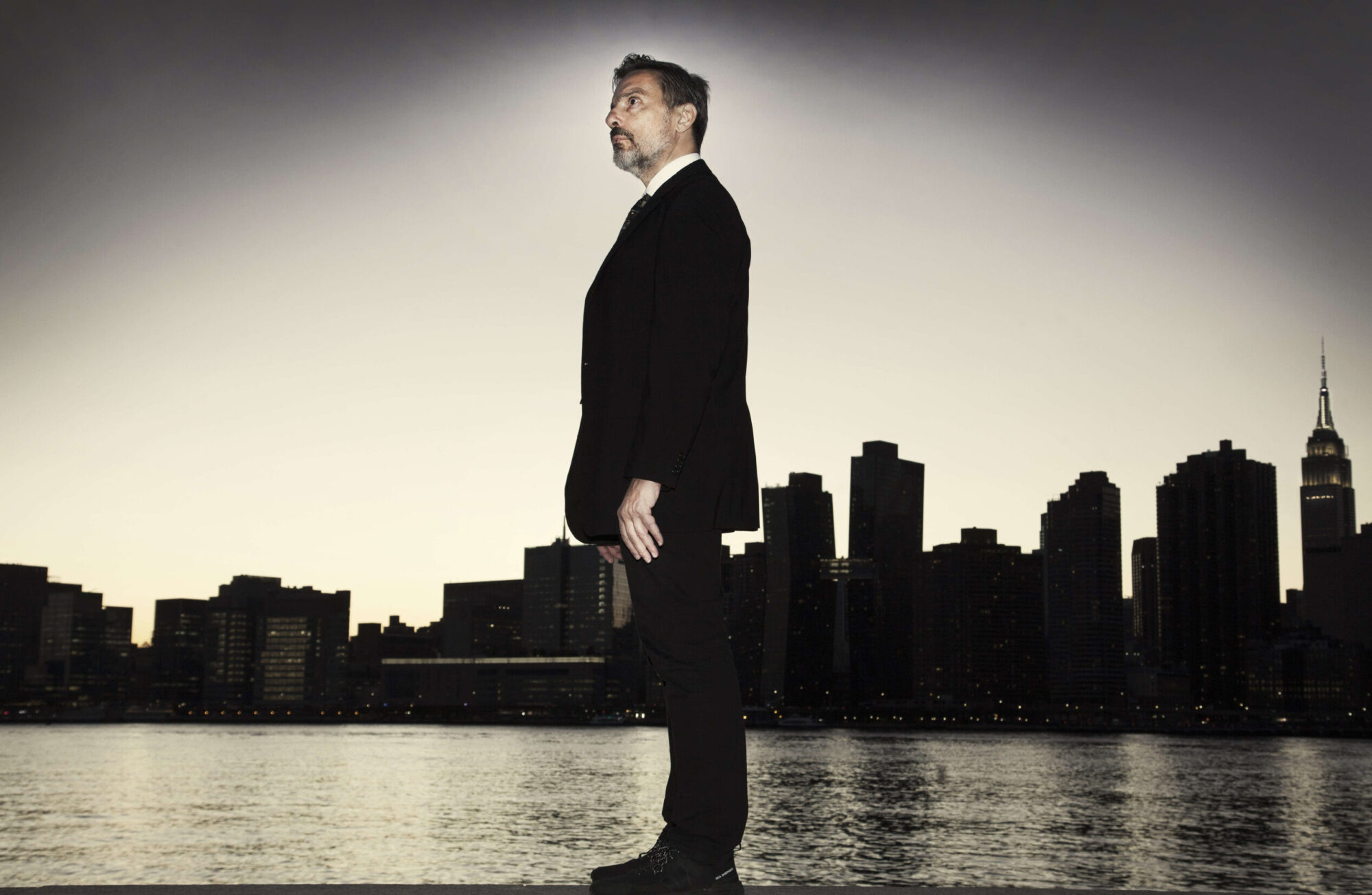
Mephisto – Work
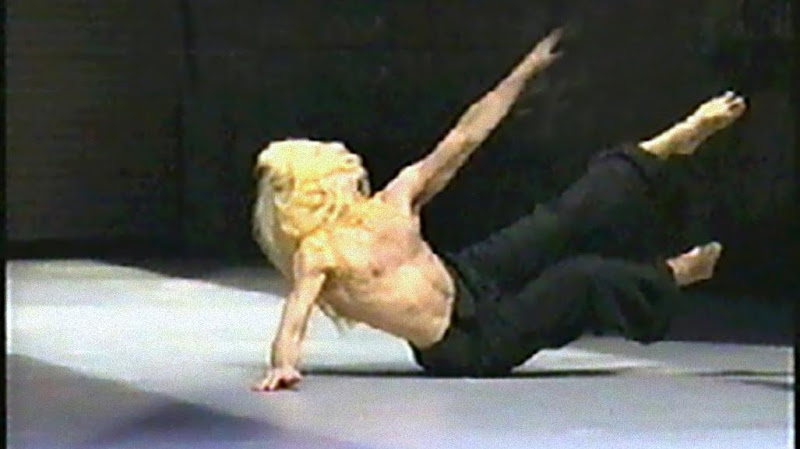
Serafim Ponte Grande
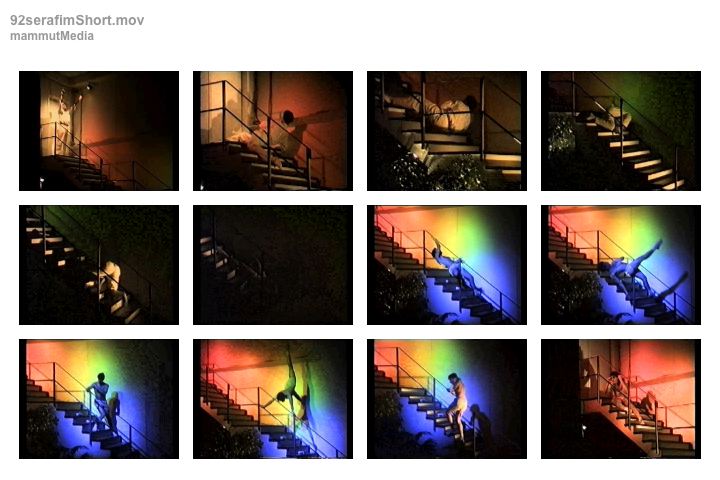
2012 Collision of Oswald de Andrade
and Vilém Flusser in media-dance.
Introduction
In the past years Brazil has seen immense changes in its social and anthropological organization. Changes that were fore- but un-seen by Vilém Flusser.
An acceleration and collision of Vilém Flusser’s views with the current practice of Brazilian theater and dance is the object of this research.
The project aims at catapulting Oswald de Andrade’s modernistic writings ‘Serafim Ponte Grande’ one hundred years later into the post-historic subset and clashing it some of Flusser’s concepts. Andrade discourses about a nomadic alter-ego – Serafim Ponte Grande in his excursions in the European early 20th century (1912).
This work is materialized in a reworking of the dramaturgy of a Tanztheater piece with music by Villa-Lobos (Köln 1992) for the group of the dance company from Palácio das Artes, Belo Horionte, MG Brazil, de-materializing it as video-HD recording in Brazil and re-assembling it during a residency at the Vilém Flusser Archiv colliding with text and concepts of Brazil, nomadism, and kitsch by Flusser.
The work would then put in the information networked-pool losing geography and temporality.
Manhãs de Minas – Oswald de Andrade
O teu cabelo é da cor das manhãs de Minas!O teu beijo é quente como o sol do Rio de Janeiro,Quando teus lábios reviram nos meus me envolvem do calor das águas de minha terra,O teu corpo é frio como o sepulcro do meu!Quando sais no foquestrotes aí por esses hotéis, na podridão das orquestras , sinto as tuas duas pontas espetarem o meu coração enquanto a minha lança se revolta contra a tua virgindade,Minha mão em concha apanha a tua bundaQuente , viva, musculosa e buliçosa,Encosto a cabeca na tua, aí por esses foquestrotes, por esses Charlestões,Encosto a língua na tua, mole, babosa, salivosa.
… Um dies zu erfassen, ist es zwar einfach, aber zu billig, Etymologie zu Hilfe zu rufen. Es ist zwar richtig, daß der Sitzende be-sitzt, und der Fahrende er-fährt, oder daß der Sitzende in der Gewohnheit wohnt und der Fahrende Gefahr läuft. … Vilém Flusser – Nomadische Überlegungen
Colchões Ortopédicos – Dance Concert
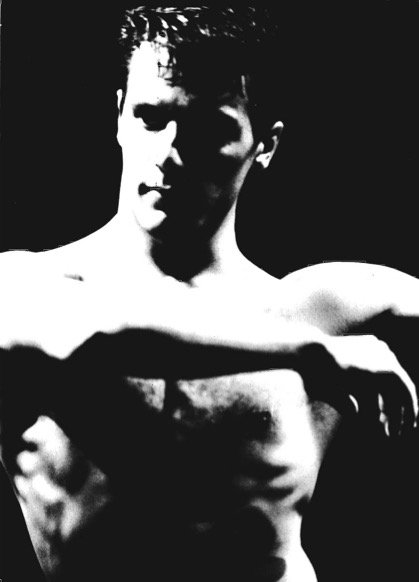
Type: Production · Dance Concert / Presentation
Date: 29–30 October 1988
Time: 8:00 PM
Context: An evening of Brazilian new dance presenting repertory works and new works by Ricardo Viviani
Location: Dance Space, 622 Broadway, New York City
Institution / Organisation: Dance Space; self-produced by Ricardo Viviani; assisted by Dance Theater Workshop
Role: Choreographer · Performer · Producer / Presenter
Participants: Ricardo Viviani; Cheryl Hartley; Fernanda Meyer; Mark Bridges; Marcelo Galbetti; Fernando Vugman; additional production personnel as documented below
Status: Historical Record — documented by surviving programme and press material
Record / Description
Colchões Ortopédicos was the title of Ricardo Viviani’s self-produced evening of Brazilian new dance presented at Dance Space in New York City on 29 and 30 October 1988. The surviving programme describes the event as an evening bringing together repertory and newly developed works, and identifies Dance Theater Workshop as an assisting organisation.
The programme documents six works: Girl, Serious Talk, Blue Danube, Pavões, Colchões Ortopédicos (Orthopedic Mattresses) and Rubber Gloves. It therefore provides an important production-level record of a period in which Viviani’s Brazilian and New York choreographic histories were being brought together within the context of what was described publicly as Brazilian new dance.
The production is particularly significant because the programme does not present the works as isolated creations. It places works from different moments of Viviani’s development into one evening, including Blue Danube, identified as dating from 1982, Colchões Ortopédicos, dated 1984–88, and Rubber Gloves, identified as a 1988 premiere. This chronology makes the concert an important document for understanding the continuity and transformation of Viviani’s choreographic practice during the 1980s.
The Work / Creation
The surviving programme establishes the following six works within the concert:
- Girl — solo; music by Tom Jobim; choreography by Ricardo Viviani; danced by Cheryl Hartley.
- Serious Talk — duet; music by Antonio Carlos Jobim; choreography by Ricardo Viviani; danced by Cheryl Hartley and Ricardo Viviani.
- Blue Danube (1982) — solo; choreography by Ricardo Viviani; danced by Ricardo Viviani with Cheryl Hartley identified in the programme documentation.
- Pavões — work in progress; music by Heitor Villa-Lobos; costumes by Mark Bridges; danced by Fernanda Meyer.
- Colchões Ortopédicos / Orthopedic Mattresses (1984–88) — solo; text by Fernando Vugman; costumes by Mark Bridges; additional music by Marcelo Galbetti; bilingual version, choreography and soundtrack by Ricardo Viviani; danced by Ricardo Viviani.
- Rubber Gloves (1988) — premiere; duet; music by Heitor Villa-Lobos; costumes by Mark Bridges; choreography by Ricardo Viviani; danced by Cheryl Hartley and Ricardo Viviani. The programme notes that the solo in Rubber Gloves was dedicated to Viviani’s father.
These works should ultimately receive individual records where their histories, movement vocabularies, collaborators, music, costumes, performances and critical documentation can be developed in detail. This production record should remain focused on their coming together within the 1988 concert.
Activity / Event
The concert took place on Saturday 29 and Sunday 30 October 1988 at 8:00 PM at Dance Space, 622 Broadway, New York City. The surviving programme identifies the event as a presentation by Ricardo Viviani and describes it as an evening of Brazilian new dance.
The concert was self-produced and was assisted by Dance Theater Workshop. The programme acknowledges Norman Kean, Ron Nash, Maria di Dia and the staff of the Edison Theater, particularly Karen, together with Tim McCormack, Phil Barbieri, Jodi Johnson, Bob Hillebrecht and Dan Carter. The production crew is identified as Jim Garvey, Mel Marwitz, Linda Miller and McCormack.
Production
The production was organised around a repertoire that crossed several phases of Viviani’s choreographic work. The programme itself provides a useful internal chronology: Blue Danube is identified as a 1982 work; Colchões Ortopédicos as dating from 1984–88; and Rubber Gloves as a 1988 premiere. Pavões is described as a work in progress.
The production also brought together a group of collaborators whose work extended beyond performance. Cheryl Hartley performed in several of the works; Fernanda Meyer performed Pavões; Mark Bridges was responsible for costumes for Pavões, Colchões Ortopédicos and Rubber Gloves; Fernando Vugman contributed the text for Colchões Ortopédicos; and Marcelo Galbetti provided additional music for that work.
The programme’s biographical material also places these collaborators within Viviani’s wider New York professional network. Cheryl Hartley is identified as having danced on Broadway in Oh! Calcutta! and as having toured Europe and the Middle East with Viviani. Mark Bridges is identified as a costume designer with theatre, film and television credits. Fernanda Meyer is described as a dancer, choreographer and teacher with professional activity in São Paulo, Japan, San Francisco and New York.
Intellectual Production
The production is also relevant to Viviani’s broader investigation of the relationship between humanity, technology, gesture and movement. However, the surviving 1988 programme functions primarily as production and historical documentation rather than as a separate intellectual publication. More developed statements concerning choreographic methodology, technology and the conceptual framework of individual works should be documented in their respective work or intellectual production records.
Primary Source / Documentation
The principal surviving production document currently located is the eight-page programme and press dossier for Colchões Ortopédicos, dated October 1988. It contains the event announcement, programme, artist biographies, acknowledgements, press listings and contemporary press material.
The programme establishes the exact performance dates, venue and address, the title of the evening, the six works presented, individual credits, performers, costume and music contributions, production assistance and a number of contemporary press references. It is therefore the primary source for the production metadata presently recorded on this page.
The same document contains contemporary press material describing Viviani as a São Paulo-born dancer and choreographer presenting an evening of Brazilian new dance in New York. One clipping states that the concert would present repertory pieces and new works, while another lists the Dance Space performances on 29 and 30 October.
The programme also preserves an important connection with the earlier history of Colchões Ortopédicos. It identifies the work as dating from 1984–88 and states that it had first been presented at Dança na Praça, an outdoor festival in São Paulo, Brazil. This provides a documented bridge between the Brazilian origins of the work and its New York development.
The programme further preserves the contemporary terminology surrounding the event: the evening is repeatedly described as Brazilian new dance. This wording is useful historically because it places Viviani’s work within the presentation and reception of Brazilian modern / contemporary dance in New York during the late 1980s.
Research
This production is a key source for reconstructing the development of Viviani’s choreographic practice during the 1980s. The chronological spread of the works makes it possible to examine how movement ideas, performance relationships, music, costume and technological or structural approaches persisted and changed across several years.
Serious Talk is particularly relevant to the history of Viviani’s interest in technology and systems of movement organisation. Earlier documentation connects the work with an outdoor project in Brazil and with computer-mediated variation of movement material. The exact chronology of its original creation should be reconciled against the surviving programme, interview material and other archival sources rather than assumed from a single later recollection.
Blue Danube provides another important chronological marker. The 1988 programme dates the work to 1982, while surviving New York documentation records its presentation with Cheryl Hartley and later critical response. The existing Blue Danube record should be expanded as an individual work record and then linked back to this production.
Colchões Ortopédicos is equally important because the programme gives it a 1984–88 date range and records its development from the Brazilian Dança na Praça context into the New York production. Its combination of text, bilingual presentation, soundtrack, choreography and additional music makes it a particularly useful individual record for documenting Viviani’s dance vocabulary and collaborative practice.
Relationship
This production is directly related to the six works documented in the 1988 programme: Girl, Serious Talk, Blue Danube, Pavões, Colchões Ortopédicos and Rubber Gloves. The production record establishes their relationship as a single concert programme; the individual work records should document their independent histories.
The production is also related to the professional collaboration between Ricardo Viviani and Cheryl Hartley, as well as to Mark Bridges’ costume work. These relationships connect the concert to Viviani’s wider New York performance history, including his professional association with Oh! Calcutta!.
The production is further connected to Viviani’s Brazilian choreographic history through Colchões Ortopédicos and the documented reference to Dança na Praça in São Paulo.
Place / Context
The 1988 concert belongs to the New York phase of Viviani’s professional career while retaining a strong connection with his Brazilian choreographic background. The programme explicitly presents the event as Brazilian new dance and identifies Viviani as a dancer and choreographer from São Paulo.
Dance Space, at 622 Broadway, provided the New York setting for the presentation. The production’s self-produced character, combined with assistance from Dance Theater Workshop, is also significant: it documents an independently organised presentation supported by an established dance organisation rather than a conventional commercial production structure.
Selected Work Contexts
Colchões Ortopédicos / Orthopedic Mattresses: The programme dates the work 1984–88 and credits text by Fernando Vugman, costumes by Mark Bridges, additional music by Marcelo Galbetti, and choreography, soundtrack and bilingual version by Ricardo Viviani. It was first presented at Dança na Praça, an outdoor festival in São Paulo. The work deserves a separate expanded record dealing with its movement vocabulary, text, soundtrack, bilingual structure and relationship to the later New York presentation.
Blue Danube: The 1988 programme identifies the work as dating from 1982. Existing documentation of its New York presentation records Ricardo Viviani and Cheryl Hartley and includes contemporary critical response, including Jennifer Dunning’s observation in The New York Times that the quality of movement in Blue Danube was particularly subtle and interesting. The individual work record should be developed as a pivotal document of Viviani’s early choreographic vocabulary.
Serious Talk: The programme identifies the work as a duet performed by Cheryl Hartley and Ricardo Viviani, with music by Antonio Carlos Jobim. Earlier documentation associates the work with a Brazilian outdoor project and with computer-mediated organisation of movement sequences. The chronology of its original creation should be established through comparison of the surviving interview, programme and other archival sources.
Pavões: The programme describes the work as a work in progress, with music by Heitor Villa-Lobos, costumes by Mark Bridges and Fernanda Meyer as performer. The work is part of the Brazilian cultural and Carnival-related material that appears elsewhere in Viviani’s archive. Mark Bridges’ recollection concerning the exceptionally large rear section of Fernanda Meyer’s costume — and his having to carry or walk with it through Manhattan from Midtown toward the venue — should be preserved in the individual work record as an identified personal recollection, rather than as independently verified production fact.
Girl: The programme identifies Girl as a solo choreographed by Ricardo Viviani and danced by Cheryl Hartley, with music by Tom Jobim. Its inclusion in the 1988 concert links the work to Viviani’s ongoing collaboration with Hartley.
Rubber Gloves: The programme identifies Rubber Gloves as a 1988 premiere, performed as a duet by Cheryl Hartley and Ricardo Viviani, with music by Heitor Villa-Lobos and costumes by Mark Bridges. It also records that the solo in the work was dedicated to Viviani’s father. This work was omitted from the earlier reconstruction of the concert and should now be treated as part of the documented 1988 programme.
Personal Reflection
[Add Ricardo Viviani’s retrospective reflection on the 1988 concert, the decision to present these works together, the experience of working with Cheryl Hartley and Mark Bridges, and the relationship between the Brazilian origins of the work and its New York presentation.]
Archival Material
Eight-page Colchões Ortopédicos programme / press dossier, October 1988; concert postcard; press clippings; contemporary listings; documentation for Girl; documentation for Serious Talk; documentation for Blue Danube; documentation for Pavões; documentation for Colchões Ortopédicos; documentation for Rubber Gloves; video documentation where available; photographs; and related archival correspondence and production material.
Primary archival document: Colchões Ortopédicos — programme and press documentation, October 1988.
Continue reading “Colchões Ortopédicos – Dance Concert”
Corpos / Norma Guimarães
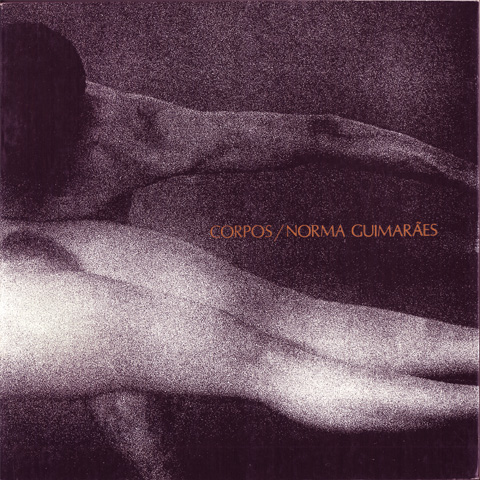
Corpos
ensaio fotográfico de Norma Guimarães
Apresentação de Gilberto Di Pierro
prefácio de Jacob Klintowitz
Massao Ono Editor 1987
Edição de 700 exemplares
Paperback circa 40 pages
Shop
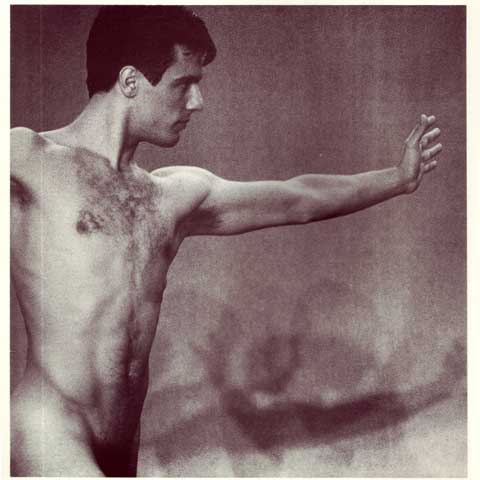
Luzes, ação, click. Arte e objetiva, arte-objetiva, click. Rostos, corpos, click. Sombras, magias, click. Pés, peitos, coxas. Click, click, click. Olhos sensuais, bocas sensuais, corpos sensuais. Danças, click, sons, click, sexo, click. Há uma mão que passa no corpo que olha para os olhos que espiam outras mãos passando em outros corpos que olham para outros olhos. Pele, pele, pele. Suor, perfume, magia. Esta é uma viagem fotográfica de Norma Guimarães pelos corpos e pelos pêlos de bailarinos, atrizes. Este é um documento fotográfico de um espetáculo onde os corpos encontraram as artes e, pelo vão da porta, encontraram a máquina fotográfica de Norma Guimarães.
Gilberto Di Pierro (Giba Um)
Com: Inês Aguiar, Ricardo Viviani, Manuela Assunção, Flávio Cardoso, Vera Mancini, Fernando Wellington, Miriam Lins e Graça Bermam
Blue Danube @ DanceSpace NYC 1986
Alternatives: Vimeo Outside Germany: YouTube
reviews

The Village Voice by Bruce Supree
Serious Talk – New York City
… Darkly handsome, Viviani has the masculine power of the young Robert Mitchum, but he’s hot, not cool. Joining Hartley for Serious Talk, he’s slightly menacing, controlled, agressive — but unhurried. A ’40s film noir, Mickey Spillane kind of guy — but he doesn’t lay a hand on her. … Viviani’s in formal pants, black suspenders, a sleeveless undershirt. He slowly raises his arms, folds them across his chest. He points his index finger, then with the other hand pushes softly in the opposite direction with measured force. Repeating gestures, speeding them up, adding more, he produces a steady flow of contradictory impulses, while playing off the waltz rhythms. He opens his hands with a kind of helpless strength, then draws them in to his chest and cringes. The accelerating repetition of impassioned gestures gradually builds as unbearable pressure of feeling in him.

The New York Times
by Jennifer Dunning
Blue Danube – New York City
… Mr. Viviani, a relatively new choreographer, took simple themes and dealt with them with admirable simplicity … The quality of movement is most subtle and interesting in “Blue Danube,” set to the Strauss waltz, its message is mystifying. Mr. Viviani and Cheryl Hartley were personable dancers.
Danças Novas e Uma Usada – Dança na Praça
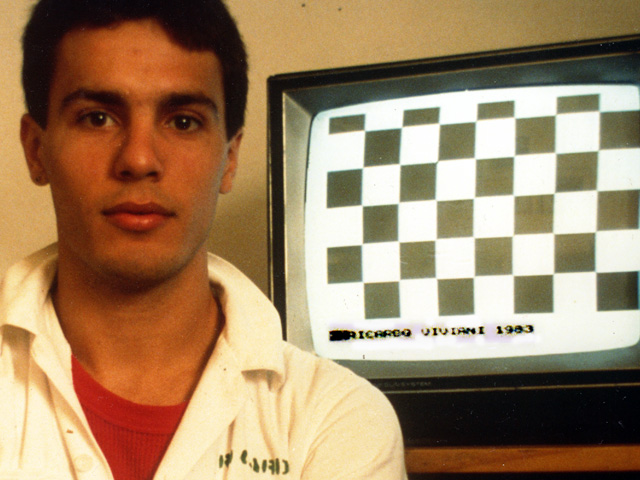
Type: Production · Dance / Computer Art / Performance
Date: 11 December 1984; related documentation and presentations extend into 1984
Context: Experimental dance integrating choreography, computer technology, generated visual material and live performance
Location: Circo Escola Picadeiro, Parque do Povo, São Paulo; additional presentation at Praça Benedito Calixto
Organisation: Ricardo Viviani / independent production
Role: Choreographer · Performer · Researcher · Producer
Participants: Ricardo Viviani · Renata Melo
Technology: Microdigital computer equipment
Status: Historical production record reconstructed from surviving primary documentation, photographs and archival recollection
Record / Description
Danças Novas e uma Usada belongs to an early period in Ricardo Viviani’s work in which choreography, performance, experimental composition and computer technology began to intersect.
The surviving press release identifies the presentation as taking place on 11 December 1984 at 20:30 at the Circo Escola Picadeiro, Parque do Povo, São Paulo, near the Jardim bridge. The document presents Viviani as a dancer and choreographer and describes an artistic practice concerned with developing new forms of dance through experimentation and research.
The programme included a series of solos and a duet performed by Ricardo Viviani and Renata Melo. The release specifically identifies Uma Usada as the solo Danúbio Azul, which had premiered in 1982, while Relações Interpessoais is described as a work in which dance and computer technology interact.
The computer was not simply an object placed onstage. According to the surviving release, Relações Interpessoais used computers and monitors as part of the logic of the performance: data generated through the system determined aspects of the relationship and sequence of the dancers’ actions.
The Work / Creation
Danças Novas e uma Usada should be understood as a production framework rather than simply the title of a single choreography. The surviving document presents a group of works that brought together existing repertoire and new experiments.
The most technologically distinctive component was Relações Interpessoais, described in the release as an integration of computer and dance. A computer-generated or computer-determined system became part of the choreographic structure, with data used to determine the relationship between the dancers and the sequence of events.
The release also identifies Uma Usada as Danúbio Azul, a solo that had premiered in 1982. This establishes an important relationship between the earlier solo repertoire and the new computer-oriented research.
Activity / Event
Documented presentation: 11 December 1984, 20:30, Circo Escola Picadeiro, Parque do Povo, São Paulo.
The surviving press release gives the venue and location as the Circo Escola Picadeiro at Parque do Povo, near the Jardim bridge. This supersedes the previously uncertain venue information in the archive.
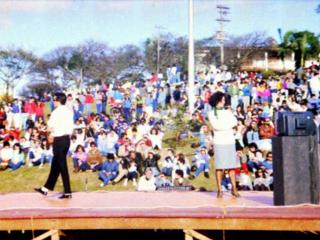
An additional presentation is recalled at Praça Benedito Calixto. The surviving performance photograph provides visual evidence of Ricardo Viviani and Renata Melo performing outdoors before an audience. The photographic record is particularly significant because Viviani’s studio address, printed on the surviving release, was also at Praça Benedito Calixto.
Production
The production combined choreography, performance, computer equipment, sound, text and visual experimentation.
The surviving release states that the computer equipment was provided by Microdigital Computadores. The release describes a stage environment containing four monitors and three computers. The equipment therefore formed part of the performance environment and choreographic conception rather than functioning solely as technical support.
The surviving computer equipment is still held in Ricardo Viviani’s archive. These machines constitute important physical evidence of the technological environment in which this work was developed and should eventually be documented as archival objects, including their models, configuration and surviving software or media where identifiable.
Intellectual Production
The production represents an early form of artistic research in which computer technology was treated as a compositional partner in dance rather than simply as a recording or administrative tool.
The surviving release describes the computer system as contributing data that determined relationships and sequences within the performance. This provides direct evidence of an attempt to translate computational processes into choreographic structure.
The work is therefore relevant to the history of Viviani’s research into new dance forms, as well as to the broader intersection of dance, experimental performance and early personal-computer culture in Brazil.
Primary Source / Documentation
The principal primary source for this record is a surviving thermal-paper press release / artistic information document associated with the production. Its typography, 8-bit graphics and physical format are themselves part of the production history.
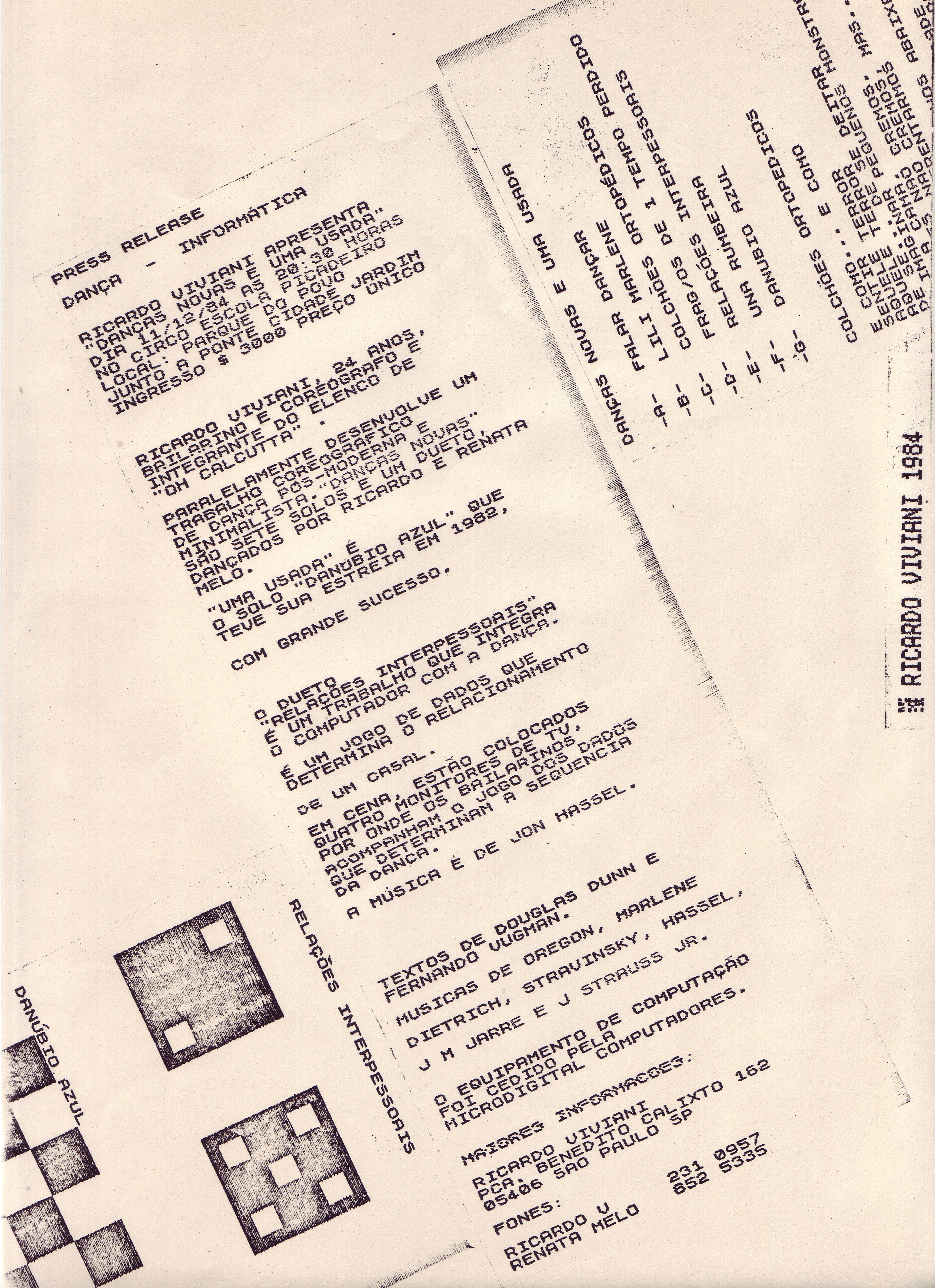
The document is particularly important because it preserves information that would otherwise be difficult to reconstruct: the documented venue, date and time; the relationship between the existing and new works; the participation of Renata Melo; the use of computers and monitors within the performance; the musical and textual credits; the equipment provider; and Ricardo Viviani’s studio address.
The 8-bit graphics are not treated here as incidental decoration. They form part of the surviving visual language of the project and provide evidence of the connection between the graphic, technological and choreographic aspects of the work.
Research
This record contributes to a larger chronology of Ricardo Viviani’s experimentation during the early and mid-1980s.
The surviving documentation establishes a connection between the 1982 Danúbio Azul, the 1984 presentation documented by the press release, and subsequent work involving Relações Interpessoais / Serious Talk and Colchões Ortopédicos.
The relationship between the different dates and presentations should remain historically explicit rather than being reduced to a single creation date. The archive currently contains evidence from 1983 and 1984, including the press release, performance photography and later documentation. Further examination of surviving papers, computers, photographs and other materials may refine the chronology.
Relationship
Relações Interpessoais is particularly important to the genealogy of this production. The surviving documentation establishes the Portuguese title, while later documentation identifies Serious Talk as its English title. These should be treated as two titles for the same work, not as separate choreographies.
The computer-based research documented here also connects directly with the later development and presentation of Viviani’s work in New York and with the technological and graphic experiments visible in the surviving 1984 documentation.
This production should therefore be read as part of a continuing line of investigation rather than as an isolated event.
Place / Context
The documented venue was Circo Escola Picadeiro, Parque do Povo, São Paulo.
The archive also contains photographic evidence of an outdoor presentation at Praça Benedito Calixto. This location has particular significance because Ricardo Viviani’s studio was situated at Praça Benedito Calixto 162, the address printed on the surviving release. The studio was not simply an administrative address: it was a place where Viviani lived, rehearsed and gave dance classes.
The proximity between studio, rehearsal activity, teaching and public presentation forms an important part of the working context of this period. The Praça therefore represents both a geographic and an artistic context for the production.
Personal Reflection
This work belongs to a period when the computer itself became part of the artistic investigation. The surviving machines, the early computer graphics and the performance documentation preserve a moment when technology was being explored directly through dance and choreography.
Archival Material
- Surviving thermal-paper press release / artistic information document
- 8-bit graphics incorporated into the surviving printed document
- Surviving computers used in the production
- Performance photograph of Ricardo Viviani and Renata Melo at Praça Benedito Calixto
- Production-related photographs and computer-art images
- Printed studio address and contact information contained in the original release
Continue reading “Danças Novas e Uma Usada – Dança na Praça”