Type: Presentation Proposal · Lecture-Demonstration
Date: 31 July 2015
Context: Artistic Research / Dance Creation
Location: Frankfurt am Main, Germany
Role: Choreographer · Researcher
Status: Proposal · Never presented
Morphogenesis in Dance
The Shaping of Artistic Creation
This lecture-demonstration proposal asks: “What gives shape to things?”
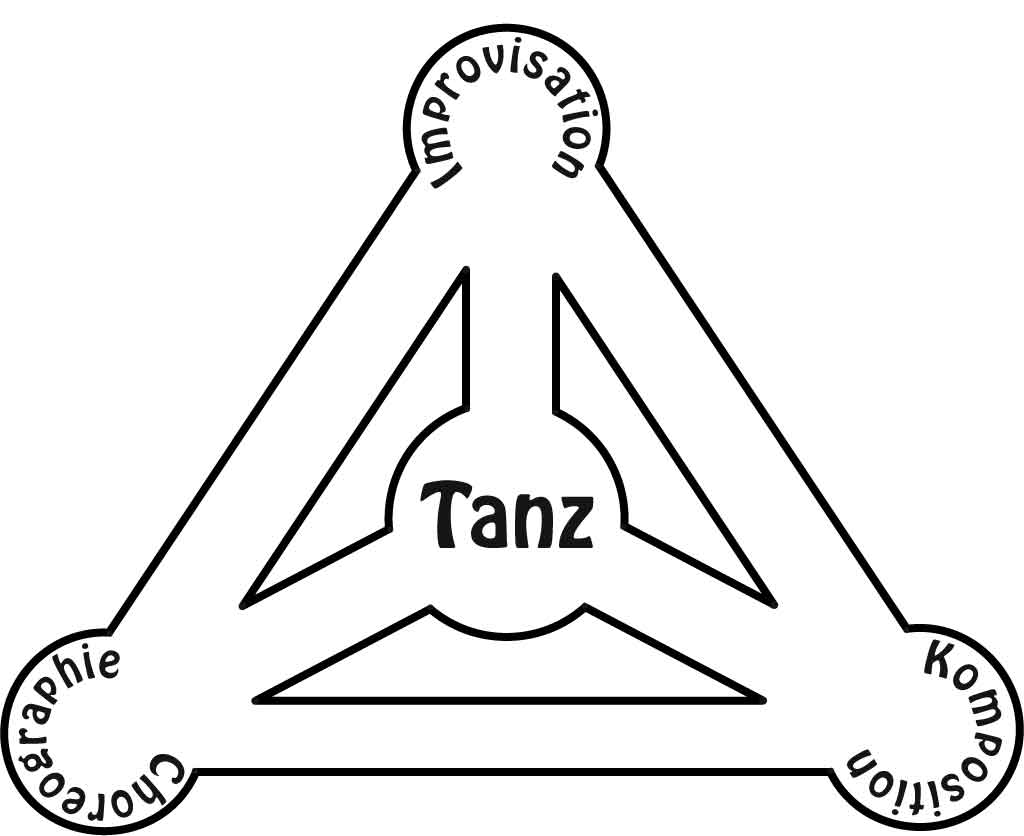
Three approaches to observe the process of creation.
Format: Lecture / performance
In this lecture-performance, three theoretical models of morphogenesis are exposed and a live example is performed.
1. What is Morphogenesis?
What gives shape to things?
Morphogenesis is the process that determines how biological forms are differentiated and organized. A right or a left limb has the same genetical materials; why and how it takes one form or another is not biologically fully explained yet.
Performance undergoes similar processes: the coding and rules of genetics as in the modes of communication, the materials and mechanics of genes in the instruments and scores, dance steps and the bodies, are present in the same way. The moment of decision that differentiates and piles up a cell in one way or another, and the combination of one movement next to another, has been the subject of theories in the recent past.
Three approaches to this issue are presented here, from biology, from quantum physics applied to Jungian psychology, and from performance studies.
1.1 Chreode
A neologism created by biologist Conrad H. Waddington in his book The Strategy of the Genes from 1957, chreode (chre — necessary and hodos — path) is explained by using an analogy that uses gravity as an easy-to-relate phenomenon in the physical world: a ball rolling along a path. The theory of chreode provides for self-organisation, natural temporal framework and variation of form.
1.2 Attractors
In combining chaos theory with Jungian Archetypes, psychologist John R. Van Eenwyk creates a possible model that inverts causation and lends to behavior with posterior causation. The future pulls creation as opposed to being pushed from the past. Creativity in this sense, most likely, operates freed from natural time.
1.3 Viscosity
Portuguese philosopher José Gil introduces the concept of “viscosity” to explain movement choices in his article “O Corpo Paradoxal” (Paradoxical Body) in his book Movimento Total – O Corpo e a Dança from 2001. According to his postulate, dance is channeled through paths of lower viscosity that are sensed by the dancer in the act of dancing.
2. Observing Morphogenesis in Performance
In dance, morphogenesis can be observed both in the rehearsal room by observing specific interactions of the choreographer and dancer, but also in performance by restricting some parameters and concentrating the observation on specific variables.
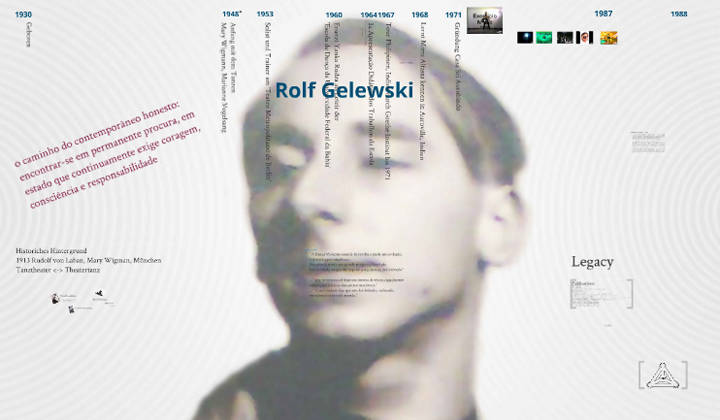
To access the creation moment, this presentation will use a methodology developed by German dance pedagogue Rolf Gelewski. Gelewski is a disciple of Mary Wigman in the analytical genealogy of Rudolf von Laban.
Rolf Gelewski was a dancer and educator born in 1930 in Berlin. Acclaimed by the press in the 1950s as a new Harald Kreuzberg, he was sent by Mary Wigman to establish the first contemporary dance education program in the University of Salvador, Bahia, Brazil in the 1960s. His later pedagogical work structured a methodology to access the creative impulse in a dance yoga-like meditation system. His influence also reaches the Auroville community in India. Gelewski was killed in a car accident in 1986.
3. Summary
Models for explaining morphogenesis in performance transcend the natural sciences toolkit; still, it can be observed and described. This lecture-demonstration proposes three approaches to observe this phenomenon.
After exposing these theories, a short dance piece will be performed to enable an observation under the aspects of morphogenesis of a moment of creation. This dance piece — Blue Danube — presents a frame that constrains the observable phenomenon of improvisation in three parameters: Force, Speed and Timing.
An early full video of this dance can be seen here: Blue Danube @ DanceSpace NYC 1986.
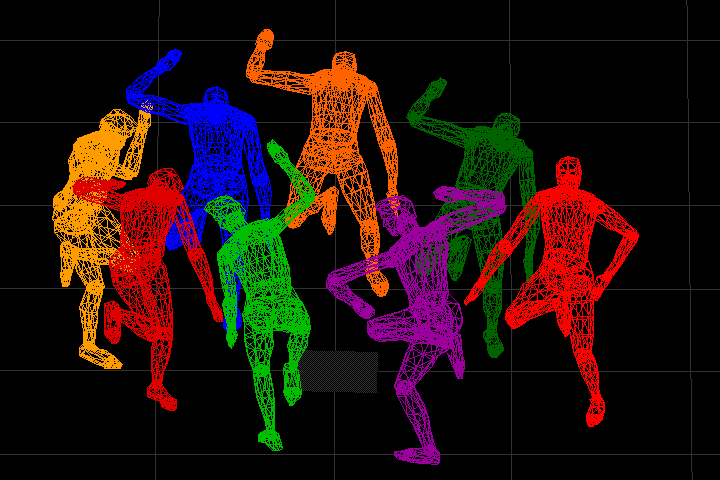
Life Forms
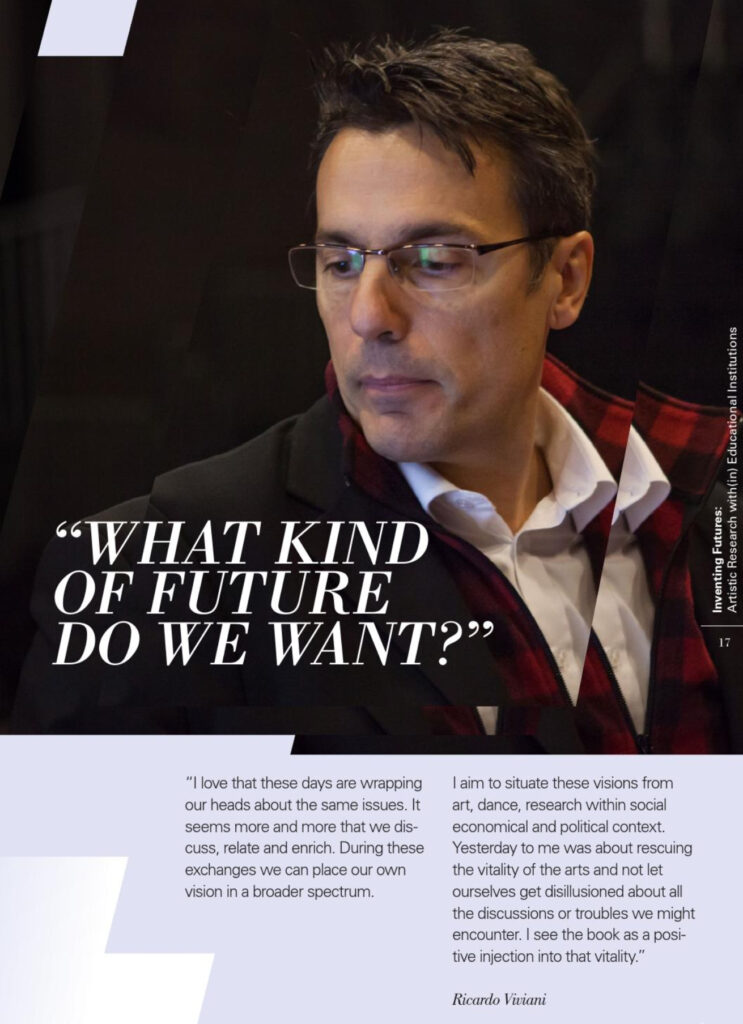
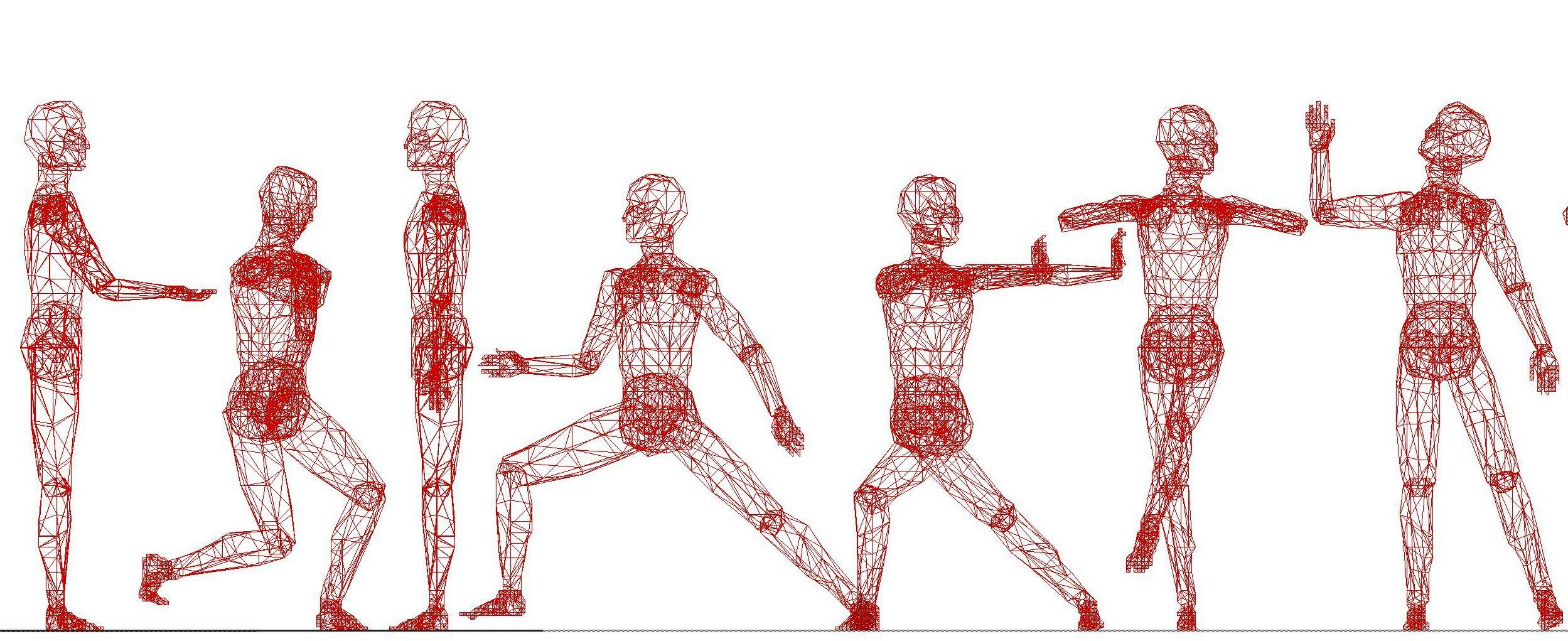
The proposal also used Life Forms for the visual analysis of human movement. The software became an important tool in Viviani’s choreographic work and was used intensively in several productions in the early 2000s.
Later Development
A working vocabulary that developed from this line of inquiry later became important in Viviani’s thinking about dance creation, particularly the distinctions between improvisation, choreography and composition. These distinctions belong to later work and are not presented here as a completed triad in the 2015 proposal.
Formal Requirements
The original proposal specified the following technical requirements:
- Duration: Introduction 15 minutes, demonstration 10 minutes
- Stage dimensions: minimum 8 meters wide, 2 meters deep
- Equipment: video projector and computer for PowerPoint, and PA system for music playback
Archival Material:
Lecture-demonstration proposal, version 1.0 EN, 31 July 2015; PDF handout; presentation images; Life Forms analysis; related Blue Danube documentation.
Continue reading “morphogenesis”