morphogenesis

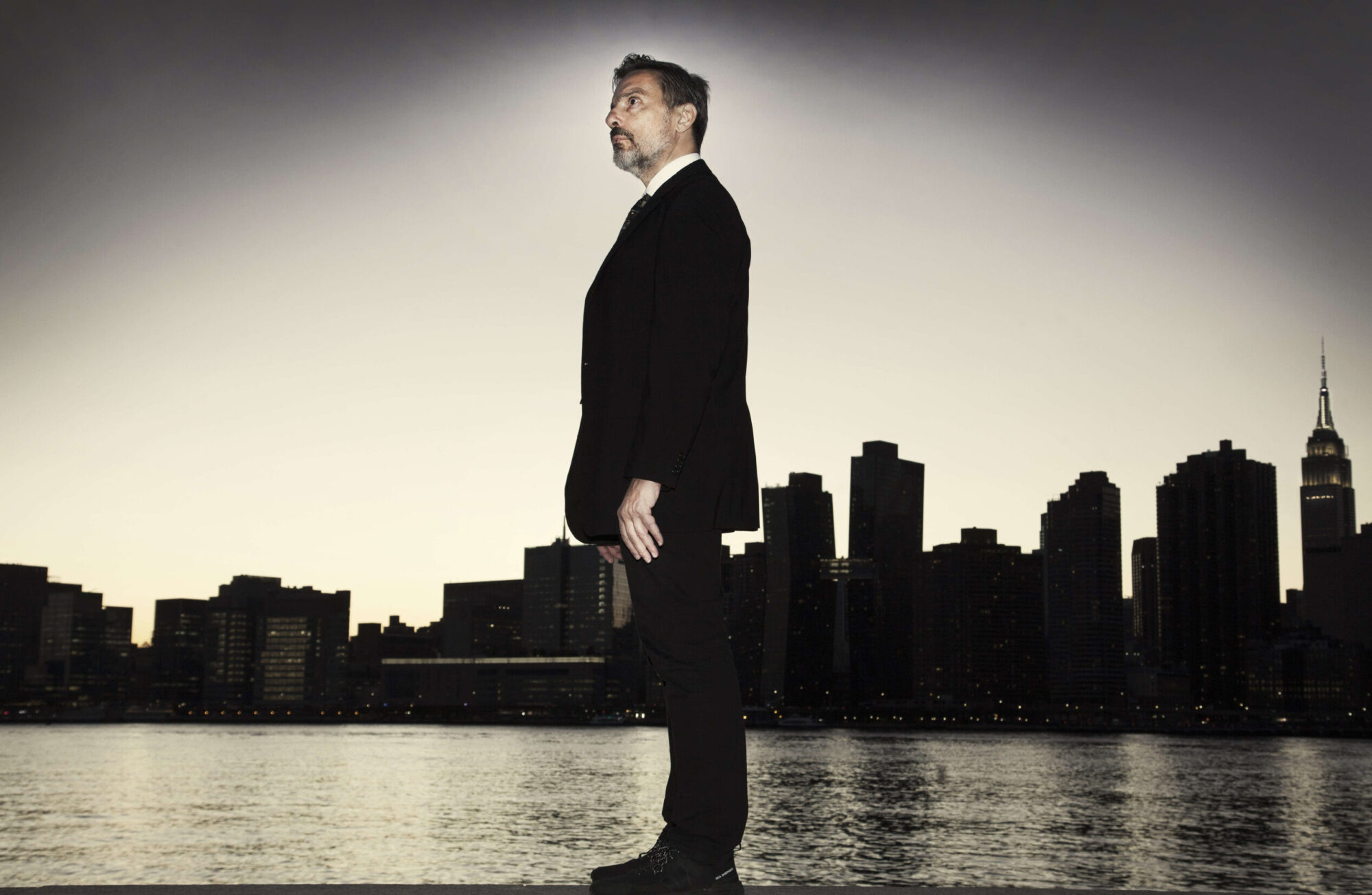
Ricardo Viviani performing Blue Danube
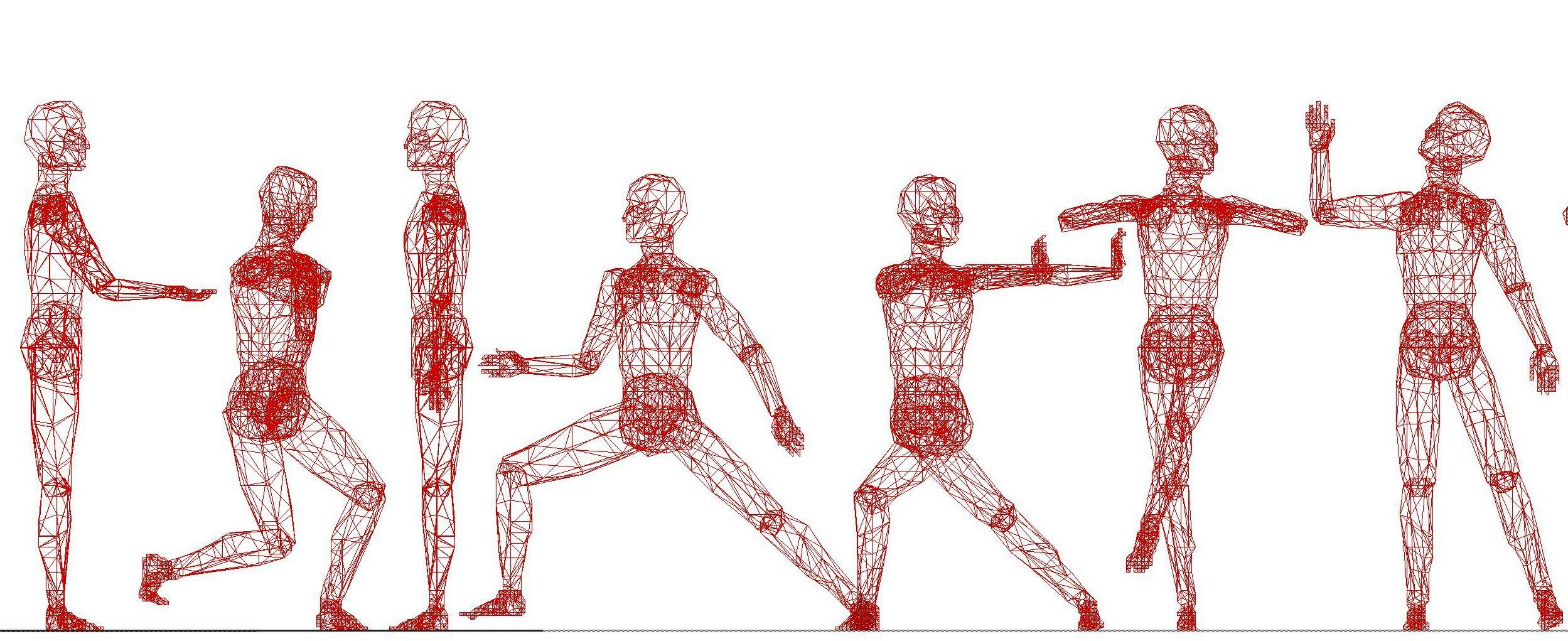
Analysis of Blue Danube using Life Forms — Ricardo Viviani 2015

Type: Presentation Proposal · Lecture-Demonstration
Date: 31 July 2015
Context: Artistic Research / Dance Creation
Location: Frankfurt am Main, Germany
Role: Choreographer · Researcher
Status: Proposal · Never presented


Morphogenesis in Dance
The Shaping of Artistic Creation

This lecture-demonstration proposal asks: “What gives shape to things?”
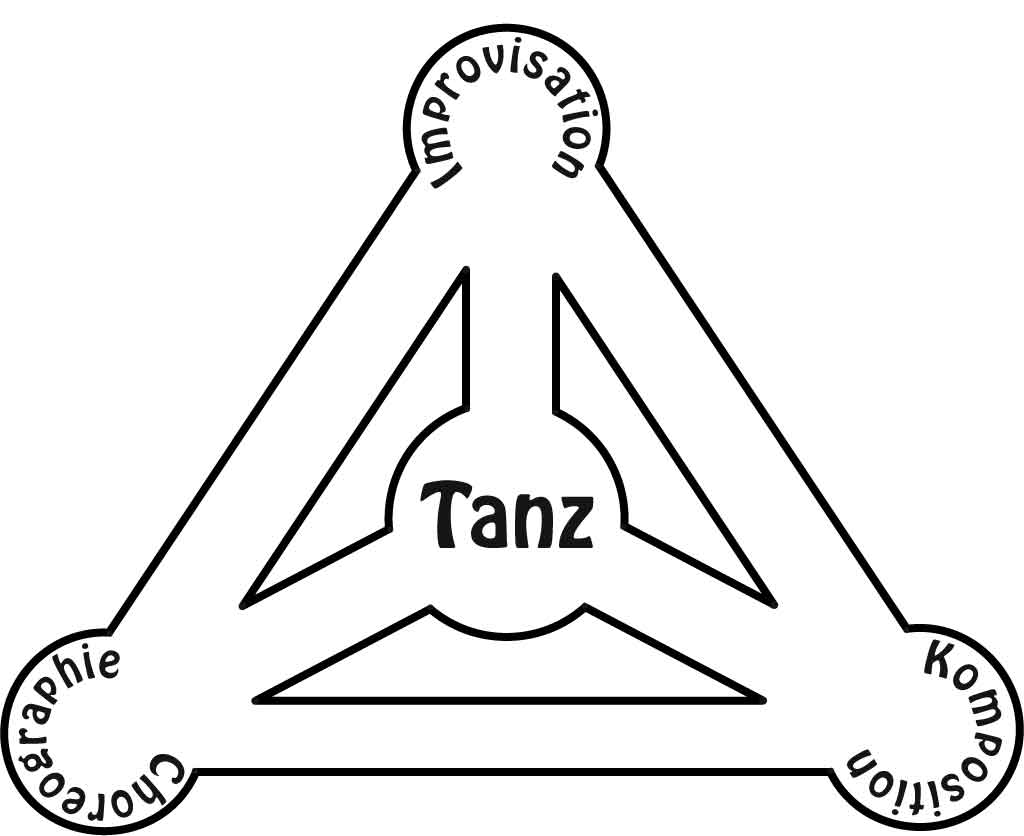
Three approaches to morphogenesis in dance
Three approaches to observing creation

Three approaches to observe the process of creation.

Format: Lecture / performance

In this lecture-performance, three theoretical models of morphogenesis are exposed and a live example is performed.

1. What is Morphogenesis?

What gives shape to things?

Morphogenesis is the process that determines how biological forms are differentiated and organized. A right or a left limb has the same genetical materials; why and how it takes one form or another is not biologically fully explained yet.

Performance undergoes similar processes: the coding and rules of genetics as in the modes of communication, the materials and mechanics of genes in the instruments and scores, dance steps and the bodies, are present in the same way. The moment of decision that differentiates and piles up a cell in one way or another, and the combination of one movement next to another, has been the subject of theories in the recent past.

Three approaches to this issue are presented here, from biology, from quantum physics applied to Jungian psychology, and from performance studies.

1.1 Chreode

A neologism created by biologist Conrad H. Waddington in his book The Strategy of the Genes from 1957, chreode (chre — necessary and hodos — path) is explained by using an analogy that uses gravity as an easy-to-relate phenomenon in the physical world: a ball rolling along a path. The theory of chreode provides for self-organisation, natural temporal framework and variation of form.

1.2 Attractors

In combining chaos theory with Jungian Archetypes, psychologist John R. Van Eenwyk creates a possible model that inverts causation and lends to behavior with posterior causation. The future pulls creation as opposed to being pushed from the past. Creativity in this sense, most likely, operates freed from natural time.

1.3 Viscosity

Portuguese philosopher José Gil introduces the concept of “viscosity” to explain movement choices in his article “O Corpo Paradoxal” (Paradoxical Body) in his book Movimento Total – O Corpo e a Dança from 2001. According to his postulate, dance is channeled through paths of lower viscosity that are sensed by the dancer in the act of dancing.

2. Observing Morphogenesis in Performance
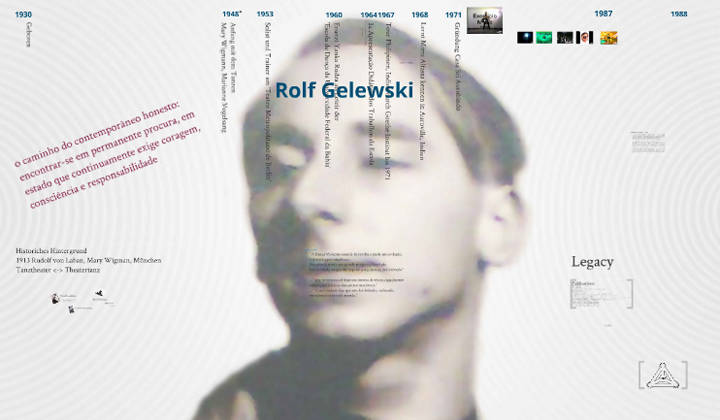
Rolf Gelewski
Rolf Gelewski — presentation material

In dance, morphogenesis can be observed both in the rehearsal room by observing specific interactions of the choreographer and dancer, but also in performance by restricting some parameters and concentrating the observation on specific variables.

To access the creation moment, this presentation will use a methodology developed by German dance pedagogue Rolf Gelewski. Gelewski is a disciple of Mary Wigman in the analytical genealogy of Rudolf von Laban.

Rolf Gelewski was a dancer and educator born in 1930 in Berlin. Acclaimed by the press in the 1950s as a new Harald Kreuzberg, he was sent by Mary Wigman to establish the first contemporary dance education program in the University of Salvador, Bahia, Brazil in the 1960s. His later pedagogical work structured a methodology to access the creative impulse in a dance yoga-like meditation system. His influence also reaches the Auroville community in India. Gelewski was killed in a car accident in 1986.

3. Summary

Models for explaining morphogenesis in performance transcend the natural sciences toolkit; still, it can be observed and described. This lecture-demonstration proposes three approaches to observe this phenomenon.

After exposing these theories, a short dance piece will be performed to enable an observation under the aspects of morphogenesis of a moment of creation. This dance piece — Blue Danube — presents a frame that constrains the observable phenomenon of improvisation in three parameters: Force, Speed and Timing.

An early full video of this dance can be seen here: Blue Danube @ DanceSpace NYC 1986.


Life Forms

The proposal also used Life Forms for the visual analysis of human movement. The software became an important tool in Viviani’s choreographic work and was used intensively in several productions in the early 2000s.

Later Development

A working vocabulary that developed from this line of inquiry later became important in Viviani’s thinking about dance creation, particularly the distinctions between improvisation, choreography and composition. These distinctions belong to later work and are not presented here as a completed triad in the 2015 proposal.

Formal Requirements

The original proposal specified the following technical requirements:

  • Duration: Introduction 15 minutes, demonstration 10 minutes
  • Stage dimensions: minimum 8 meters wide, 2 meters deep
  • Equipment: video projector and computer for PowerPoint, and PA system for music playback

Archival Material:
Lecture-demonstration proposal, version 1.0 EN, 31 July 2015; PDF handout; presentation images; Life Forms analysis; related Blue Danube documentation.


Continue reading “morphogenesis”

Rolf Gelewski – Presentation

Rolf Gelewski — Ricardo Viviani presentation, 11 May 2015

Type: Presentation · Research
Date: 11 May 2015
Context: Research into Rolf Gelewski and dance pedagogy
Format: Prezi presentation
Role: Researcher · Presenter
Subject: Rolf Gelewski (1930–1988)


Rolf Gelewski — A Biographical Presentation

On 11 May 2015, Ricardo Viviani prepared a Prezi presentation devoted to the life and work of Rolf Gelewski. The presentation formed part of his research into Gelewski’s place within dance pedagogy and his relevance to Viviani’s own artistic formation.

The presentation is preserved as a record of the research activity itself. The Prezi remains the principal document.

Archival Material:
Prezi presentation dated 11 May 2015; presentation images; research notes; related references to Gelewski.


Continue reading “Rolf Gelewski – Presentation”

why. what. how. 2014

lectures

Lectures and Research

The Secret: What do dancers know?

‘Dance is at the bottom of the food chain.’ (William Forsythe 2009)

Neuroscientists, philosophers, and also dance academics of all sorts have been trying to figure out what it is: what do dancers know that other people can’t grasp? Unless they’ve been through the mill of arduous training and rehearsing, they have no way of knowing it. Call it embodied knowledge, somatic intelligence and so forth, it is rarely articulated by dancers, so there’s little understanding of it outside the dancer’s circle. It is a secret. A secret not by intention but by virtue of its nonverbal nature.

Continue reading “why. what. how. 2014”

Carnaval da Dorotéia

Type: Production · Presentation · Dance Education
Date: 12 June 2014 — documented premiere
Time-span: 2014
Location: Casa do Brasil · Frankfurt Hauptbahnhof, Frankfurt am Main, Germany
Context: Brazilian Carnival · cultural education · young audiences · 2014 FIFA World Cup
Role: Choreographer · Director · Dance Educator
Participants: Julia Mota Carvalho — Dorotéia · dance dramaturgy
Status: Historical record · documented from surviving project material


Record / Description

Carnaval da Dorotéia — Tanzen mit Dorothee was a dance-education and cultural presentation for children introducing Brazilian Carnival through movement, music and regional cultural references.

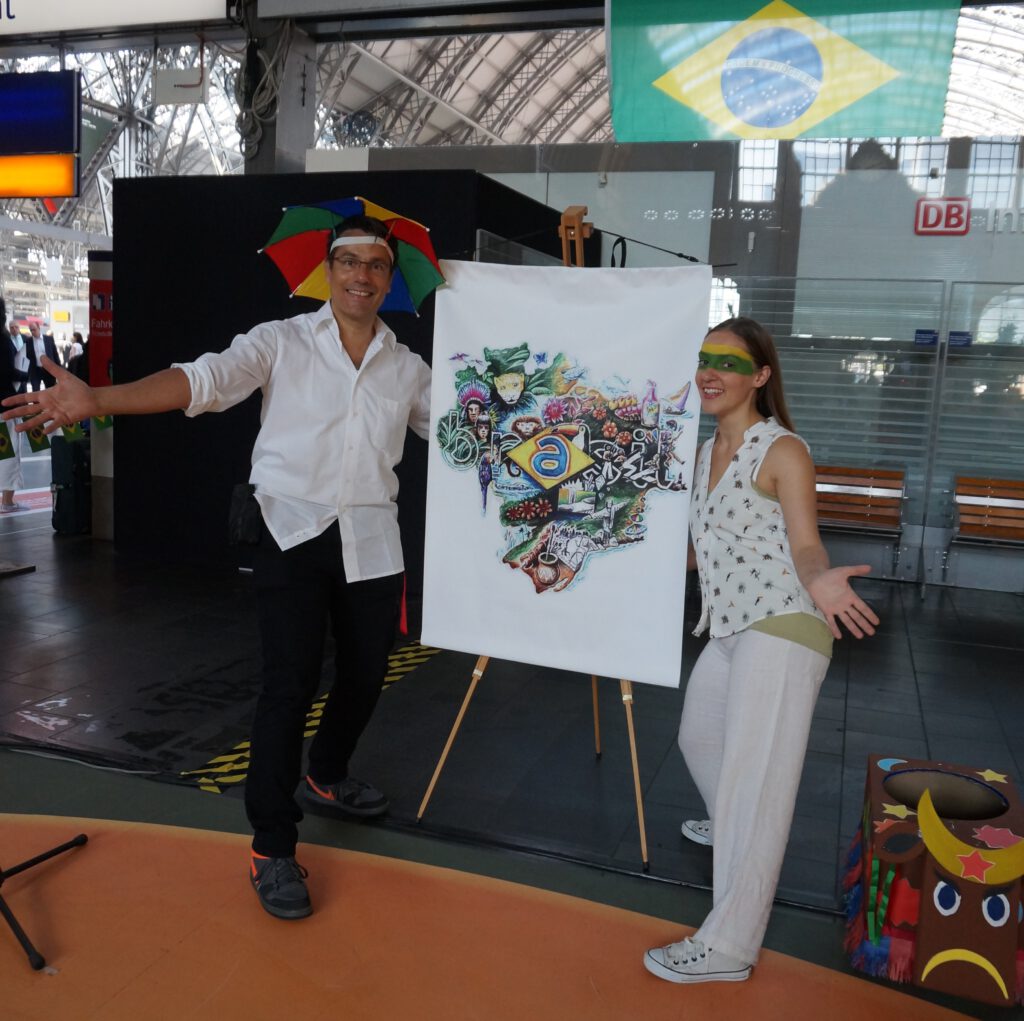
Ricardo Viviani and Júlia Carvalho for Carnaval da Dorotéia at the Frankfurt Hauptbahnhof

The surviving project exposition documents the premiere at Casa do Brasil, Frankfurt Hauptbahnhof, on 12 June 2014. The project was conceived for children and their parents and combined an introduction to Brazilian Carnival with practical dance and movement activities.

The surviving material describes Brazilian Carnival through examples from different regions of the country. The programme connected the activities to the atmosphere surrounding the 2014 FIFA World Cup in Brazil and referred specifically to Salvador, Fortaleza and Recife and to forms of Carnival and popular dance associated with those places.

The project was conceived not simply as a performance but as an encounter in which children could experience Brazilian culture through their own bodies, music and movement.

The Work / Creation

Carnaval da Dorotéia, Frankfurt Hauptbahnhof, 2014. Public web version reduced in resolution for privacy protection; original photograph

The project exposition identifies Ricardo Viviani as choreographer and describes the format as a one-hour pedagogical encounter with three principal stages:

Introduction — approximately 15 minutes. Dorotéia welcomes the children, introduces Brazilian Carnival, plays music and demonstrates dance movements. A playful geographical association connects Brazilian regions and cities with different Carnival traditions.

Dance and movement — approximately 30–40 minutes. The children participate in free movement, coordination and rhythm exercises, spatial work and basic dance movements. A simple choreographic structure develops into a more open and festive Carnival section.

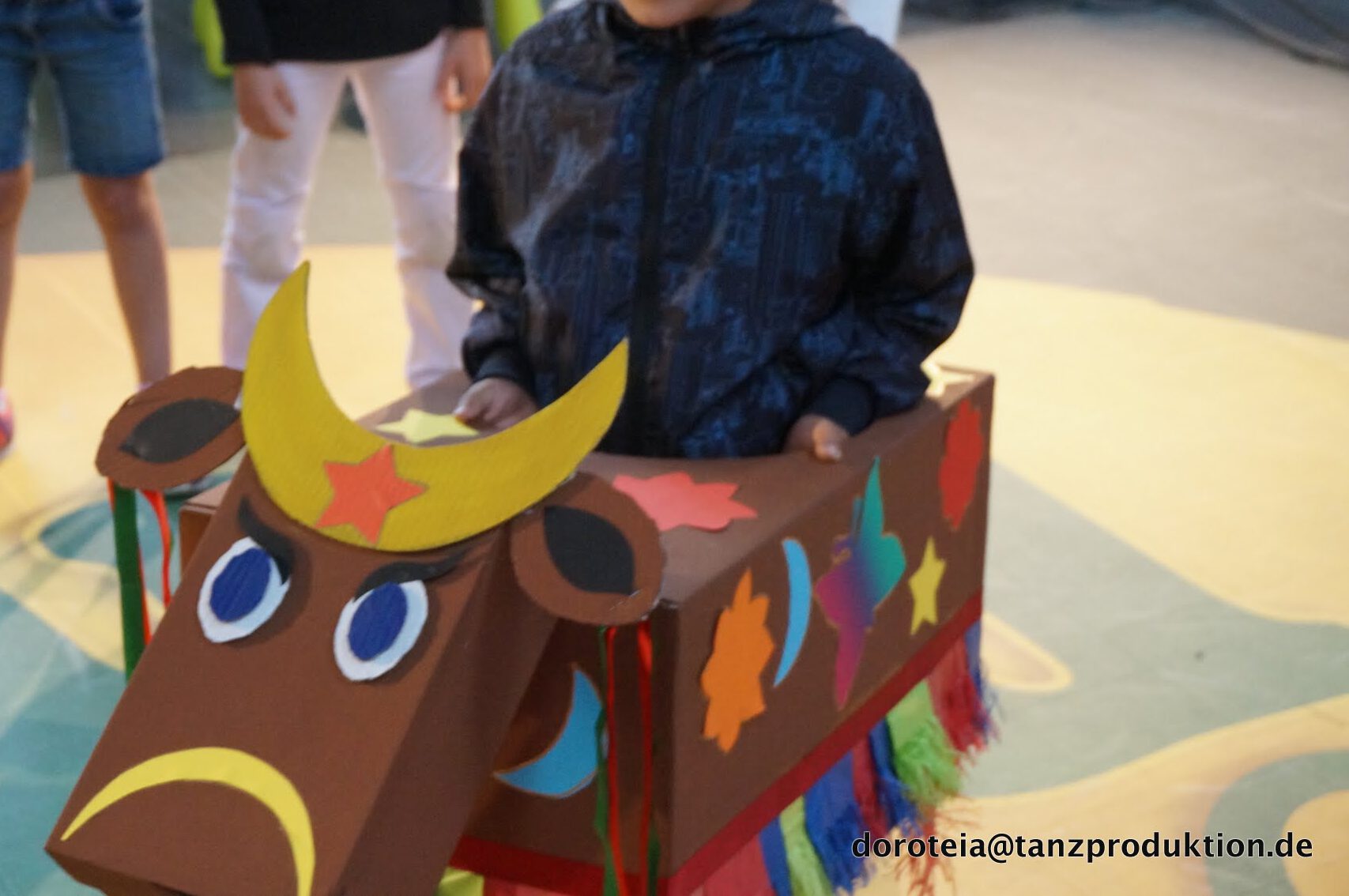
Reflection. The concluding section combines photographs, movement and conversation about Brazil, Carnival and the places introduced during the activity. The surviving exposition refers specifically to a Bumba-meu-boi element in this concluding context.

Production

The surviving production documentation credits Ricardo Viviani with concept, choreography and pedagogical execution. The project also identifies Julia Mota Carvalho as Dorotéia and as a dance dramaturgical collaborator.

Ricardo’s archival recollection describes the project as a commissioned intervention connected with the Brazilian cultural programme in Frankfurt during the 2014 World Cup. The precise commissioning organisation is not named here because it has not yet been independently established from the surviving documentation.

Contracts, invoices and other managerial or administrative documents relating to the production are preserved privately and are not reproduced on this public archival page.

Dance Education

Carnaval da Dorotéia continues a documented strand of Ricardo Viviani’s practice connecting professional dance, cultural education and work with young audiences.

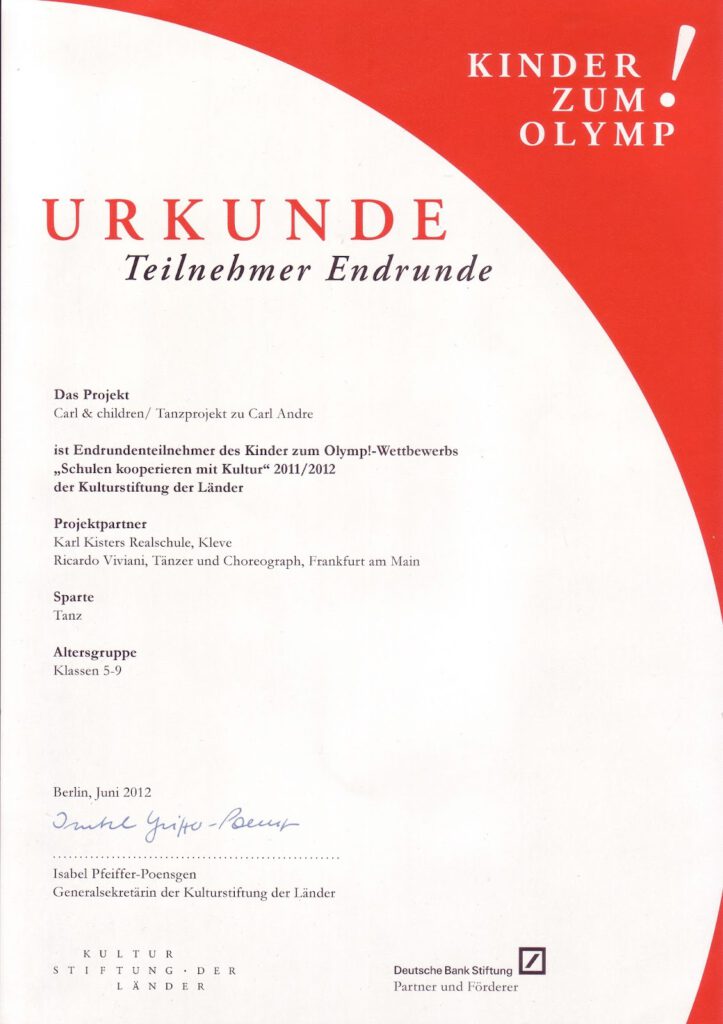
An earlier documented example is Carl & children / Tanzprojekt zu Carl Andre, developed with the Karl Kisters Realschule in Kleve. The surviving Kinder zum Olymp! certificate identifies the project as an Endrundenteilnehmer of the 2011/2012 competition „Schulen kooperieren mit Kultur“, in the category Tanz for Klassen 5–9, with Ricardo Viviani identified as Tänzer und Choreograph.

This Kleve work is independently corroborated by the NRW Kultur und Schule project documentation, which records Ricardo Viviani as the artist for Klever Klangnacht at Karl Kisters Realschule Kleve-Kellen during the 2011/2012 school year. Museum Kurhaus Kleve also documents the Karl Kisters Realschule’s participation in the Schule Kunst Museum network and student dance performances connected with the Carl Andre exhibition.

The Kleve work is retained here as relevant background to Viviani’s established practice with schools, dance education and young people. A fuller archival account of the Karl Kisters Realschule, Kleve and Museum Kurhaus collaborations will be documented separately.

Kinder zum Olymp! — Urkunde, Teilnehmer Endrunde, 2011/2012. Certificate documenting the project Carl & children / Tanzprojekt zu Carl Andre as a finalist in the Kinder zum Olymp!competition “Schulen kooperieren mit Kultur” of the Kulturstiftung der Länder. The certificate identifies Karl Kisters Realschule, Kleve, and Ricardo Viviani, Tänzer und Choreograph, as project partners; category: Tanz; age group: Klassen 5–9. Issued in Berlin, June 2012.
Kinder zum Olymp! certificate documenting Carl & children /
Tanzprojekt zu Carl Andre as an Endrundenteilnehmer, 2011/2012.

Activity / Event

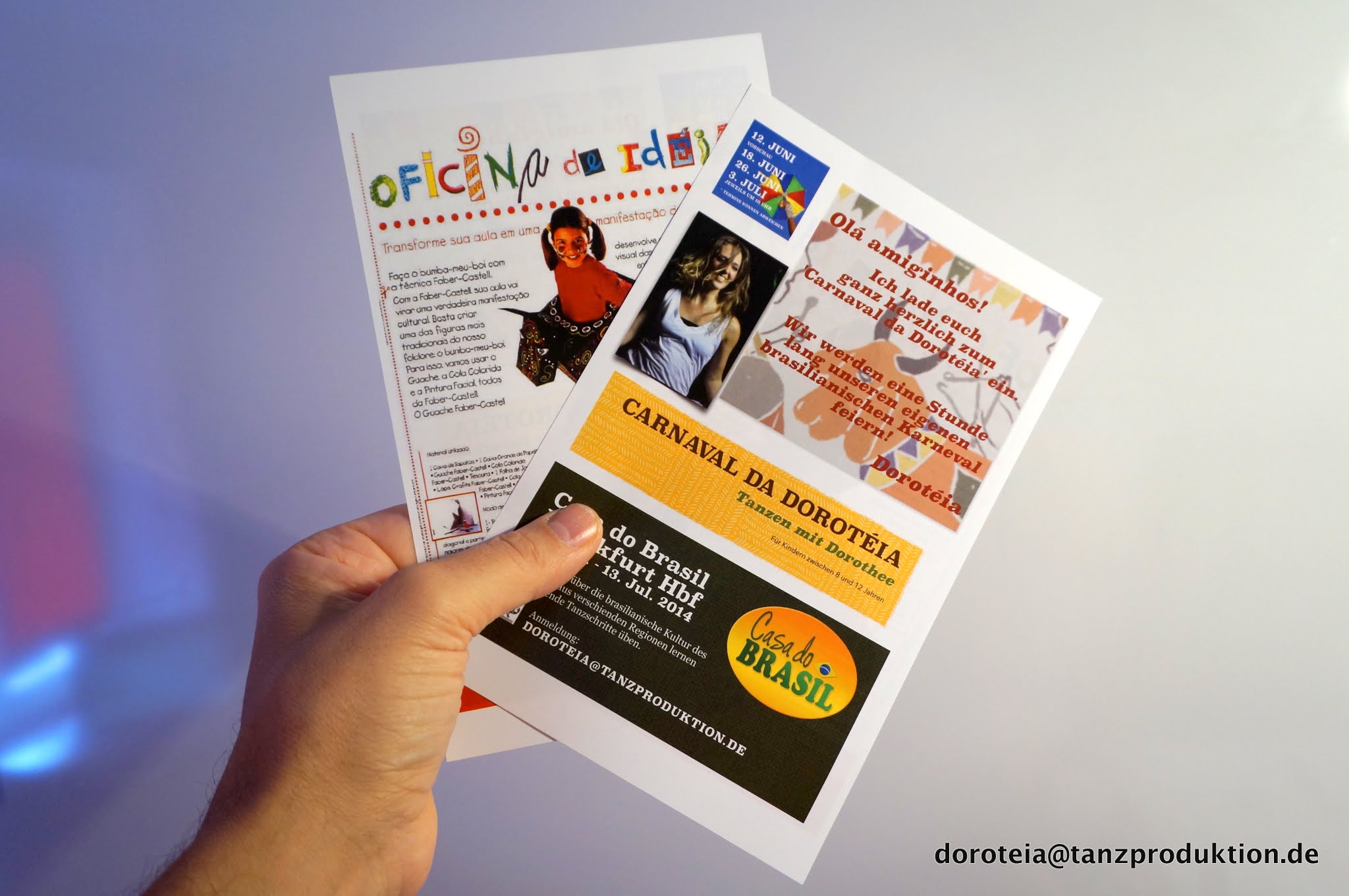
The surviving flyer documents a public presentation at Casa do Brasil, Frankfurt Hauptbahnhof, with the date 13 July 2014. The project exposition, however, identifies 12 June 2014 as the premiere. The two dates are therefore preserved as separate documentary references rather than reconciled by assumption.

The flyer also gives a different target age range from the project exposition: it addresses children aged 8–12, while the exposition describes the project as intended for children aged 5–12. Both formulations are retained as evidence from their respective documents.

Promotional flyer for Carnaval da Dorotéia at Casa do Brasil, Frankfurt Hauptbahnhof, 2014.

Primary Source / Documentation

The principal surviving documentation consists of the project exposition Carnaval da Dorotéia — Tanzen mit Dorothee, version 3, dated 15 January 2015; the promotional flyer; surviving photographs; the promotional video; and associated project records.

The exposition provides the principal documentary account of the project’s concept, pedagogical structure, team and intended audience. The flyer provides independent documentary evidence for a public presentation and preserves a different date and age specification.

The surviving visual material is retained as archival evidence. Where children appear, public derivatives should be reduced, cropped or otherwise prepared so that children are not reasonably identifiable. Original documentary files remain preserved separately as archival masters.

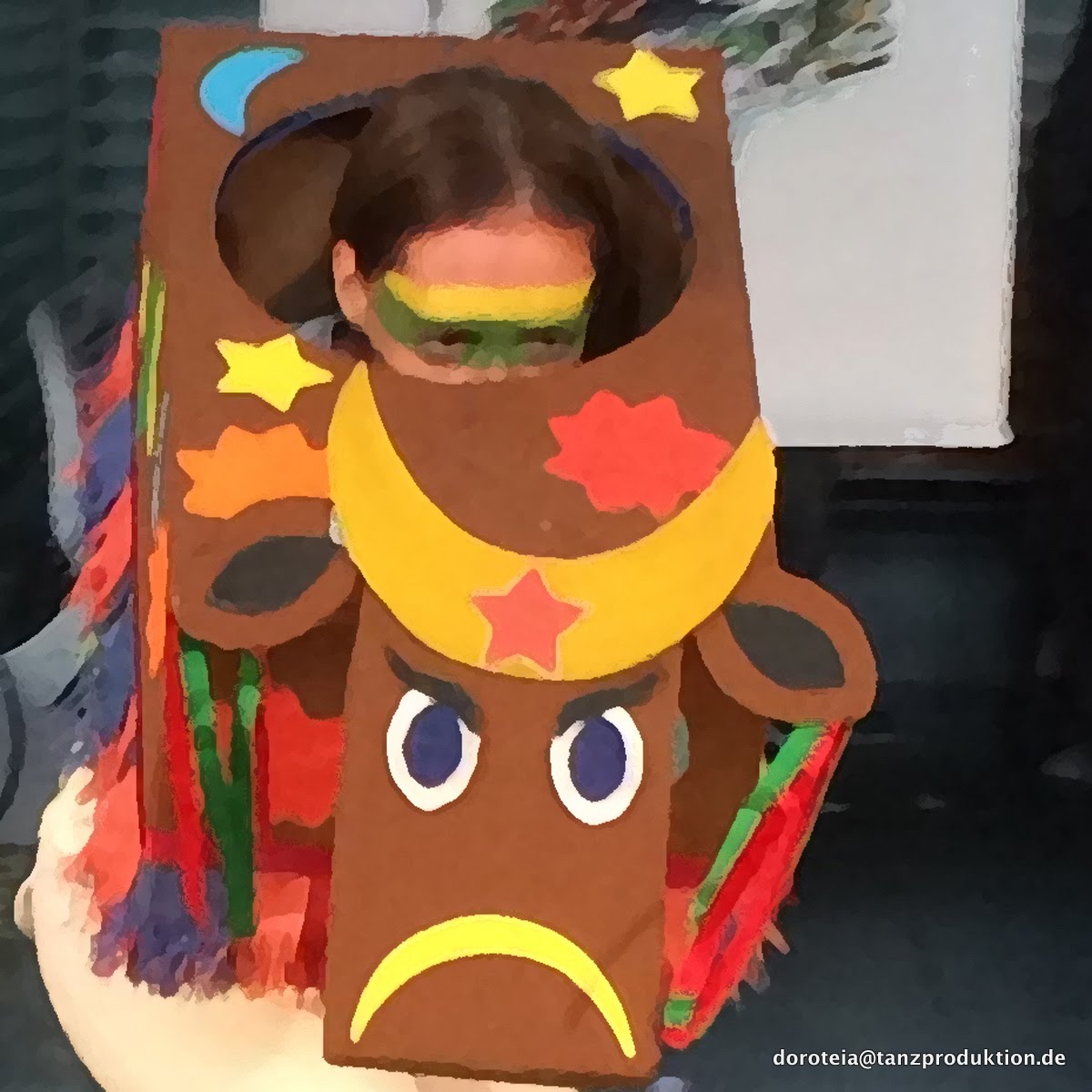
Bumba-meu-boi object associated with Carnaval da Dorotéia, 2014.
Bumba-meu-boi element associated with the Carnaval da Dorotéia activity.

Personal Reflection

I later collaborated with Júlia in a commission during the football World Cup in Brazil to create an occupation in the Frankfurt train station in Germany to present Brazil through its different Carnival cultures and give the continental dimension of the country. It was called Carnaval da Dorotéia for young people and schools. Many pictures survive and a flyer describing the intervention to recruit school classes. [from IRIBIRI recollections]

This recollection is preserved as Ricardo Viviani’s retrospective account and is distinguished from the independent documentary evidence contained in the surviving project material.

Relationship

Carnaval da Dorotéia is related to Ricardo Viviani’s broader work in dance education and with young audiences, including documented projects developed with schools in Kleve. The relationship to the Karl Kisters Realschule and the Museum Kurhaus Kleve will be developed more fully in the relevant archival records rather than duplicated here.

Place / Context

many aspects of carnival da Dorotéia in action
Carnaval da Dorotéia, Frankfurt Hauptbahnhof, 2014. Public web version reduced in resolution for privacy protection; original photograph preserved in the archive.

Casa do Brasil, Frankfurt Hauptbahnhof formed the documented institutional and spatial setting for the project. The Frankfurt Hauptbahnhof context was particularly relevant to the project’s public-facing cultural approach: Brazilian Carnival was presented in a major railway environment during the period of the 2014 World Cup.

The surviving project documentation should be read primarily as evidence of a cultural-educational intervention rather than as a conventional stage production.

Contribution / Significance

The project is significant within Ricardo Viviani’s practice because it brought together choreography, dance education, cultural mediation and young audiences in a public setting.

Its distinctive contribution was to approach Brazilian Carnival through embodied experience: children encountered regional cultural references through music, rhythm, movement and participation rather than through information alone.

Assessment / Relevance

Carnaval da Dorotéia documents an intersection between Viviani’s Brazilian cultural background, his professional choreographic practice and his continuing work in dance education.

The surviving documentation also demonstrates a form of cultural presentation in which dance functions simultaneously as artistic practice, educational medium and means of intercultural encounter.

Archival Material

Surviving material includes: Project exposition: Carnaval da Dorotéia — Tanzen mit Dorothee, version 3, 15 January 2015, Promotional flyer for Casa do Brasil, Frankfurt Hauptbahnhof, Photographic documentation from 2014, Promotional video, Private contracts, invoices and administrative project records, retained but not reproduced publicly.

Keywords

Carnaval da Dorotéia · Tanzen mit Dorothee · Brazilian Carnival · dance education · Dance Educator · young audiences · children · cultural education · Frankfurt · Frankfurt Hauptbahnhof · Casa do Brasil · 2014 FIFA World Cup · Brazilian culture · Bumba-meu-boi · Frevo · Salvador · Fortaleza · Recife · Julia Mota Carvalho · Ricardo Viviani


External Links

Journal Frankfurt — Casa do Brasil

Facebook — surviving video documentation

Tanzen macht Schlau — Carnaval da Dorotéia

performing:group

Internal Links

IRIBIRI

Três Ensaios


Archival Note

This record distinguishes documentary evidence, external documentation and Ricardo Viviani’s retrospective recollection. Dates, audience descriptions and other details are retained according to their respective surviving sources where discrepancies occur. Later discoveries, corrections or additional documentation should be added through a dated Post Scriptum rather than silently altering the historical record.

Inventing Futures ArtEZ

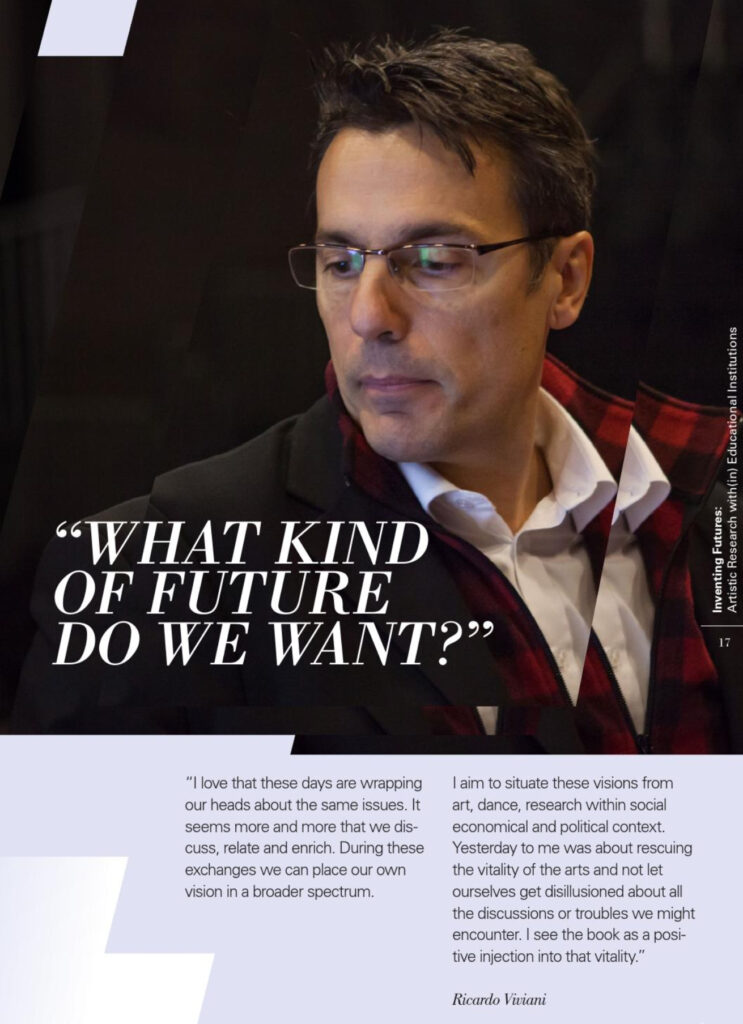
ArtEZ report for Inventing Futures, 2013
ArtEZ Report — Inventing Futures, 2013

Title: Crie Futuros / Create Futures Movement
Type: Presentation · Artistic Research / Education
Date: 2–3 December 2013
Context: Inventing Futures — Artistic Research With(in) Educational Institutions
Location: ArtEZ Arnhem, The Netherlands
Role: Presenter · Researcher


Crie Futuros / Create Futures Movement

The presentation introduced the ideas of Brazilian choreographer, futurologist, creative-economy consultant and activist Lala Deheinzelin, drawing particularly on her book Desirable New World. The presentation considered how intangible resources such as culture, creativity and wellbeing can contribute to a sustainable and attainable future.

From the perspective of a choreographer, the presentation asked how knowledge developed through dance and performance might contribute to broader questions of creativity, participation and social development. A central question was: What do dancers know that non-dancers can’t grasp?

The presentation approached dance practice as a source of knowledge that is often implicit and difficult to articulate outside the circle of dancers. It connected physical and pedagogical practice with questions of communication, collaboration, decision-making and ways of understanding intangible resources.

Deheinzelin’s framework also proposed a methodology for imagining futures through inventing futures, pooling resources, collaborative models, identifying resources and measures, and implementation. In this context, choreographic knowledge was considered as one possible contribution to broader strategies for creating desirable futures.

The presentation was part of Crie Futuros Movement within the conference discussion of artistic research in educational institutions.

Archival Material:
ArtEZ report; presentation slides / Prezi; presentation script; bibliography and source materials.


Continue reading “Inventing Futures ArtEZ”

Kleve — Dance, Museum and Education

Record / Description

This record documents a period of collaboration in Kleve connecting dance, museums, schools and cultural education. From 2009 onward, Ricardo Viviani worked with schools and cultural institutions in Kleve, bringing dance and choreographic practice into encounters with visual art and museum exhibitions.

The surviving documentation shows a form of artistic education in which dance was not simply an additional activity for young people. Movement, spatial perception, bodily experience and choreographic practice became ways of encountering, interpreting and responding to artworks.

The collaboration developed principally through the network connecting Museum Kurhaus Kleve, participating schools including Karl Kisters Realschule, and the NRW state programme Kultur und Schule.


Museum and Education

The Museum Kurhaus Kleve’s documentation of Schule Kunst Museum records a year-long collaboration between the museum and five Kleve secondary schools. In 2009, students worked with exhibitions including Ettore Spalletti and with works by Stephan Balkenhol and Ewald Mataré from the museum collection. Their responses included visual and performing arts, photography, video and dance performances.

The museum identifies Ricardo Viviani as the international choreographer and dancer who worked with the students through funding from the NRW state programme Kultur und Schule. The students were not only recipients of art education but became artistic participants, presenting their own works and performances within the museum.

This institutional documentation establishes the central character of the Kleve collaboration: dance entered the museum-school relationship as an artistic practice and as a way of engaging with visual art.

Dance in the Museum

The Kleve projects explored the possibility of approaching visual art through bodily and spatial experience. Dance provided another form of attention to artworks: through movement, students could investigate space, scale, relation, perception and physical response rather than relying exclusively on verbal explanation.

This approach became particularly explicit in the later Carl & children / Tanzprojekt zu Carl Andre project. The surviving project documentation describes students engaging with Carl Andre’s sculptures through bodily and spatial perception, developing movement and choreographic responses to the works.

In this context, dance functioned simultaneously as artistic practice, a method of observation and a form of learning.

Pedagogical Development

The collaboration with Kultur und Schule also formed part of Ricardo Viviani’s own continuing development as an educator. His pedagogical studies and professional development include work with Christa Coogan and continuing-education activities associated with the NRW programme Kultur und Schule, with Anja Weber, Maria Speth and Nadja Raszewski.

His studies also included the Landesmusikakademie NRW — Pädagogisches Basisseminar I und II, with van Almsick, Schneider, Levkau and Jendrkowiak. These experiences form part of the pedagogical background to his later work connecting dance, embodied learning, cultural education and artistic practice.

The inclusion of this training is significant because the Kleve collaboration was not only a transfer of existing dance knowledge into a school and museum environment. It also involved an ongoing development of the pedagogical methods through which that knowledge could be shared.


Projects and Activities

2009 — Schule Kunst Museum / Museum Kurhaus Kleve

Students from several Kleve secondary schools worked with exhibitions at Museum Kurhaus Kleve and developed their own artistic responses. The museum’s documentation records dance performances among the resulting works and identifies Ricardo Viviani as the choreographer and dancer supporting the students through Kultur und Schule.

2010 — Workshop on the Works of Ewald Mataré

A further workshop connected dance and the encounter with visual art. Contemporary documentation is preserved in the Tanzen macht Schlau! archive.

2011/2012 — Carl & children / Tanzprojekt zu Carl Andre

A dance and education project developed with students in relation to the work of Carl Andre. The surviving documentation presents bodily perception, spatial experience, somatic thinking and movement as ways of engaging with sculpture.

The project was documented as an Endrundenteilnehmer in the 2011/2012 Kinder zum Olymp! competition. The surviving certificate identifies Karl Kisters Realschule, Kleve, and Ricardo Viviani as project partners.

2011/2012 — Klever Klangnacht / Karl Kisters Realschule

The NRW Kultur und Schule documentation records Ricardo Viviani as the artist working with Karl Kisters Realschule Kleve-Kellen in the 2011/2012 school year. The project is described as interdisciplinary and identifies body movement and dance as artistic and emotional forms of expression. It involved approximately 20 students and continued throughout the school year as a continuous measure.


Contribution / Significance

The Kleve collaborations form an important strand in Ricardo Viviani’s development of dance as a medium of cultural education. Their significance lies in the movement between institutions and forms of knowledge: museum and school, visual art and dance, observation and bodily experience, artwork and student response.

The work demonstrates an approach in which dance can enter the museum not merely as performance, but as a method for encountering and interpreting art.

The Carl & children project represents a documented culmination of this strand. Its selection as an Endrundenteilnehmer in the 2011/2012 Kinder zum Olymp! competition provides recognition of the school–artist collaboration, while the surviving project documentation preserves the particular role of dance and embodied learning within it.

Primary Documentation

Tanzen macht Schlau! remains the principal surviving contemporary documentation for this strand of work. The blog records projects and activities in Kleve from 2009 onward, including workshops connected with Ettore Spalletti, Ewald Mataré and Carl Andre.

The public presentation of this historical documentation is currently being reviewed with regard to privacy and data minimisation, particularly where historical photographs may contain identifiable children. The archival value of the surviving documentation is preserved while its public presentation is being reassessed.

Archival Material

Surviving material includes project documentation, photographs, flyers, school and museum references, the Tanzen macht Schlau! blog archive, and the Kinder zum Olymp! certificate documenting Carl & children / Tanzprojekt zu Carl Andre as an Endrundenteilnehmer in 2011/2012.


External Links

Museum Kurhaus Kleve — Schule Kunst Museum, 2009

Kultur und Schule — Klever Klangnacht

Tanzen macht Schlau!

Internal Links

Três Ensaios (e o resto)

IRIBIRI

Carnaval da Dorotéia — Tanzen mit Dorothee


Archival Note

Archival Status: Historical Record — incomplete / ongoing archival reconstruction.

This page is an umbrella record for Ricardo Viviani’s documented collaborations in Kleve involving dance, museums, schools and cultural education. It does not replace individual archival records or the contemporary documentation of the projects themselves.

External institutional sources are used where they independently document the collaboration. The Kinder zum Olymp! Endrunde status is documented by the surviving certificate held in the archive.

The Tanzen macht Schlau! blog is retained as an important contemporary source, while its public presentation is subject to ongoing privacy and GDPR review.