Type: Presentation Date: 26 June 2026 Context: International Conference Pina Bausch – From Ritual to Romance, Bergische Universität Wuppertal Institution: Pina Bausch Foundation Role: Presenter / Researcher
Speakers / Moderation:
Ricardo Viviani
Isabelle Charnavel
Laura Wiemer — Moderator
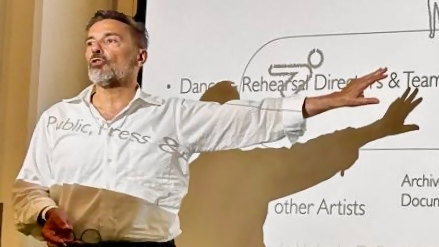
Embodied Knowledge Articulated Reflections on Ten Years of Oral History Collection of the Pina Bausch Archives
This presentation reflected on ten years of Oral History work at the Pina Bausch Archives and on the experiences accumulated through working with dancers and collaborators of Tanztheater. The material considered how oral testimony can bring aspects of artistic experience, memory and professional life into historical documentation.
Drawing on approximately seventy interviews, the presentation addressed questions arising from the documentation of dance as a lived and embodied practice. It considered testimonies in relation to artistic processes, formation, cultural encounters and personal histories, and examined what such accounts can contribute to the understanding of Tanztheater.
The contribution was presented within the conference section Epistemologies and Forms, placing the experience of a long-term Oral History collection in dialogue with other approaches to knowledge in and through dance.
Archival Material:
Presentation material; conference documentation; presentation photograph; related Oral History documentation.
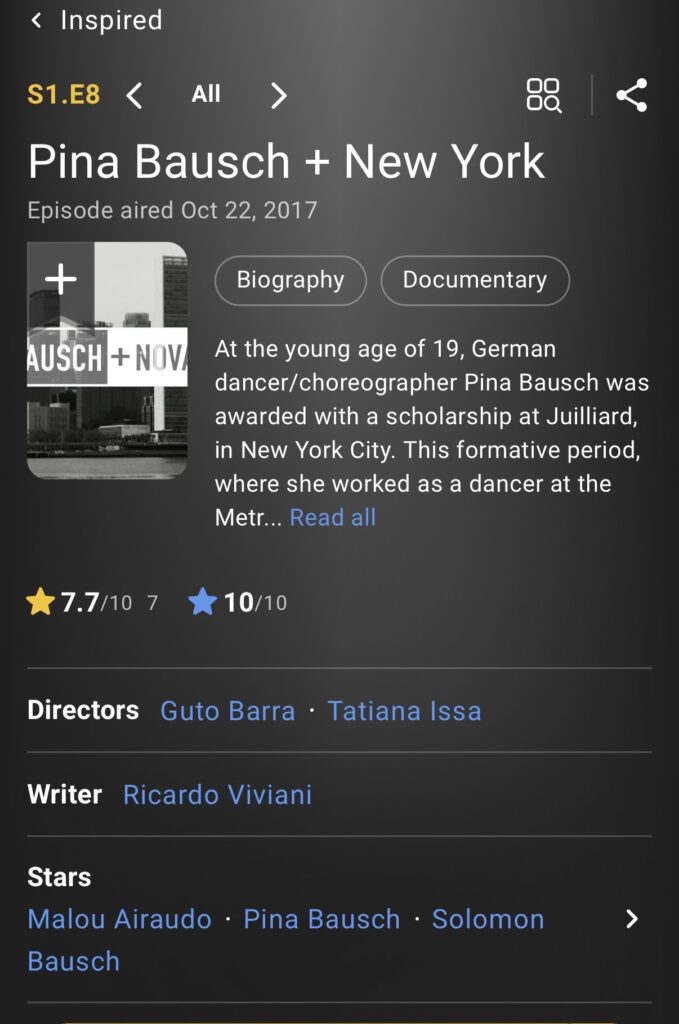
Type: Publication · Documentary Film · Oral History Date: 2017 Context:Pina Bausch + New York, part of the series Geografia da Arte Role: Script Writer · Researcher Production: Producing Partners NYC in collaboration with the Pina Bausch Foundation Broadcast: Arte1, Brazil Locations: New York · Chicago · Woodstock · Wuppertal · Essen
Pina Bausch + New York explored the formative relationship between Pina Bausch and New York through archival research, Oral History and conversations with artists and people connected to her experiences in the United States.
The project was Ricardo Viviani’s first major project at the Pina Bausch Foundation after joining the institution in 2016. It brought together his new role as a researcher at the Foundation with experiences from his own history as a dancer and choreographer in the New York dance environment.
Viviani had first met Pina Bausch personally in New York after performances of Viktor at the Brooklyn Academy of Music. Bausch stayed with dancer Manuel Alum at his loft in TriBeCa, together with her son. Viviani was part of Alum’s performing circle and had known him since his own years at Jacob’s Pillow.
This encounter revealed connections between Viviani’s own formation in the New York dance scene and Bausch’s formative experiences in the United States. When the documentary research began, these intersections became a starting point for tracing the people, places, teachers and artistic encounters connected to Bausch’s early development.
Research
The research extended across a wide range of dance and performing-arts archives and personal networks. Viviani worked with the archives of the Pina Bausch Foundation and the Deutsches Tanzarchiv Köln, as well as collections and institutions in the United States including the 92nd Street Y, Jacob’s Pillow, the New York Public Library’s Dance Collection and the archives of Juilliard School.
At the 92nd Street Y, where Pina Bausch had danced in New York for the first time, Viviani encountered an institution that was also part of his own history as a choreographer, having received a grant and presented work there. At Jacob’s Pillow, he returned to an archive and community he had known since 1980, when he was a scholarship student there, and worked with longtime archivist and curator Norton Owen.
The research also included conversations with dance scholars and critics including Mark Franko and Deborah Jowitt, as well as tracing places, people and artistic networks connected to New York in the late 1950s and early 1960s. Viviani also drew on his own study with Alfredo Corvino and his knowledge of the New York dance environment.
Oral History
The documentary developed an Oral History-based account of Pina Bausch’s formative relationship with New York. Interviews and archival research brought together memories of artists, teachers, collaborators and other witnesses, allowing aspects of Bausch’s early artistic development to be reconstructed through personal testimony and historical sources.
The resulting material provides a record of experiences and encounters that are not always visible in conventional accounts of Bausch’s biography, including the teachers, artistic communities and cultural environments that she encountered in New York and the United States.
Production
The opportunity to produce the interviews arose through an independent coincidence. Rolf Salomon Bausch received a request to collaborate with a New York production company developing a series about artists and geographical places. This led to a collaboration between Producing Partners NYC and the Pina Bausch Foundation.
Interviews and filming subsequently took place in Chicago, New York, Woodstock, Wuppertal and Essen. Although the production company was based in New York, the resulting series was produced for the Brazilian cable channel Arte1.
Producing Partners, led by Tatiana Issa and Guto Barra, was responsible for the production on the New York side.
Archival Material:
Film and production documentation; research notes; Oral History interviews; archival research material; correspondence and production material where preserved; related documentation concerning Pina Bausch’s relationship with New York.
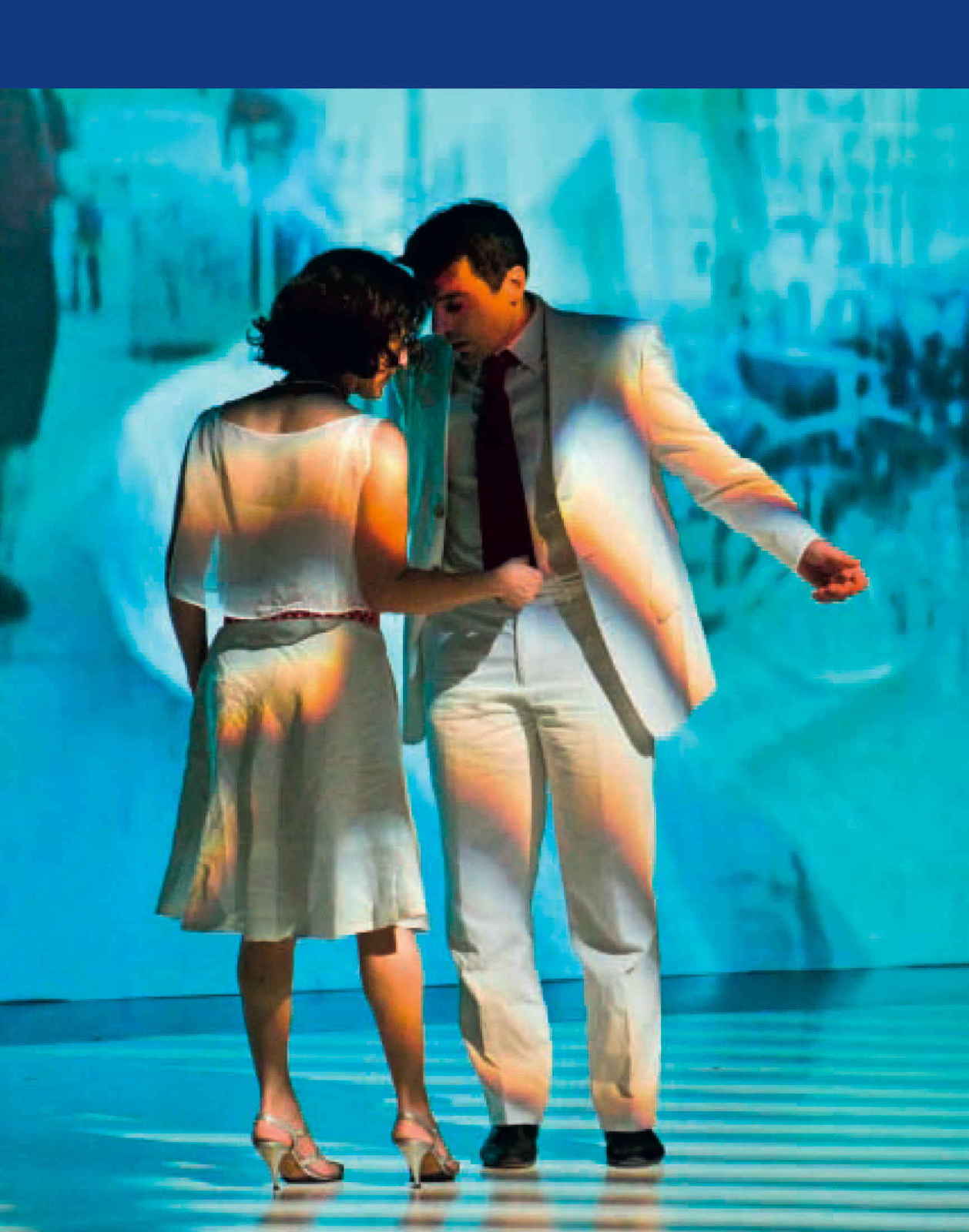
Published in April 2010 by Land NRW – Abteilung Kultur, this is a study by Sinus Sociovision GmbH of the social positioning of immigrants in Germany today. It features a large amount of pictures of the production QuaaDriDuuo, even thou it doesn’t talk about it at all.
It intends to be free from preconceptions and cliches. The study delivers a great amount graphical statistics making it a basic instrument for decision making. It has a strong focus on the cultural production of immigrants in Germany or as the officially correct term defines: „Menschen mit Migrationshintergrund“ *.
* The European concept ‘nationality’ is very different from the one in the American continent. The German language Wikipedia entry for the word Migrationshintergrund is elucidating and also makes for an amusing read defining the term ‘Biodeutsch’ as an antonym to immigrants.