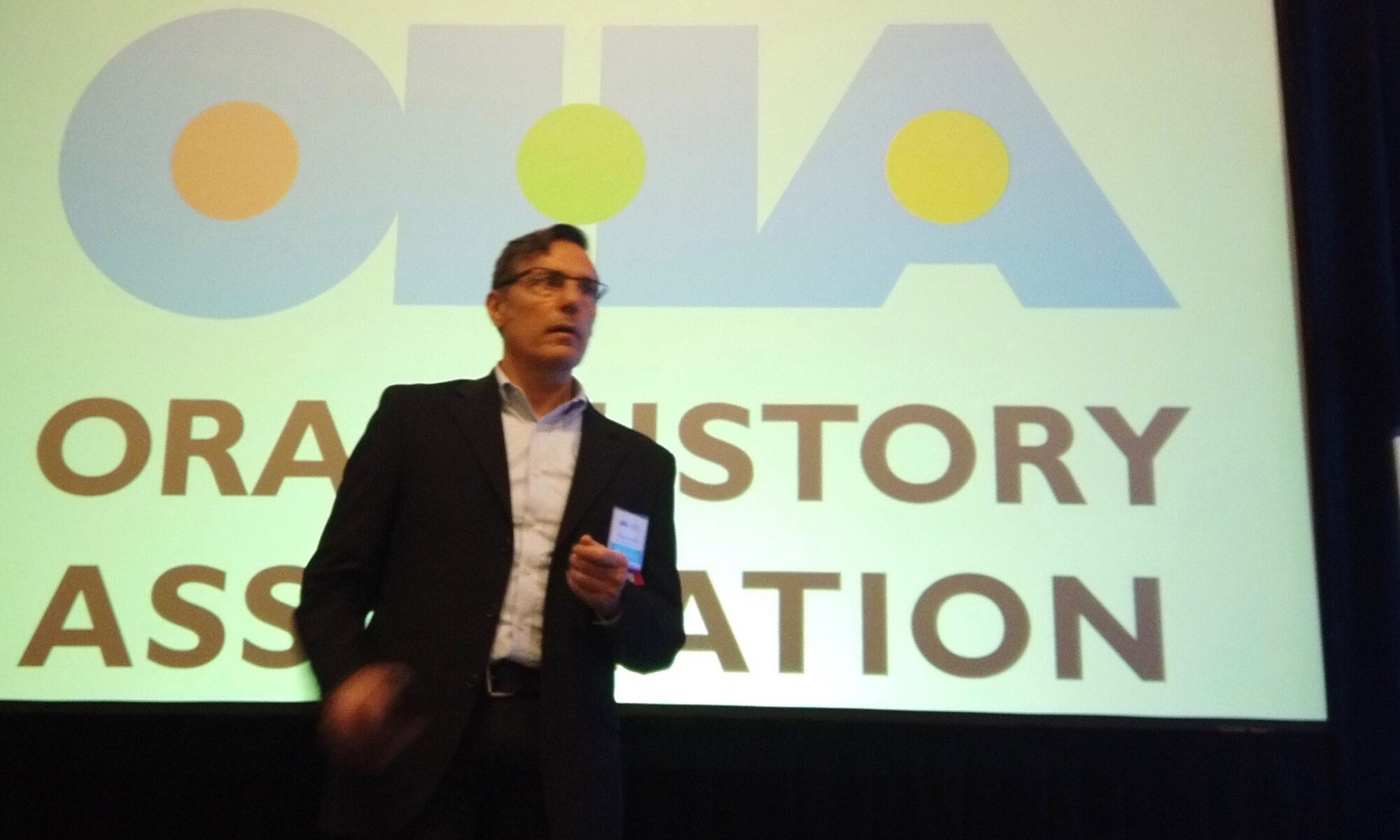
International Oral History Association Conference 16-19 September 2025
Re-Thinking Oral History
Beyond Words: Crafting Oral Histories in Dance and the Arts
Visual Presentation by Ricardo Viviani 18th of September 2025 11:00
Knowledge that is not documented often faces the risk of being forgotten. With the rise of Large Language Models (LLMs), knowledge that is primarily non-logocentric —knowledge that doesn’t rely on words or traditional text— risks falling behind in the rapidly evolving digital landscape. In fields like the performing arts, particularly in theatrical dance (the focus ofmy oral history community), the processes of decision-making, contextualization, and articulating non-logocentric knowledge into oral histories require specific skills. These skills can be shared and expanded, especially within communities like theatrical dance, which transcend national borders and foster deep, personal communication and skill exchange over decades. In this presentation, I will share my approach to creating oral histories indance, which often reflect broader transnational social and politicaldevelopments from the 1940s to the present. My methodology aims toarticulate this knowledge and create transnational legacy maps that preserveand highlight the richness of non-logocentric knowledge.
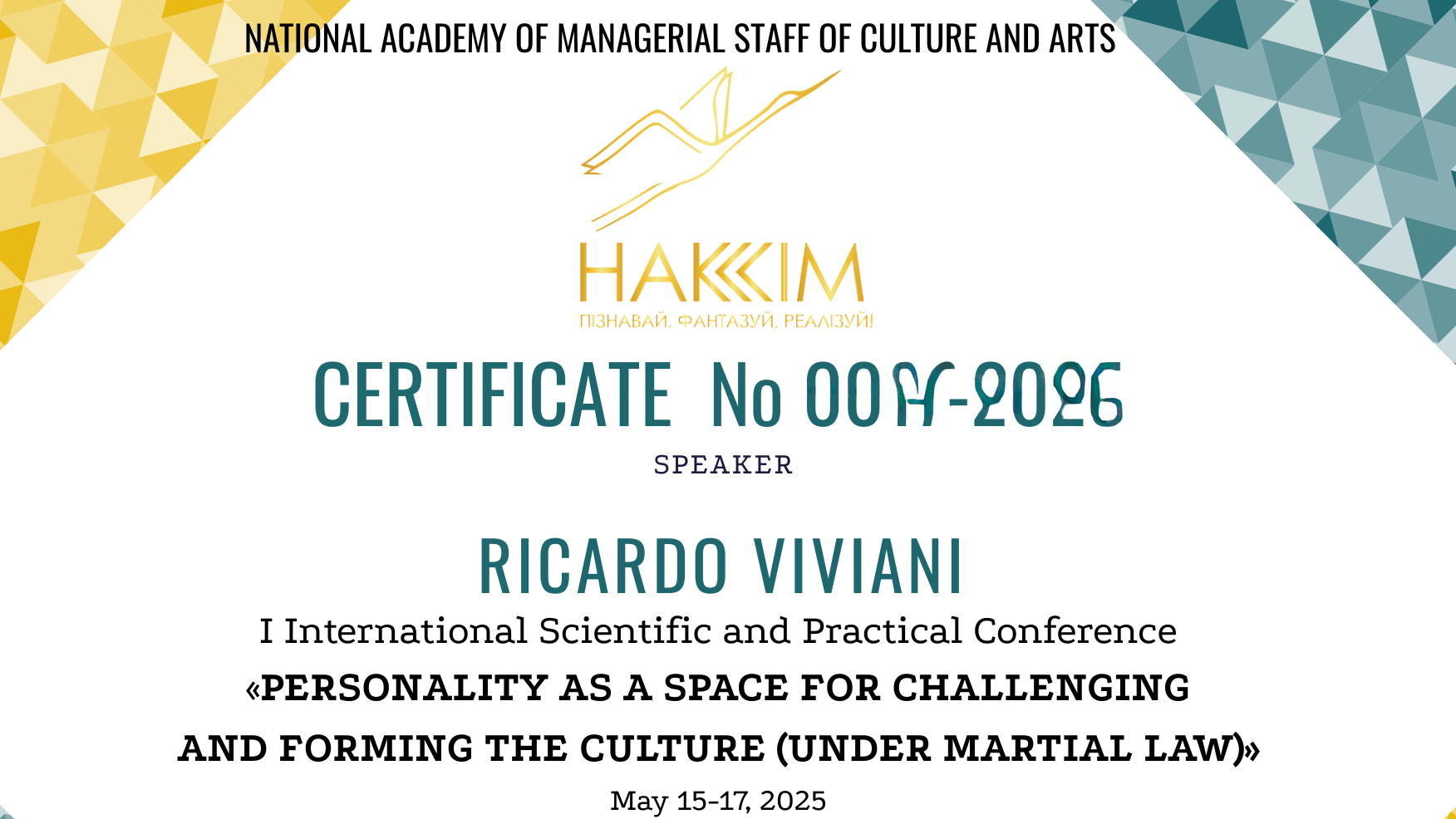
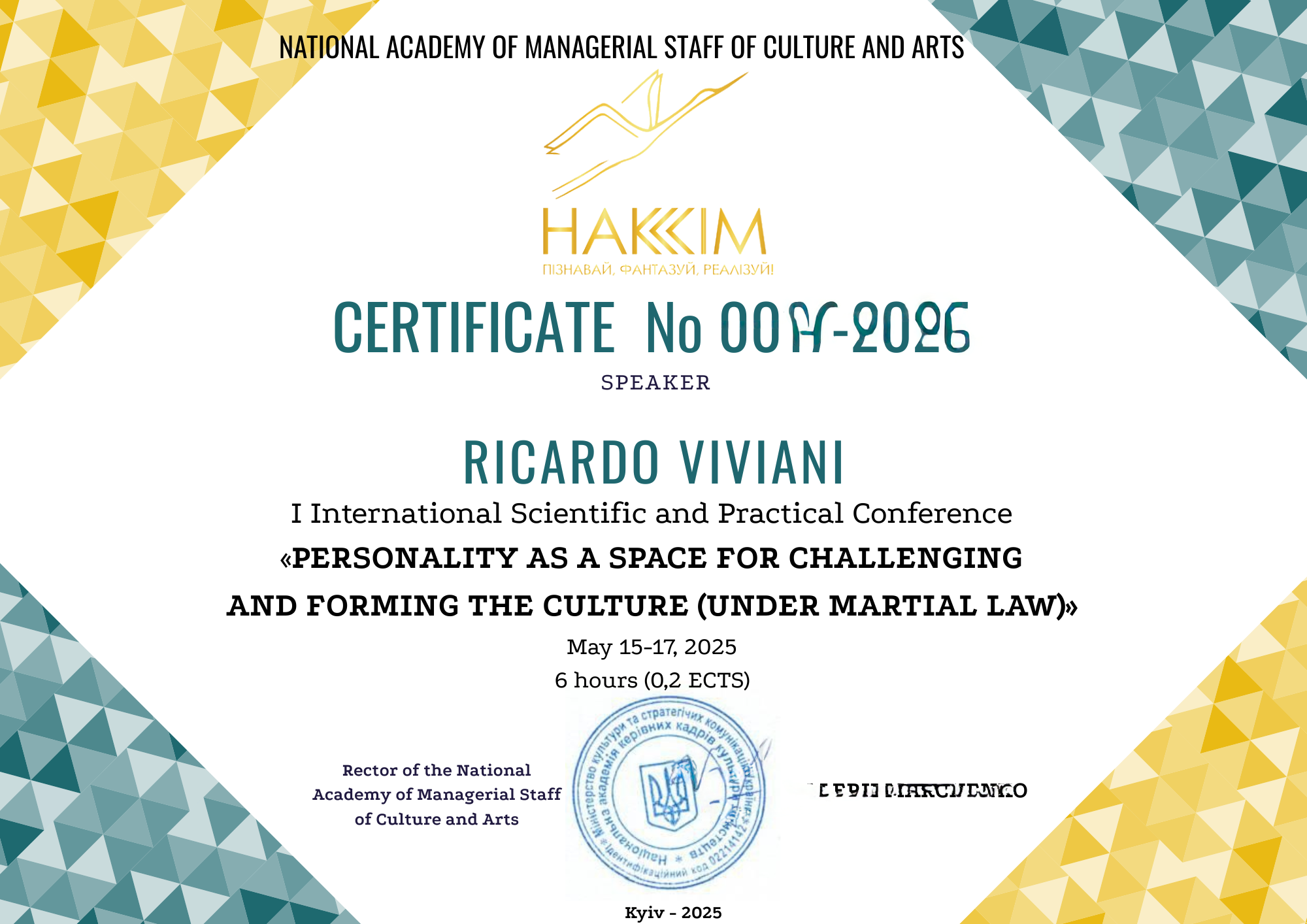
Type: Presentation · Online Contribution Title: The Injustice of Being Silenced Date: 15–17 May 2025 Context: I International Scientific and Practical Conference Personality as a Space for Challenging and Forming the Culture (under Martial Law) Location: National Academy of Managerial Staff of Culture and Arts, Kyiv, Ukraine Organizer: Impulse Transformation Platform Role: Presenter · Researcher
The Injustice of Being Silenced examines the relationship between artistic formation, personal value systems and the social and political environments in which artists come of age. The presentation draws on Ricardo Viviani’s experience both as a dance artist and as an Oral Historian working with life histories of dancers and other practitioners.
The presentation begins from the observation that artistic expression may register aspects of a person’s historical and social experience before those experiences can be fully analyzed or consciously articulated. Dance, theatre, music and performance can therefore provide traces of lived histories that exceed what can later be expressed verbally.
Viviani connects this observation to his own artistic formation during the Brazilian Military Regime (1964–1985), when dance, music and theatre developed forms of expression shaped by political constraint and resistance. The presentation considers comparable situations in other cultural contexts, including Ireland, Germany and the Balkans, where artists worked under political and social pressure.
A central concept is the idea of “anti-biographies”. Viviani uses this term for sequences of events in a person’s biography that become meaningfully contextualized through questioning and the construction of narrative. In this sense, the interview does not simply reproduce a biography already known; it can bring relationships between experience, context and value into articulation. The process has an affinity with oral traditions, in which knowledge is transmitted in forms responsive to the needs and circumstances of the present.
The presentation also considers the relationship between embodied and verbal knowledge. While Oral History is transmitted through the voices of living individuals, artistic works may embody a broader spectrum of lived experience that cannot always be directly articulated in words. Artistic expression can therefore become an additional source through which personal and collective histories may be approached.
The accompanying research notes develop these questions through case studies including Ballet Stagium and the Dzi Croquettes under the Brazilian Military Regime, as well as examples concerning divided Germany, Ireland, the Yugoslav Wars and other situations in which artistic expression developed under political or social duress. These examples examine how cultural agents developed forms, vocabularies and practices capable of expressing experiences that could not always be stated directly.
The presentation connects these observations to Viviani’s broader practice as a choreographer and Oral Historian. His personal history is not treated only as biographical information, but also as part of the perspective through which research questions are formed and artistic expression is understood.
Archival Material:
Conference abstract; presentation notes; presentation material; related research and bibliographic notes; documentation of the online contribution.
Type: Presentation · Oral History Date: 17 October 2019 Context: Oral History Association Annual Meeting, Pathways in the Field: Considerations for those Working In, On, and Around Oral History Location: Sheraton Salt Lake City Hotel, Salt Lake City, Utah, USA Panel: Oral History in Artistic Mediums Role: Presenter · Researcher Affiliation: FernUniversität in Hagen
Panel Participants:
Ricardo Viviani
Kenneth Horowitz
Daniel Horowitz Garcia
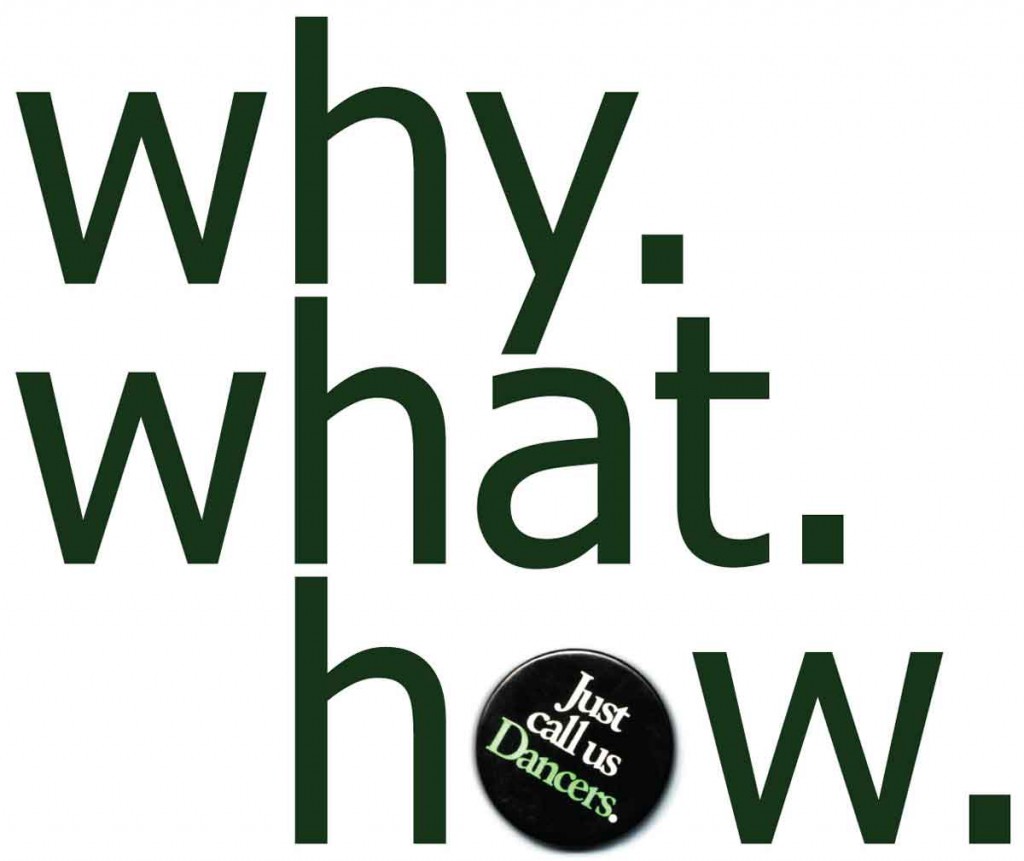
In the winter of 1980/81, I was awarded a scholarship to study at a dance studio located at 400 Lafayette Street in New York City. The name of this studio was Dancerschool. The studio was part of the life work of Dennis Wayne, a star dancer of the 1970s. His company was called “Dancers”, just the word “Dancers”. The simplicity of that name indicates that what they do should suffice. The art speaks for itself.
The title Just Call Us Dancers comes from this memory. It is therefore both a reference to that particular moment in my own formation and a question about what can be communicated by the practice itself, before it is translated into explanatory language.
Just Call Us Dancers — Oral History in the Performing Arts was a presentation about Ricardo Viviani’s pathway from dance and choreography into Oral History and about the methodological questions that arise when oral history is applied to a predominantly non-verbal art form.
The presentation was deliberately personal. Using slides that included images from Viviani’s early years as a dancer, it traced a path that began with his unexpected discovery of dance while studying Biology at the University of São Paulo. During university strikes, he encountered a dance group forming in the Faculty of Architecture (FAU). The group, composed of amateur dancers, chose the deliberately grand institutional name Corpos de Baile. What began as a moment of curiosity became a professional artistic trajectory.
A year or two later, Viviani entered the Escola de Comunicações e Artes — Escola de Arte Dramática (ECA-EAD) at the University of São Paulo to study Theatre Direction, as a dance programme was not available there in 1979. His teachers directed his attention toward non-verbal communication, giving him a way of thinking about performance beyond spoken language.
This formation took place during the Brazilian Military Regime. Viviani observed how music, theatre and dance could contain several layers of meaning and how artists developed forms capable of communicating around censorship. Learning to create and read these layers of meaning became useful to him as a choreographer and remained part of his artistic practice.
The presentation then followed the longer development of this interest: from early choreography and a continuing attention to non-verbal communication, through years of artistic practice and further study, to Viviani’s later decision to investigate these questions more systematically.
Alongside his work as a choreographer, Viviani returned to formal study through Cultural Sciences (Kulturwissenschaften) at FernUniversität in Hagen. He regarded this as continuing education rather than a break from his artistic practice. Through these studies he encountered Oral History and recognized a methodological correspondence with questions he had carried through his artistic life: how can knowledge embedded in lived practice be investigated, articulated and placed within a historical context?
The presentation argued that dancers can be unusually difficult interview subjects because dance contains forms of knowledge that are not primarily verbal. Studio communication can be pragmatic, affective, metaphorical and inseparable from movement. The challenge for the interviewer is therefore not simply to ask dancers to explain what they know, but to create conditions in which aspects of their experience can become narratable.
A related question concerned the role from which knowledge is acquired. In an institutional dance environment, dancers experience creative processes according to their position within the theatre structure. Their memories therefore contain not only individual recollection, but knowledge shaped by their particular role, relationships and responsibilities.
The presentation also introduced the idea that apparently simple biographical questions can open onto much wider historical contexts. A question such as “How did you start to dance?” may begin as a personal biography and lead toward histories of education, cultural identity, political circumstances and artistic formation. The interview becomes a space in which these unexpected connections can emerge.
One example from Viviani’s Oral History work concerns a dancer’s account of learning ballet in Dublin during the 1970s. What begins as a question about entering dance opens onto questions of cultural identity and the experience of studying ballet within a context shaped by the colonial relationship between Ireland and the United Kingdom. Such moments demonstrate how the apparent simplicity of a life-history question can reveal wider historical structures.
The presentation therefore positioned Oral History not simply as a means of collecting memories, but as a form of inquiry in which the specific knowledge of the interviewer and the artistic field can help open questions that might otherwise remain inaccessible.
Archival Material:
Presentation slides; presentation PDF; conference programme; research notes; related Oral History interview material; documentation of subsequent work on non-verbal communication in interviewing.
Analysis of Blue Danube using Life Forms — Ricardo Viviani 2015
Type: Presentation Proposal · Lecture-Demonstration Date: 31 July 2015 Context: Artistic Research / Dance Creation Location: Frankfurt am Main, Germany Role: Choreographer · Researcher Status: Proposal · Never presented
Morphogenesis in Dance The Shaping of Artistic Creation
This lecture-demonstration proposal asks: “What gives shape to things?”
Three approaches to observing creation
Three approaches to observe the process of creation.
Format: Lecture / performance
In this lecture-performance, three theoretical models of morphogenesis are exposed and a live example is performed.
1. What is Morphogenesis?
What gives shape to things?
Morphogenesis is the process that determines how biological forms are differentiated and organized. A right or a left limb has the same genetical materials; why and how it takes one form or another is not biologically fully explained yet.
Performance undergoes similar processes: the coding and rules of genetics as in the modes of communication, the materials and mechanics of genes in the instruments and scores, dance steps and the bodies, are present in the same way. The moment of decision that differentiates and piles up a cell in one way or another, and the combination of one movement next to another, has been the subject of theories in the recent past.
Three approaches to this issue are presented here, from biology, from quantum physics applied to Jungian psychology, and from performance studies.
1.1 Chreode
A neologism created by biologist Conrad H. Waddington in his book The Strategy of the Genes from 1957, chreode (chre — necessary and hodos — path) is explained by using an analogy that uses gravity as an easy-to-relate phenomenon in the physical world: a ball rolling along a path. The theory of chreode provides for self-organisation, natural temporal framework and variation of form.
1.2 Attractors
In combining chaos theory with Jungian Archetypes, psychologist John R. Van Eenwyk creates a possible model that inverts causation and lends to behavior with posterior causation. The future pulls creation as opposed to being pushed from the past. Creativity in this sense, most likely, operates freed from natural time.
1.3 Viscosity
Portuguese philosopher José Gil introduces the concept of “viscosity” to explain movement choices in his article “O Corpo Paradoxal” (Paradoxical Body) in his book Movimento Total – O Corpo e a Dança from 2001. According to his postulate, dance is channeled through paths of lower viscosity that are sensed by the dancer in the act of dancing.
2. Observing Morphogenesis in Performance
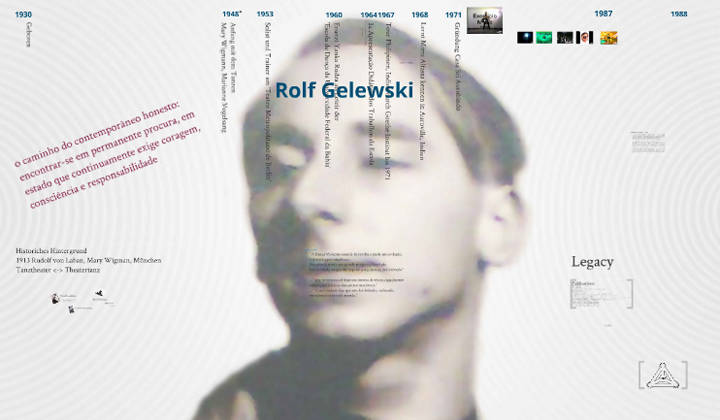
Rolf Gelewski — presentation material
In dance, morphogenesis can be observed both in the rehearsal room by observing specific interactions of the choreographer and dancer, but also in performance by restricting some parameters and concentrating the observation on specific variables.
To access the creation moment, this presentation will use a methodology developed by German dance pedagogue Rolf Gelewski. Gelewski is a disciple of Mary Wigman in the analytical genealogy of Rudolf von Laban.
Rolf Gelewski was a dancer and educator born in 1930 in Berlin. Acclaimed by the press in the 1950s as a new Harald Kreuzberg, he was sent by Mary Wigman to establish the first contemporary dance education program in the University of Salvador, Bahia, Brazil in the 1960s. His later pedagogical work structured a methodology to access the creative impulse in a dance yoga-like meditation system. His influence also reaches the Auroville community in India. Gelewski was killed in a car accident in 1986.
3. Summary
Models for explaining morphogenesis in performance transcend the natural sciences toolkit; still, it can be observed and described. This lecture-demonstration proposes three approaches to observe this phenomenon.
After exposing these theories, a short dance piece will be performed to enable an observation under the aspects of morphogenesis of a moment of creation. This dance piece — Blue Danube — presents a frame that constrains the observable phenomenon of improvisation in three parameters: Force, Speed and Timing.
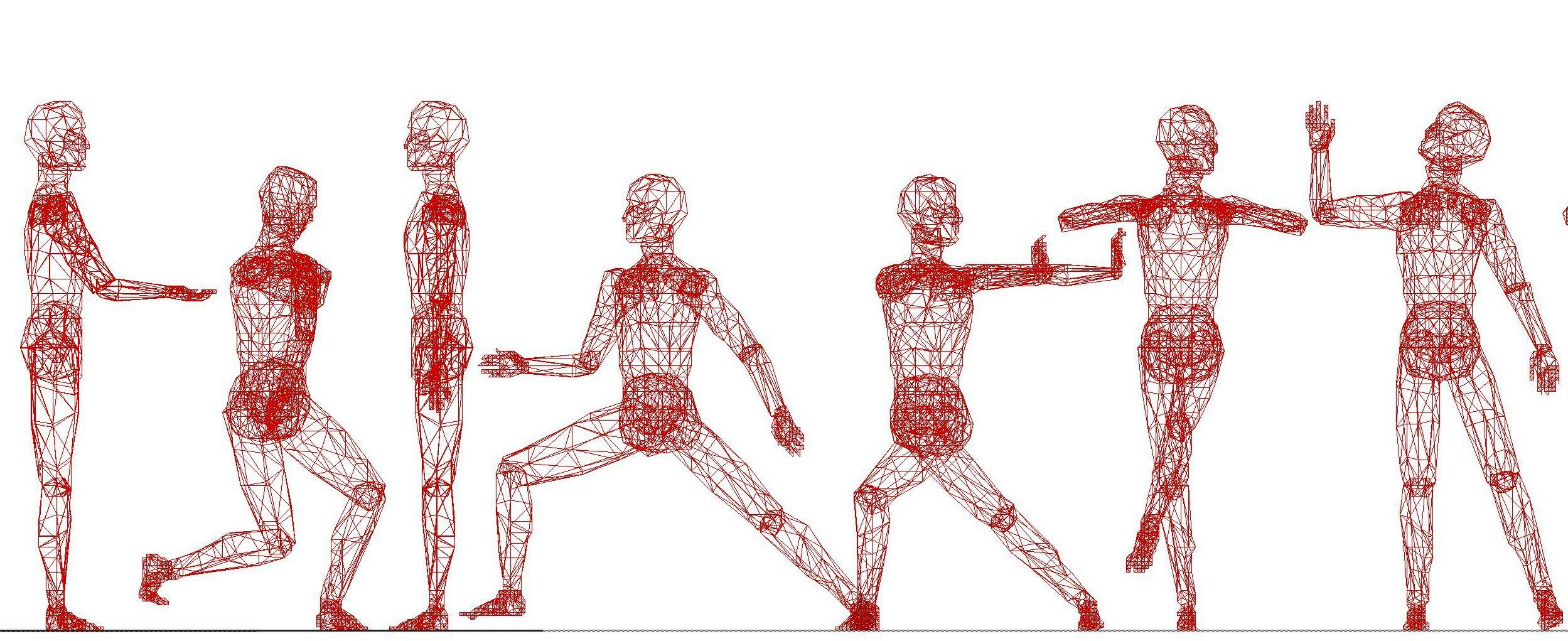
The proposal also used Life Forms for the visual analysis of human movement. The software became an important tool in Viviani’s choreographic work and was used intensively in several productions in the early 2000s.
Later Development
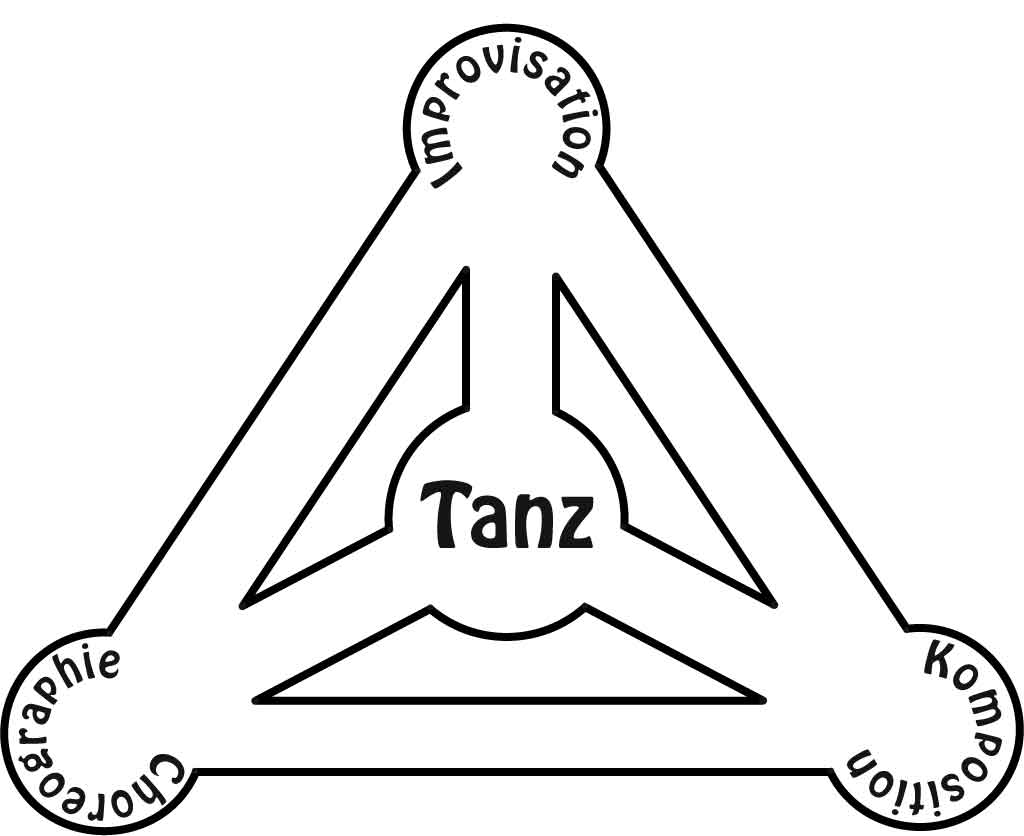
A working vocabulary that developed from this line of inquiry later became important in Viviani’s thinking about dance creation, particularly the distinctions between improvisation, choreography and composition. These distinctions belong to later work and are not presented here as a completed triad in the 2015 proposal.
Formal Requirements
The original proposal specified the following technical requirements:
Stage dimensions: minimum 8 meters wide, 2 meters deep
Equipment: video projector and computer for PowerPoint, and PA system for music playback
Archival Material:
Lecture-demonstration proposal, version 1.0 EN, 31 July 2015; PDF handout; presentation images; Life Forms analysis; related Blue Danube documentation.
‘Dance is at the bottom of the food chain.’ (William Forsythe 2009)
Neuroscientists, philosophers, and also dance academics of all sorts have been trying to figure out what it is: what do dancers know that other people can’t grasp? Unless they’ve been through the mill of arduous training and rehearsing, they have no way of knowing it. Call it embodied knowledge, somatic intelligence and so forth, it is rarely articulated by dancers, so there’s little understanding of it outside the dancer’s circle. It is a secret. A secret not by intention but by virtue of its nonverbal nature.
Ricardo Viviani wurde in São Paulo, Brasilien geboren. Er studierte Choreographie bei der legendären Bessie Schoenberg, später dann an der Joffrey Ballet School in New York und war Stipendiat an verschiedenen Tanzinstituten in Brasilien und den USA. Danach wurde er Solotänzer beim Balé da Cidade de São Paulo, der Manuel Alum Dance Company und am Nationaltheater Weimar. In den Musicals „A Chorus Line“ und „Oh! Calcutta!“ wirkte er als Darsteller am Broadway mit. Als Choreograph brachte er eigene Tanzabende in São Paulo, New York und Köln heraus. Im Bereich Musiktheater choreographierte er u.a. die Operette „Im weißen Rössl“ am Nationaltheater Weimar, „Gegen die Wand“ am theaterhagen und am Theater Heilbronn das Musical „The Wild Party“.
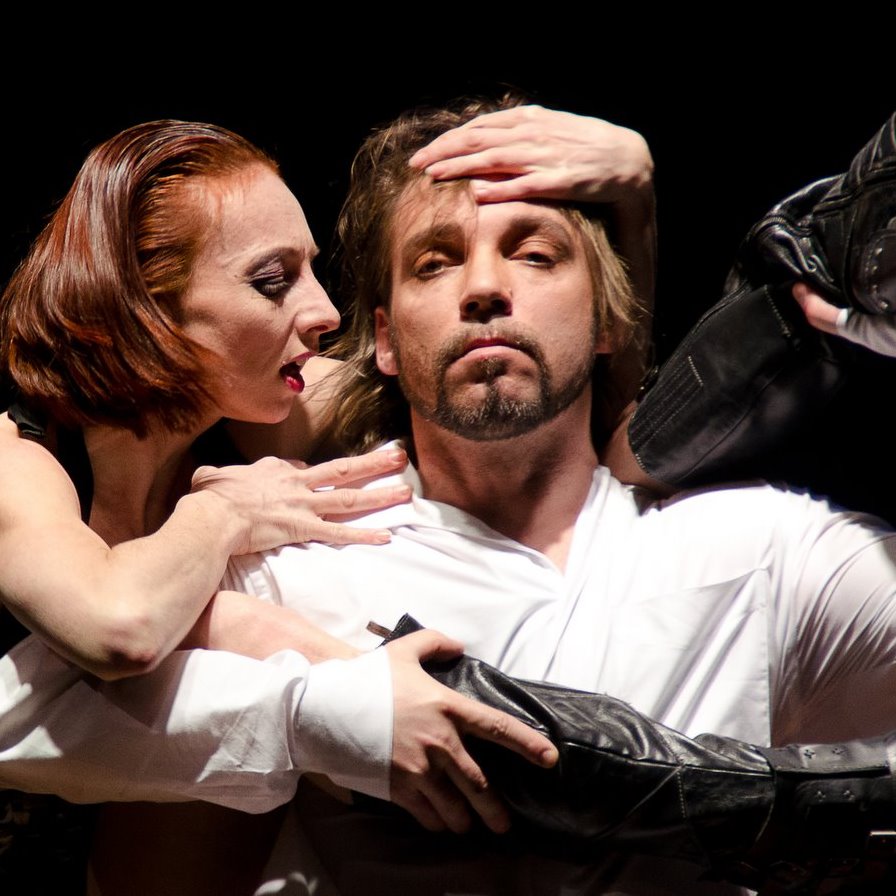
Bärbel Stenzenberger, Radoslaw Wielgus – Gegen die Wand – Photo: Kuehle
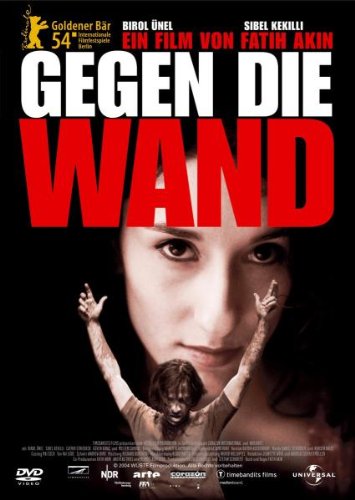
Sie ist eine junge Frau, deren unbändiger Hunger nach Leben sie in einen Selbstmordversuch treibt. Er, am Leben gescheitert, landet nach dem Versuch, sich ebenfalls das Leben zu nehmen, in der gleichen Klinik. Bei aller Verschiedenheit haben sie eines gemeinsam: Als Deutschtürken sitzen sie zwischen allen Stühlen. So werden Cahit und Sibel zum Paar – zunächst nur zum Schein, denn Sibel will mit einer Scheinehe mit einem Landsmann den engen Moralvorstellungen ihrer Familie entfliehen. Die tatsächliche Annäherung der beiden scheitert, als Cahit im Affekt Sibels Exgeliebten erschlägt. Am Ende beginnen beide, jeder für sich, ein neues Leben an einem neuen Ort.
… Gleichzeitig ist „Gegen die Wand“ eine Tanzoper. Die Protagonisten nähern sich einander, können sich doch nicht berühren, und Ricardo Viviani findet für das bizarre Werben dieses seltsamen Liebespaares eine Choreographie, die zum traurigsten und zärtlichsten gehört, das auf einer Bühne je zu sehen gewesen ist. …
… Glanzvoll und dramaturgissch geschiekt sind die Tanzeinlagen von Ricardo Viviani und Bärbel Stenzenberg, die die Sexszenen subtil, aber unverklemmt – und technisch geradezu akrobatisch – umsetzen. …
… alle mittleren und kleineren Partien in besten Händen sind … Herausrangend über den ganzen Abend: Bärbel Stenzenberger und Ricardo Viviani dessen Choreographie geradezu das “tänzerische Psychogramm” Sibels und Cahit zeichnet …
” Die Oper “Gegen die Wand” hat am Samstag im Theater Hagen Premiere.
Die Inszenierung ist an den gleichnamigen und preisgekrönten Film von Fatih Akin angelehnt. Sie erlaubt Einblicke in die Lebenswelt der in Deutschland lebenden Türken und deren Suche nach einer eigenen kulturellen Identität. Theaterintendant Norbert Hilchenbach will sich damit auch gezielt an ein junges Publikum wenden und erreichen, dass die deutsch-türkischen Beziehungen Diskussionsthema werden und die Wand zwischen den Kulturen durchlässiger wird. Der Theater-Förderverein ermöglicht 3000 Schülern einen Besuch der Oper.”