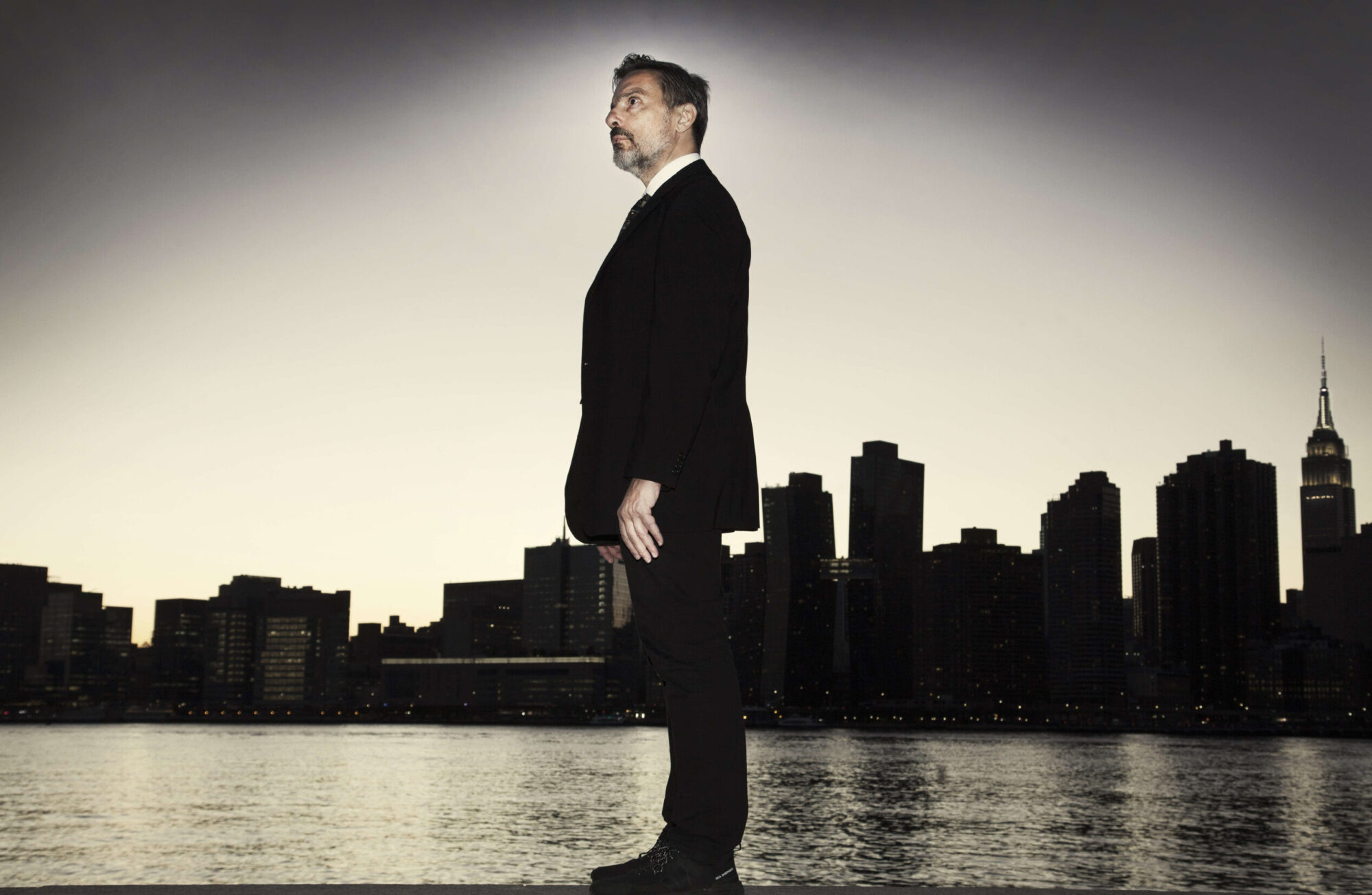
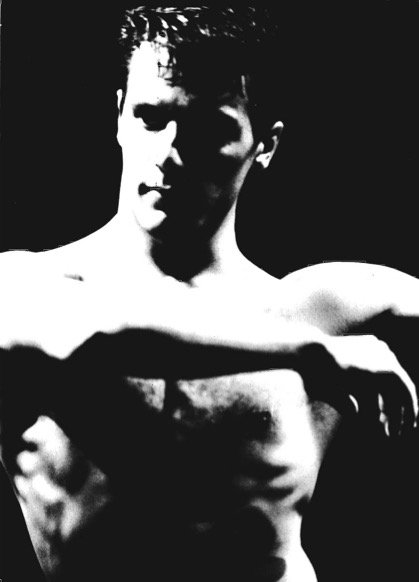
Colchões Ortopédicos – Dance Concert

Postcard for Ricardo Viviani's Colchões Ortopédicos dance concert at Dance Space, New York, October 1988
Colchões Ortopédicos — an evening of Brazilian new dance, Dance Space, New York City, 29–30 October 1988.

Type: Production · Dance Concert / Presentation
Date: 29–30 October 1988
Time: 8:00 PM
Context: An evening of Brazilian new dance presenting repertory works and new works by Ricardo Viviani
Location: Dance Space, 622 Broadway, New York City
Institution / Organisation: Dance Space; self-produced by Ricardo Viviani; assisted by Dance Theater Workshop
Role: Choreographer · Performer · Producer / Presenter
Participants: Ricardo Viviani; Cheryl Hartley; Fernanda Meyer; Mark Bridges; Marcelo Galbetti; Fernando Vugman; additional production personnel as documented below
Status: Historical Record — documented by surviving programme and press material


Record / Description

Colchões Ortopédicos was the title of Ricardo Viviani’s self-produced evening of Brazilian new dance presented at Dance Space in New York City on 29 and 30 October 1988. The surviving programme describes the event as an evening bringing together repertory and newly developed works, and identifies Dance Theater Workshop as an assisting organisation.

The programme documents six works: Girl, Serious Talk, Blue Danube, Pavões, Colchões Ortopédicos (Orthopedic Mattresses) and Rubber Gloves. It therefore provides an important production-level record of a period in which Viviani’s Brazilian and New York choreographic histories were being brought together within the context of what was described publicly as Brazilian new dance.

The production is particularly significant because the programme does not present the works as isolated creations. It places works from different moments of Viviani’s development into one evening, including Blue Danube, identified as dating from 1982, Colchões Ortopédicos, dated 1984–88, and Rubber Gloves, identified as a 1988 premiere. This chronology makes the concert an important document for understanding the continuity and transformation of Viviani’s choreographic practice during the 1980s.

The Work / Creation

The surviving programme establishes the following six works within the concert:

  • Girl — solo; music by Tom Jobim; choreography by Ricardo Viviani; danced by Cheryl Hartley.
  • Serious Talk — duet; music by Antonio Carlos Jobim; choreography by Ricardo Viviani; danced by Cheryl Hartley and Ricardo Viviani.
  • Blue Danube (1982) — solo; choreography by Ricardo Viviani; danced by Ricardo Viviani with Cheryl Hartley identified in the programme documentation.
  • Pavões — work in progress; music by Heitor Villa-Lobos; costumes by Mark Bridges; danced by Fernanda Meyer.
  • Colchões Ortopédicos / Orthopedic Mattresses (1984–88) — solo; text by Fernando Vugman; costumes by Mark Bridges; additional music by Marcelo Galbetti; bilingual version, choreography and soundtrack by Ricardo Viviani; danced by Ricardo Viviani.
  • Rubber Gloves (1988) — premiere; duet; music by Heitor Villa-Lobos; costumes by Mark Bridges; choreography by Ricardo Viviani; danced by Cheryl Hartley and Ricardo Viviani. The programme notes that the solo in Rubber Gloves was dedicated to Viviani’s father.

These works should ultimately receive individual records where their histories, movement vocabularies, collaborators, music, costumes, performances and critical documentation can be developed in detail. This production record should remain focused on their coming together within the 1988 concert.

Activity / Event

The concert took place on Saturday 29 and Sunday 30 October 1988 at 8:00 PM at Dance Space, 622 Broadway, New York City. The surviving programme identifies the event as a presentation by Ricardo Viviani and describes it as an evening of Brazilian new dance.

The concert was self-produced and was assisted by Dance Theater Workshop. The programme acknowledges Norman Kean, Ron Nash, Maria di Dia and the staff of the Edison Theater, particularly Karen, together with Tim McCormack, Phil Barbieri, Jodi Johnson, Bob Hillebrecht and Dan Carter. The production crew is identified as Jim Garvey, Mel Marwitz, Linda Miller and McCormack.

Production

The production was organised around a repertoire that crossed several phases of Viviani’s choreographic work. The programme itself provides a useful internal chronology: Blue Danube is identified as a 1982 work; Colchões Ortopédicos as dating from 1984–88; and Rubber Gloves as a 1988 premiere. Pavões is described as a work in progress.

The production also brought together a group of collaborators whose work extended beyond performance. Cheryl Hartley performed in several of the works; Fernanda Meyer performed Pavões; Mark Bridges was responsible for costumes for Pavões, Colchões Ortopédicos and Rubber Gloves; Fernando Vugman contributed the text for Colchões Ortopédicos; and Marcelo Galbetti provided additional music for that work.

The programme’s biographical material also places these collaborators within Viviani’s wider New York professional network. Cheryl Hartley is identified as having danced on Broadway in Oh! Calcutta! and as having toured Europe and the Middle East with Viviani. Mark Bridges is identified as a costume designer with theatre, film and television credits. Fernanda Meyer is described as a dancer, choreographer and teacher with professional activity in São Paulo, Japan, San Francisco and New York.

Intellectual Production

The production is also relevant to Viviani’s broader investigation of the relationship between humanity, technology, gesture and movement. However, the surviving 1988 programme functions primarily as production and historical documentation rather than as a separate intellectual publication. More developed statements concerning choreographic methodology, technology and the conceptual framework of individual works should be documented in their respective work or intellectual production records.

Primary Source / Documentation

The principal surviving production document currently located is the eight-page programme and press dossier for Colchões Ortopédicos, dated October 1988. It contains the event announcement, programme, artist biographies, acknowledgements, press listings and contemporary press material.

The programme establishes the exact performance dates, venue and address, the title of the evening, the six works presented, individual credits, performers, costume and music contributions, production assistance and a number of contemporary press references. It is therefore the primary source for the production metadata presently recorded on this page.

The same document contains contemporary press material describing Viviani as a São Paulo-born dancer and choreographer presenting an evening of Brazilian new dance in New York. One clipping states that the concert would present repertory pieces and new works, while another lists the Dance Space performances on 29 and 30 October.

The programme also preserves an important connection with the earlier history of Colchões Ortopédicos. It identifies the work as dating from 1984–88 and states that it had first been presented at Dança na Praça, an outdoor festival in São Paulo, Brazil. This provides a documented bridge between the Brazilian origins of the work and its New York development.

The programme further preserves the contemporary terminology surrounding the event: the evening is repeatedly described as Brazilian new dance. This wording is useful historically because it places Viviani’s work within the presentation and reception of Brazilian modern / contemporary dance in New York during the late 1980s.

Research

This production is a key source for reconstructing the development of Viviani’s choreographic practice during the 1980s. The chronological spread of the works makes it possible to examine how movement ideas, performance relationships, music, costume and technological or structural approaches persisted and changed across several years.

Serious Talk is particularly relevant to the history of Viviani’s interest in technology and systems of movement organisation. Earlier documentation connects the work with an outdoor project in Brazil and with computer-mediated variation of movement material. The exact chronology of its original creation should be reconciled against the surviving programme, interview material and other archival sources rather than assumed from a single later recollection.

Blue Danube provides another important chronological marker. The 1988 programme dates the work to 1982, while surviving New York documentation records its presentation with Cheryl Hartley and later critical response. The existing Blue Danube record should be expanded as an individual work record and then linked back to this production.

Colchões Ortopédicos is equally important because the programme gives it a 1984–88 date range and records its development from the Brazilian Dança na Praça context into the New York production. Its combination of text, bilingual presentation, soundtrack, choreography and additional music makes it a particularly useful individual record for documenting Viviani’s dance vocabulary and collaborative practice.

Relationship

This production is directly related to the six works documented in the 1988 programme: Girl, Serious Talk, Blue Danube, Pavões, Colchões Ortopédicos and Rubber Gloves. The production record establishes their relationship as a single concert programme; the individual work records should document their independent histories.

The production is also related to the professional collaboration between Ricardo Viviani and Cheryl Hartley, as well as to Mark Bridges’ costume work. These relationships connect the concert to Viviani’s wider New York performance history, including his professional association with Oh! Calcutta!.

The production is further connected to Viviani’s Brazilian choreographic history through Colchões Ortopédicos and the documented reference to Dança na Praça in São Paulo.

Place / Context

The 1988 concert belongs to the New York phase of Viviani’s professional career while retaining a strong connection with his Brazilian choreographic background. The programme explicitly presents the event as Brazilian new dance and identifies Viviani as a dancer and choreographer from São Paulo.

Dance Space, at 622 Broadway, provided the New York setting for the presentation. The production’s self-produced character, combined with assistance from Dance Theater Workshop, is also significant: it documents an independently organised presentation supported by an established dance organisation rather than a conventional commercial production structure.

Selected Work Contexts

Colchões Ortopédicos / Orthopedic Mattresses: The programme dates the work 1984–88 and credits text by Fernando Vugman, costumes by Mark Bridges, additional music by Marcelo Galbetti, and choreography, soundtrack and bilingual version by Ricardo Viviani. It was first presented at Dança na Praça, an outdoor festival in São Paulo. The work deserves a separate expanded record dealing with its movement vocabulary, text, soundtrack, bilingual structure and relationship to the later New York presentation.

Blue Danube: The 1988 programme identifies the work as dating from 1982. Existing documentation of its New York presentation records Ricardo Viviani and Cheryl Hartley and includes contemporary critical response, including Jennifer Dunning’s observation in The New York Times that the quality of movement in Blue Danube was particularly subtle and interesting. The individual work record should be developed as a pivotal document of Viviani’s early choreographic vocabulary.

Serious Talk: The programme identifies the work as a duet performed by Cheryl Hartley and Ricardo Viviani, with music by Antonio Carlos Jobim. Earlier documentation associates the work with a Brazilian outdoor project and with computer-mediated organisation of movement sequences. The chronology of its original creation should be established through comparison of the surviving interview, programme and other archival sources.

Pavões: The programme describes the work as a work in progress, with music by Heitor Villa-Lobos, costumes by Mark Bridges and Fernanda Meyer as performer. The work is part of the Brazilian cultural and Carnival-related material that appears elsewhere in Viviani’s archive. Mark Bridges’ recollection concerning the exceptionally large rear section of Fernanda Meyer’s costume — and his having to carry or walk with it through Manhattan from Midtown toward the venue — should be preserved in the individual work record as an identified personal recollection, rather than as independently verified production fact.

Girl: The programme identifies Girl as a solo choreographed by Ricardo Viviani and danced by Cheryl Hartley, with music by Tom Jobim. Its inclusion in the 1988 concert links the work to Viviani’s ongoing collaboration with Hartley.

Rubber Gloves: The programme identifies Rubber Gloves as a 1988 premiere, performed as a duet by Cheryl Hartley and Ricardo Viviani, with music by Heitor Villa-Lobos and costumes by Mark Bridges. It also records that the solo in the work was dedicated to Viviani’s father. This work was omitted from the earlier reconstruction of the concert and should now be treated as part of the documented 1988 programme.

Personal Reflection

[Add Ricardo Viviani’s retrospective reflection on the 1988 concert, the decision to present these works together, the experience of working with Cheryl Hartley and Mark Bridges, and the relationship between the Brazilian origins of the work and its New York presentation.]

Archival Material

Eight-page Colchões Ortopédicos programme / press dossier, October 1988; concert postcard; press clippings; contemporary listings; documentation for Girl; documentation for Serious Talk; documentation for Blue Danube; documentation for Pavões; documentation for Colchões Ortopédicos; documentation for Rubber Gloves; video documentation where available; photographs; and related archival correspondence and production material.

Primary archival document: Colchões Ortopédicos — programme and press documentation, October 1988.


Continue reading “Colchões Ortopédicos – Dance Concert”
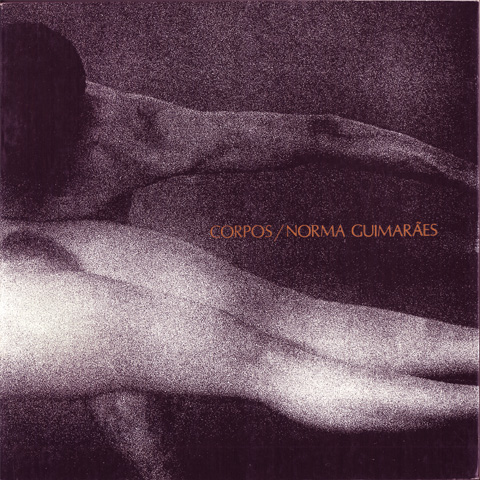
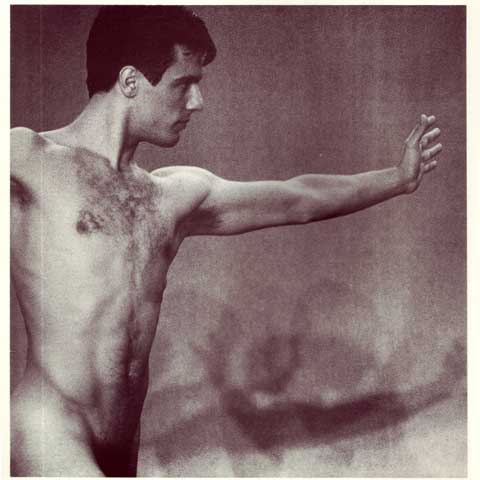
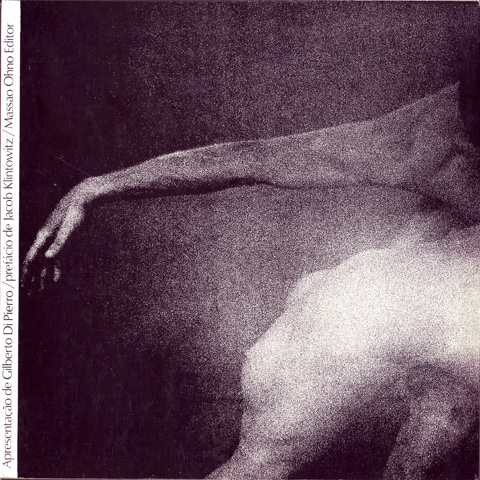
Corpos / Norma Guimarães

Corpos

ensaio fotográfico de Norma Guimarães

Apresentação de Gilberto Di Pierro
prefácio de Jacob Klintowitz
Massao Ono Editor 1987
Edição de 700 exemplares
Paperback circa 40 pages
Shop

Luzes, ação, click. Arte e objetiva, arte-objetiva, click. Rostos, corpos, click. Sombras, magias, click. Pés, peitos, coxas. Click, click, click. Olhos sensuais, bocas sensuais, corpos sensuais. Danças, click, sons, click, sexo, click. Há uma mão que passa no corpo que olha para os olhos que espiam outras mãos passando em outros corpos que olham para outros olhos. Pele, pele, pele. Suor, perfume, magia. Esta é uma viagem fotográfica de Norma Guimarães pelos corpos e pelos pêlos de bailarinos, atrizes. Este é um documento fotográfico de um espetáculo onde os corpos encontraram as artes e, pelo vão da porta, encontraram a máquina fotográfica de Norma Guimarães.
Gilberto Di Pierro (Giba Um)

Com: Inês Aguiar, Ricardo Viviani, Manuela Assunção, Flávio Cardoso, Vera Mancini, Fernando Wellington, Miriam Lins e Graça Bermam

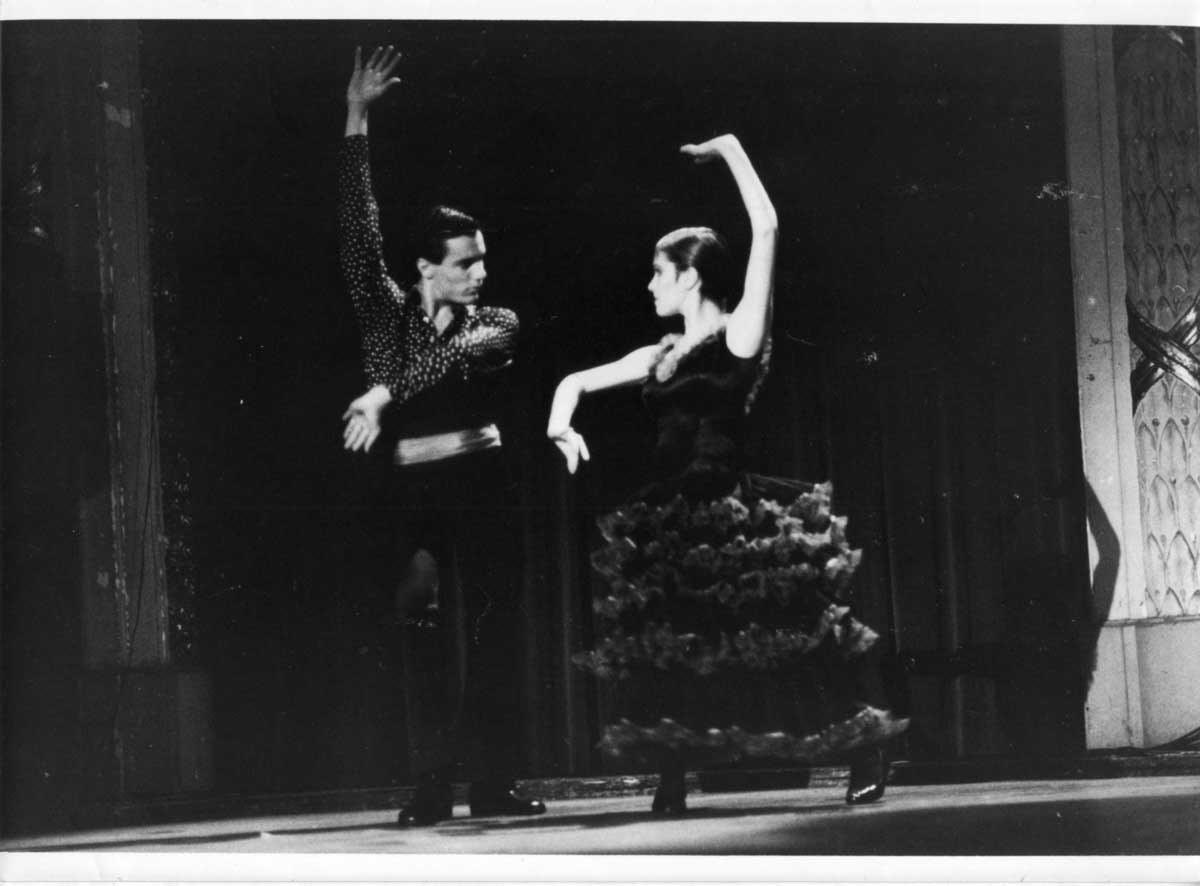
Blue Danube @ DanceSpace NYC 1986


Alternatives: Vimeo Outside Germany: YouTube

reviews

The Village Voice by Bruce Supree

Serious Talk – New York City

… Darkly handsome, Viviani has the masculine power of the young Robert Mitchum, but he’s hot, not cool. Joining Hartley for Serious Talk, he’s slightly menacing, controlled, agressive — but unhurried. A ’40s film noir, Mickey Spillane kind of guy — but he doesn’t lay a hand on her. … Viviani’s in formal pants, black suspenders, a sleeveless undershirt. He slowly raises his arms, folds them across his chest. He points his index finger, then with the other hand pushes softly in the opposite direction with measured force. Repeating gestures, speeding them up, adding more, he produces a steady flow of contradictory impulses, while playing off the waltz rhythms. He opens his hands with a kind of helpless strength, then draws them in to his chest and cringes. The accelerating repetition of impassioned gestures gradually builds as unbearable pressure of feeling in him.

The New York Times
by Jennifer Dunning

Blue Danube – New York City

… Mr. Viviani, a relatively new choreographer, took simple themes and dealt with them with admirable simplicity … The quality of movement is most subtle and interesting in “Blue Danube,” set to the Strauss waltz, its message is mystifying. Mr. Viviani and Cheryl Hartley were personable dancers.

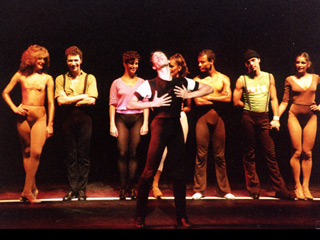
A Chorus Line 1983

Ricardo Viviani as Greg

It was a singular sensation being touched by the line, as you can see in this picture.

Ricardo Viviani playing Greg in ‘A Chorus Line’.

Some well known actors can seen in this picture.

Can you name the people?

‘ACL’ in São Paulo * April 15th, 1983.

Oh! Calcutta!

Ricardo Viviani — archival material related to Oh! Calcutta!
Archival material related to Oh! Calcutta!

Type: Musical Theater · Dance Work / Piece
Date: 1983–1989
Time-span: 1983–1989 — Ricardo Viviani’s documented and recalled period of participation
Context: Musical theater / revue; Brazilian productions, touring engagements and Broadway revival
Location: São Paulo, Brazil; Rio de Janeiro, Brazil; Brazil; Oslo, Norway; Israel; New York, USA
Role: Performer · Dancer · Singer
Status: Historical Record — incomplete / ongoing archival reconstruction


Oh! Calcutta! This page documents Ricardo Viviani’s participation in the musical theater work and revue Oh! Calcutta! during the 1980s, including engagements in Brazil, an Oslo tour, a recalled tour in Israel, and his participation as a guest on Broadway in New York. The record is being reconstructed from surviving archival material and personal recollection and is not yet complete.

The Work / Creation

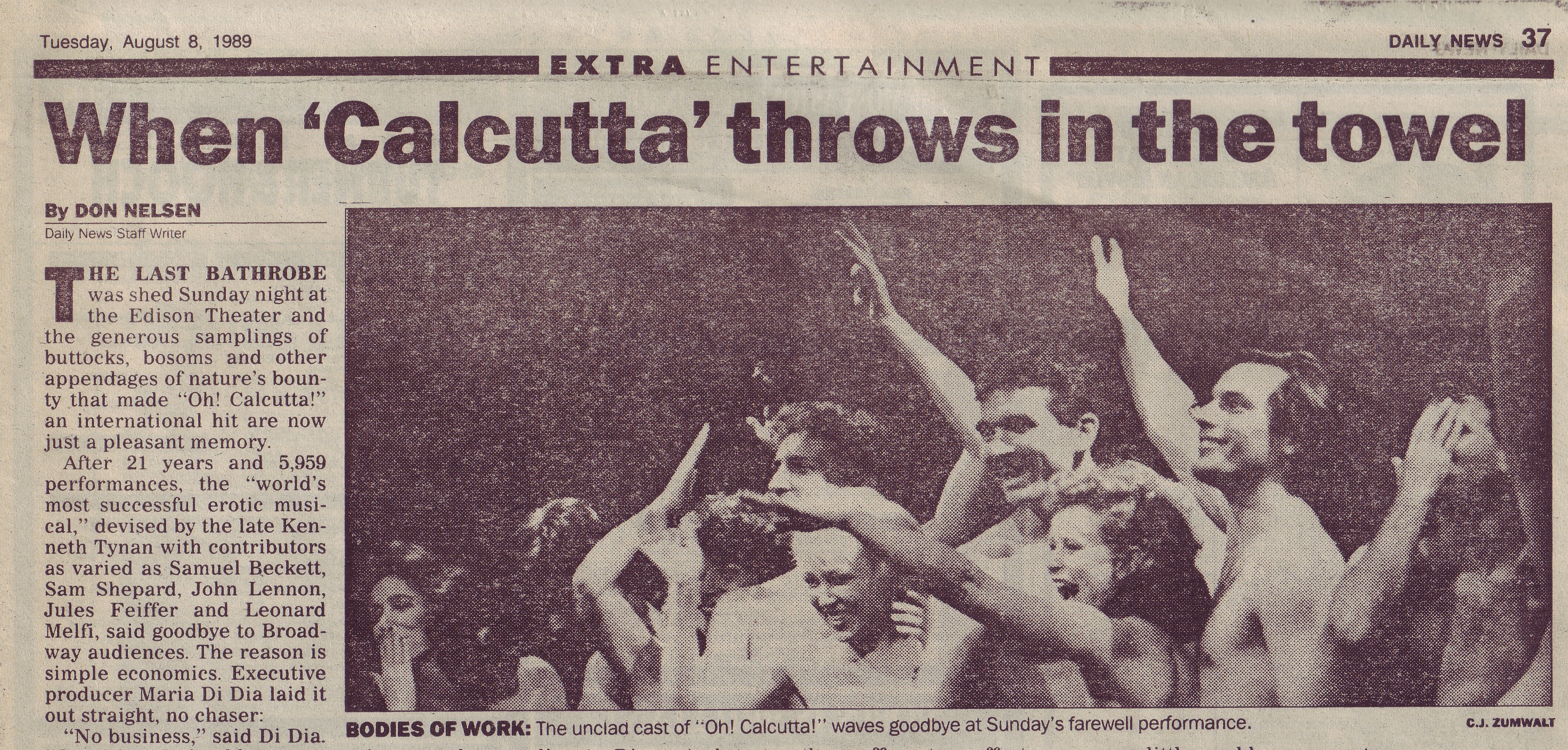
Oh! Calcutta! is a theatrical revue created by British drama critic Kenneth Tynan and produced by Hillard Elkins. It premiered Off-Broadway in New York in 1969 and subsequently had productions in London and elsewhere. The work combines sketches, music, dance and performance and became known for its treatment of sexuality and extensive nudity. The Broadway revival opened at the Edison Theatre on 24 September 1976 and closed on 6 August 1989 after 5,959 performances.

For this archive, Oh! Calcutta! is treated as the Work / Creation, while Ricardo Viviani’s individual engagements are understood as particular productions, tours or performance contexts of that work. The present page therefore functions as a work-level record that can later be connected to separate production and performance records as further documentation is identified.

Production

Ricardo Viviani participated in several different contexts of Oh! Calcutta! during the 1980s. The currently identified chronology includes São Paulo in 1983, Rio de Janeiro in 1984, a Brazilian tour, an Oslo engagement in 1986, a recalled three-month tour in Israel believed to date from approximately 1986, and guest participation in the Broadway revival in New York from 1986 to 1989.

The individual productions and touring engagements have not yet been fully separated into independent archive records. Where exact venues, dates, companies or production personnel remain undocumented, no additional details are asserted here.

Performance History

São Paulo — 1983
Ricardo Viviani participated in Oh! Calcutta! in São Paulo in 1983. Existing archive material identifies his participation as singer / dancer. The exact venue, performance dates and complete production information remain to be reconstructed.

Rio de Janeiro — 1984
Ricardo Viviani participated in the Rio de Janeiro production in 1984. Further documentation is required to establish the complete production record.

Brazilian Tour
Ricardo Viviani recalls participating in a Brazilian touring context of Oh! Calcutta!. The present archive does not yet establish a complete itinerary. Individual cities, venues and dates should be added when supported by documentation or clearly identified recollection.

Oslo, Norway — 1986
Ricardo Viviani recalls participating in an Oh! Calcutta! tour in Oslo in 1986. This is presently recorded as a personal recollection requiring documentary confirmation. No specific venue or performance dates are asserted at this stage.

Israel — approximately 1986
Ricardo Viviani recalls participating in a tour in Israel lasting approximately three months, believed to have taken place in 1986. The year and duration remain provisional pending documentary confirmation.

Broadway, New York — 1986–1989
Ricardo Viviani participated as a guest in the Broadway revival of Oh! Calcutta! at the Edison Theatre during the final years of its run. Surviving programme material dated 13 November 1988 identifies Ricardo Viviani as a member of the company and records multiple performance assignments.

The surviving programme documents Ricardo Viviani in different cast configurations and performance assignments including Attendant, One on One with Cheryl Hartley, Man #2 in Four in Hand, Dance for George, Interviewer, Nurse, One on One with Amy Fortgang and Love Lust Poem. The presence of different configurations is relevant to understanding that his participation was not necessarily limited to one fixed assignment.

Primary Source / Documentation

Format: Programme / Press Clipping / Photograph / Scan
Provenance: Ricardo Viviani Personal Archive
Status: Original / Facsimile / Archival scan

A surviving Edison Theatre programme dated 13 November 1988 documents Ricardo Viviani as part of the Broadway company and records multiple performance assignments. A Daily News clipping dated 8 August 1989 documents the closing of the Edison Theatre production after 5,959 performances. Additional photographs and press material remain in the archive and require further identification and contextualisation.

Reception / Critical Documentation

The broader critical history of Oh! Calcutta! includes substantial contemporary debate concerning its theatrical form, sexual subject matter and use of nudity. The work received sharply differing critical responses from the beginning, while its Broadway revival ultimately achieved an exceptionally long commercial run.

The surviving 8 August 1989 Daily News clipping documents the closing of the Edison Theatre production and its 5,959-performance run. It is preserved as contemporary press documentation rather than as an assessment by Ricardo Viviani.

Source: Daily News, 8 August 1989, archival clipping preserved in the Ricardo Viviani archive.

Personal Reflection

Ricardo Viviani recalls participating in Oh! Calcutta! in Brazil, on international tours including Oslo and Israel, and later as a guest on Broadway. The Oslo participation is presently recalled as taking place in 1986. The Israel tour is recalled as lasting approximately three months and is believed to have taken place in approximately 1986.

These recollections are retained as personal testimony and are intentionally distinguished from information established through surviving programmes, press material or other independent documentation. Further archival research may confirm, refine or correct the chronology.

Publication

Corpos, a photographic publication by Norma Guimarães, was published by Massao Ono Editor in 1987. The publication includes a photographic essay by Norma Guimarães, presentation by Gilberto Di Pierro and preface by Jacob Klintowitz.

Ricardo Viviani recalls that the photographic session was made after a performance of Oh! Calcutta!, in and around the sets. Corpos is therefore treated as related publication and documentation, not as part of the work itself.

Archival Material

Archival Material:
Daily News clipping — 8 August 1989, Edison Theatre / Broadway programme — 13 November 1988, calcke00.jpg, calcke01.jpg, corpos00.jpg, corpos01.jpg, corpos07.jpg, corpos50.jpg, Dagsavisen archival press material


Continue reading “Oh! Calcutta!”

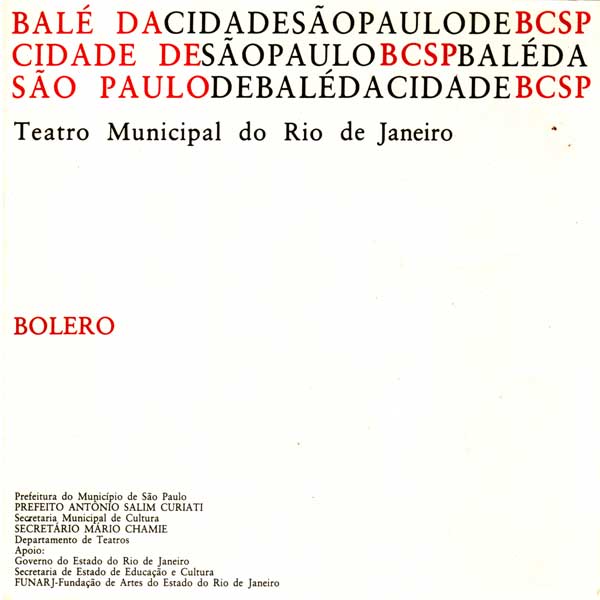
Bolero – Balé da Cidade de São Paulo 1982

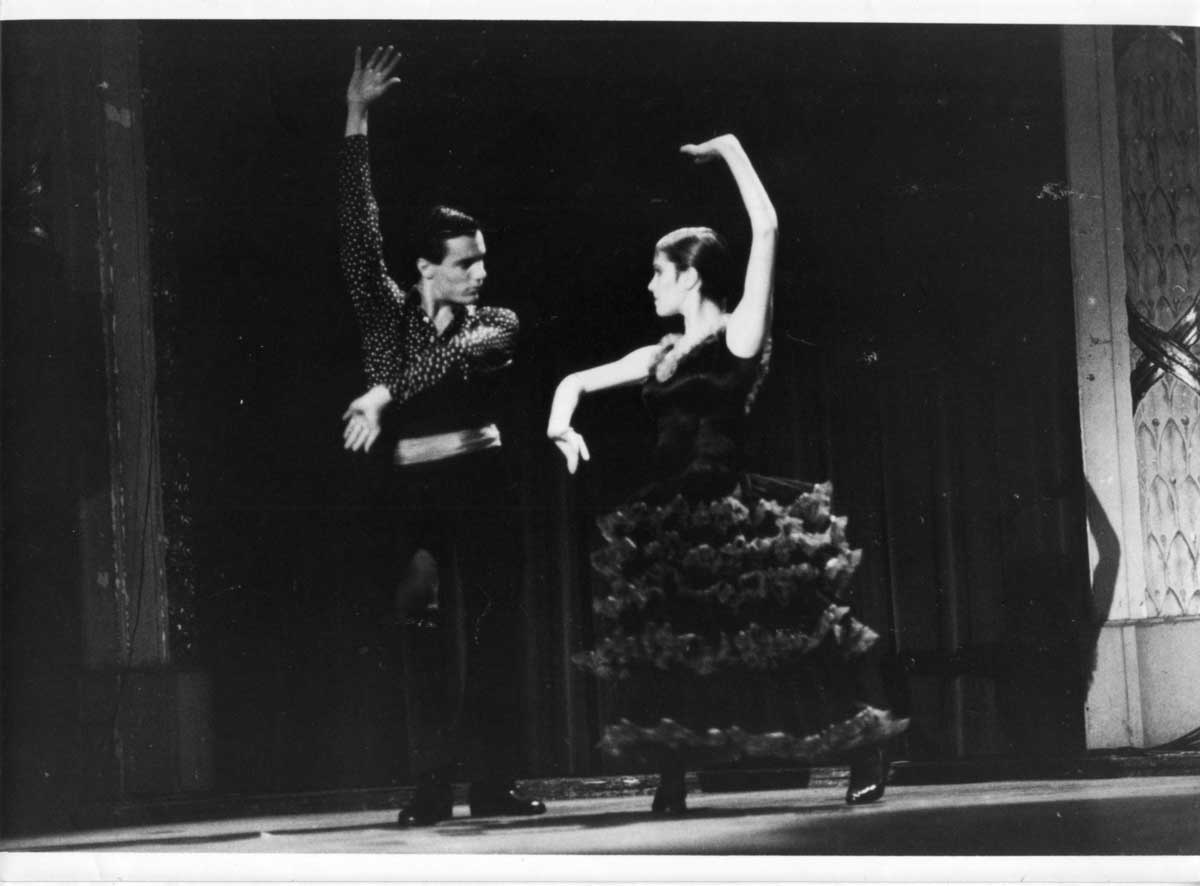
Foto: Gerson ZaniniRicardo Viviani and Ciça Teiveles Meirelles

”Uma beleza de trabalho, que transborda vitalidade e energia” Helena Katz 07 Set 1982


PDF Facsimile *Unproofed OCR Transcript*

click for pdf

Title: Bolero

Company: Balé da Cidade de São Paulo

Premiere: 18 Sep 1982

Venue: Teatro Municipal de São Paulo

Author: Emilie Chamie

O espetáculo “Bolero”, criado para o Balé da Cidade de São Paulo, em dois momentos, foi concebido, originalmente, para o Centro Cultural São Paulo. No Centro Cultural contou com um numero determinado de bailarinos. Agora, transposto o espetáculo ao Teatro Municipal, esse número é acrescido: todos os bailarinos do novo Grupo Experimental executam o primeiro momento (“Bolero” de Ravel) e a totalidade dos integrantes do Balé da Cidade dançam o “Bolero” de Trythall. 0 espaço do Centro Cultural, onde o “Bolero” estreiou e obteve sucesso extraordinário em suas quatorze apresentações, é ativo e ativador. Lá, bailarinos e público se misturavam e trocavam energias em seu movimento e contato direto. Pela versatilidade da concepção de “Bolero”, usamos, agora, o palco e a platéia do Municipal, estabelecendo outro tipo de dinâmica a partir da arquitetura interior do teatro. Para tanto, dissolvemos os limites entre platéia e palco, transformando em espaço único visual corredores, frisas e proscênio. Se no Centro Cultural havia um quase corpo-a-corpo criativo entre bailarino e espectador, no Municipal o espectador se vê envolvido de forma multilateral e estimulante ainda que fixo em seu próprio lugar.

Creative Team:

Concepção e Direção: Geral Emilie Chamie
Coreografia: Lia Robatto (0 solo feminino foi inspirado e composto a partir dos movimentos da dançarina Sonia Mota)
Assistentes: Hugo Travers, Yara Ludovico, Julia Ziviani e Monica Mion
Figurinos: Murilo Sola
Elemento cênico: Emilie Chamie
Projeto do analisador de som em tempo real: Conrado Silva
Música: Maurice Ravel (Bolero) 1928 William Schinstine (Scherzo) 1978 John Cage (She is Asleep) 1943 Richard Trytball (Bolero) 1979
Músicos Grupo de Percussão Agora: Elizabeth Del Grande, John E. Boudier, José Carlos da Silva e Mário Frungillo
Assistente Musical junto ao BCSP: João Paulo de Mendonça
Iluminação: Iacov Hillel
Trilha Sonora: Flávia Calabi
Coordenação da Exposição: Valéria de Mendonça

Performers:

Simone Ferro, Julia Ziviani, Lilia Shaw, Beatriz Cardoso, Regina Restelli, Patricia Galvão, Nelly Guedes, Paula do Valle, Luciana Maluf, Mário Enio Jarry, Alberto Cidra, Sérgio Botelho, Marcos Verzani, Tony Callado, Raymundo Costa, Cacá da Boa Morte, Leila Sanches, Monica Mion, Aurea Ferreira, Nadia Luz, Bete Arenque, Ana Luisa Seelaender, Solange Caldeira, Ana Verônica, Franco Moran, Paulo Rodrigues e Antonio de Almeida Solistas Simone Ferro e Sonia Mota – Elenco Grupo Experimental: Ismael Ivo, Daniela Stasi, Mariana Muniz, Fernando Lee, Ciça Teivelis, Vivien Buckup, José Carlos Nunes, Susana Yamauchi, Eduardo Costilhes, Silvia Bittencourt, João Maurício, Mara Borba, Dolores Fernandes, Maria José Crescente, Marina Helou, Ricardo Viviani, Luiz Vasconcelos e Hugo Travers (participaqdo especial)

Balé da Cidade de São Paulo

Diretor Artístico: Klauss Vianna
Assistente de Direção: Ruth Rachou
Assistentes de Coreógrafo: Hugo Travers, Yara Ludovico, Monica Mion e Julia Ziviani
Professores: Ismael Guiser, Sonia Mota, Hugo Travers, Klauss Vianna e Joana Lopes
Programação: Cyra Gomes de Araújo Moreira Pianista Olga Carrera
Iluminador: Tanaka
Diretora de Cena: Cleusa Fernandez
Massagistas: Alvaro Faro Mendes e Daniel Pires
Encarregada do Guarda-Roupa Maria Cristina Tavares
Costureira: Clarinda Rodrigues Alves
Sonoplasta: Miguel Derosa
Inspetor do BCSP: Deoclides Pereira Fraga Neto

Performances:

820918 to 26 Teatro Municipal de São Paulo
8210012300 TMdSP II Festival Nacional de Dança
821103 to 04 Teatro Municipal do Rio de Janeiro
830605 to 10 Teatro João Caetano SP

Archival Material:

820918 Program, Poster, Photo; 821001 Program; 821103 Program; 830605 Program


Balé da Cidade de São Paulo

IRIBIRI – Cisne Negro Dança 1982

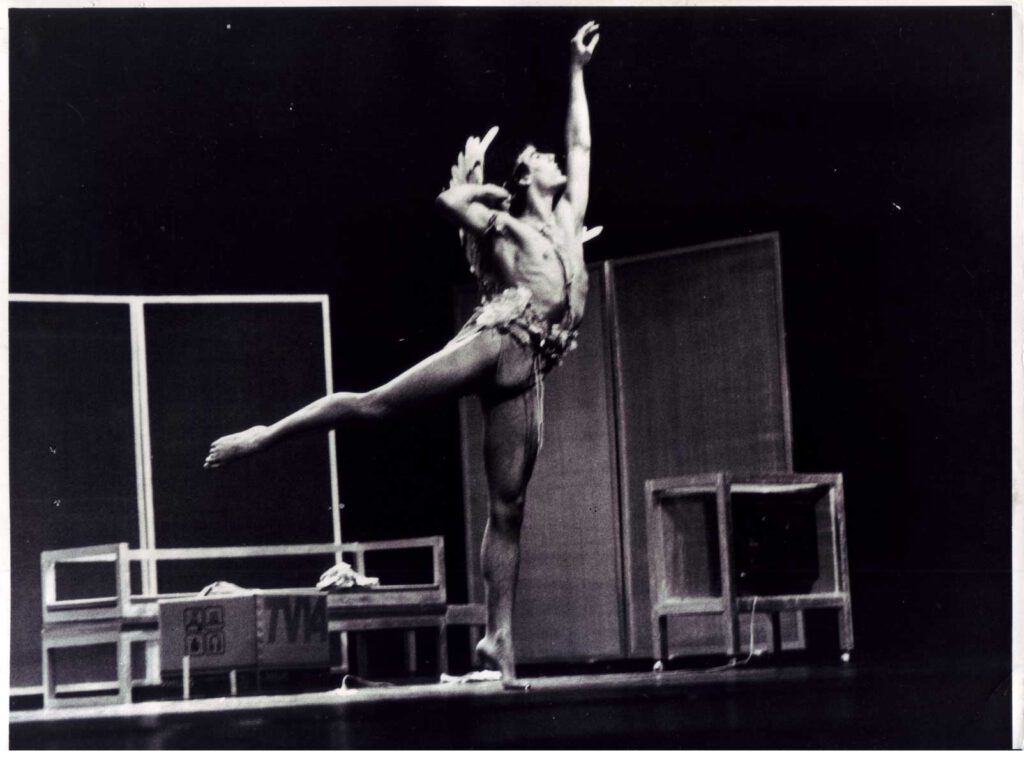
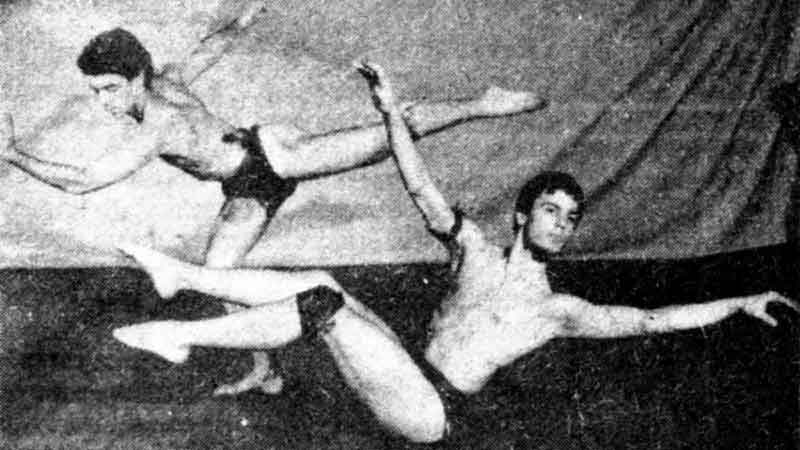
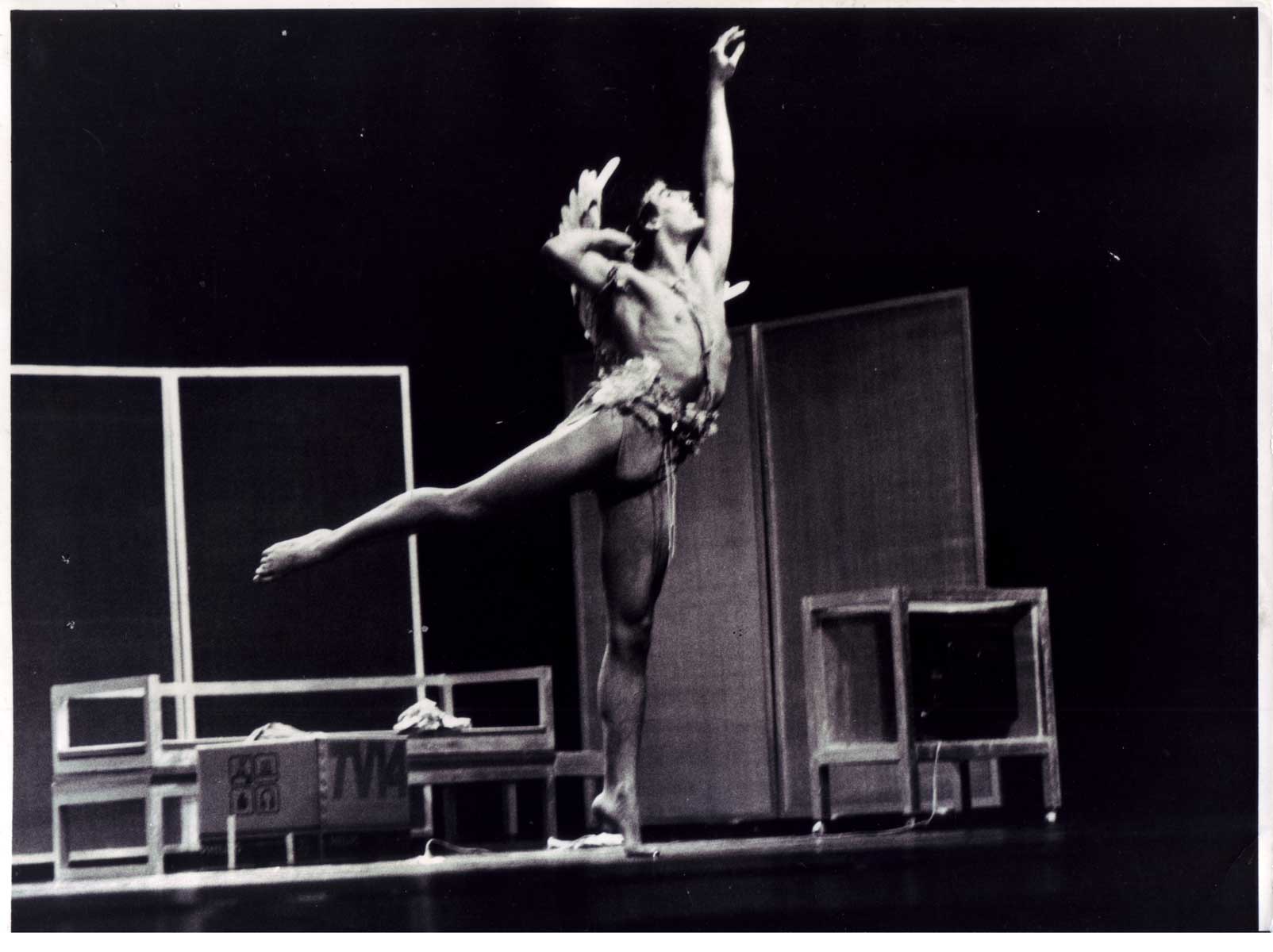
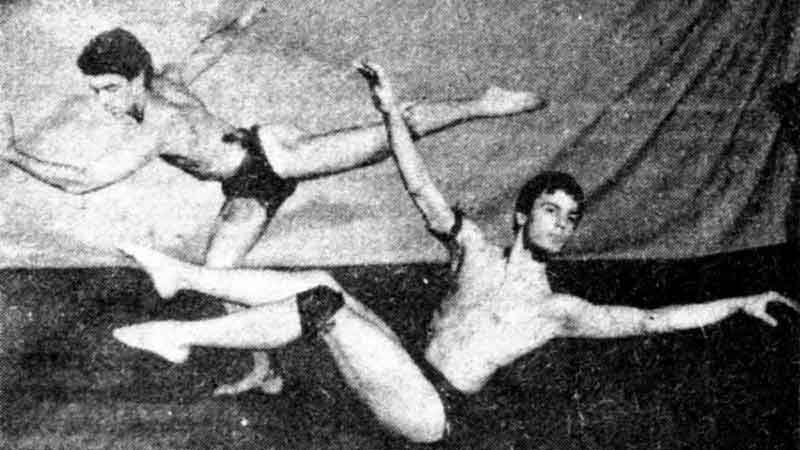
Ricardo Viviani in arabesque
Ricardo Viviani performs O Homem do Céu in IRIBIRI

Type: Dance Work / Piece · Production  
Date: 10 May 1982  
Context: Long-form dance theatre production by Grupo de Dança Cisne Negro  
Location: Theatro São Pedro, São Paulo, Brazil  
Institution / Organisation: Grupo de Dança Cisne Negro  
Role: Performer  
Status: Historical Record — documented


Record / Description

IRIBIRI was a long-form dance theatre production presented by Grupo de Dança Cisne Negro, with its documented premiere at Theatro São Pedro in São Paulo on 10 May 1982. For a company accustomed to programmes composed of varied choreographies, the production represented a departure towards a sustained work centred on a single subject.

The work combined theatrical action, recognisable everyday behaviour, choreographic movement and poetic or dream-like imagery. Its scenic structure developed through two principal planes: a hyperrealist plane constructed from everyday actions and a poetic plane in which images of dreams commented upon, criticised or clarified the reality of the action. As the production progressed, the two planes increasingly interacted.

The Work / Creation

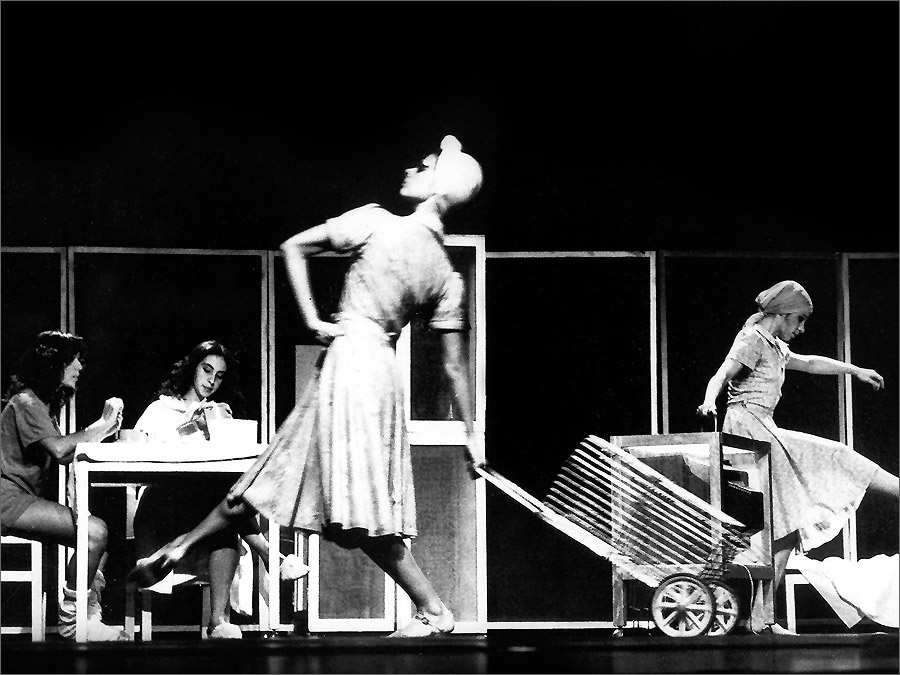
Women in Iribiri
Scene from IRIBIRI — Photo João Caldas

The everyday scenes included the waking of two young women, the arrangement of an apartment by two friends, a family dinner and the supper of an old woman. These ordinary situations gradually acquired a melancholic dimension, culminating in the image of the “woman of a thousand years”. The poetic or dream dimension eventually transformed the old woman into a young dancing woman.

A significant aspect of the production was the transformation of everyday physical actions into dance. The movement of the real plane was derived from ordinary behaviour, while the dream plane took those actions and transformed them into choreography. The contemporary review, for example, describes a young woman pulling a shopping cart not simply as performing an everyday action, but as dancing her way of pulling the cart.

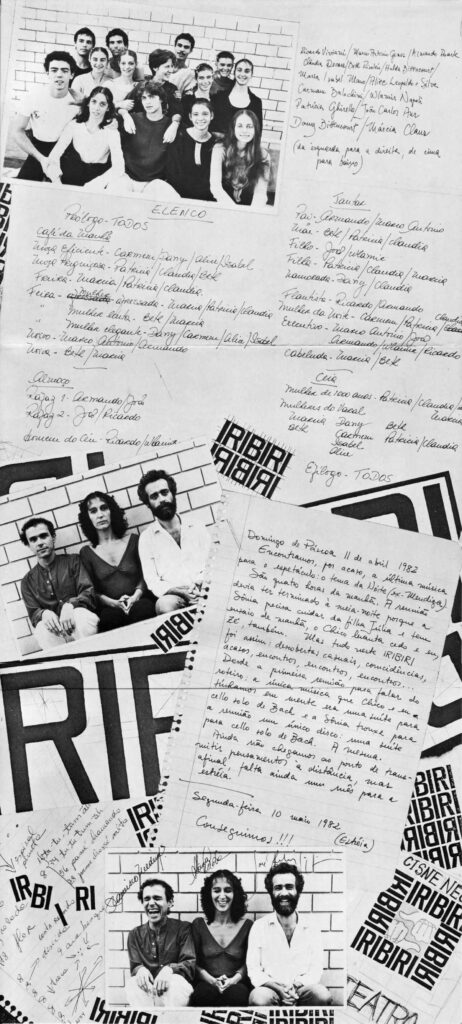
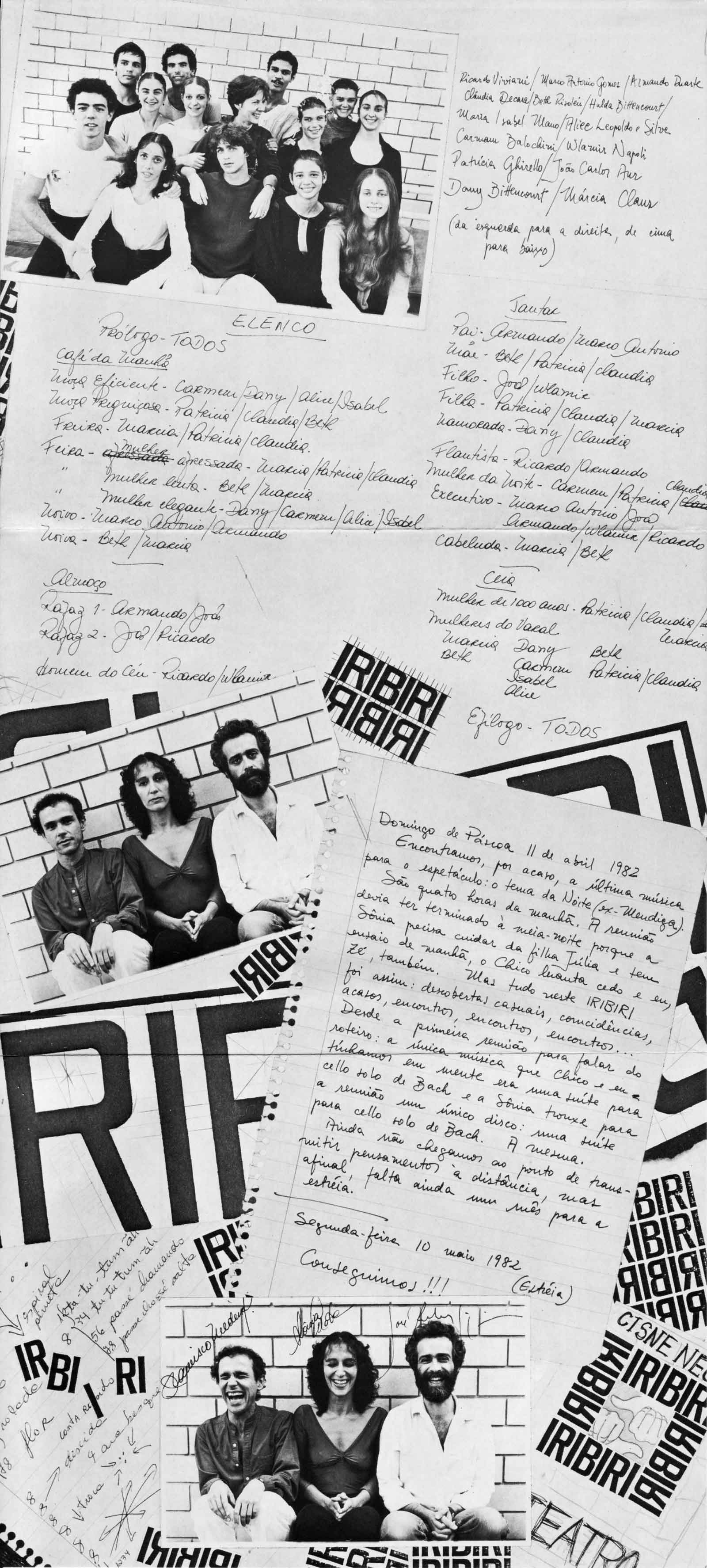
The surviving premiere programme provides a more detailed view of the internal sequence of the work. Its handwritten Elenco is not simply a list of performers: it records the scenes in sequence and the performers assigned to them, providing rare documentation of the dramaturgical and working structure of the production.

Creative Team

Roteiro original: Francisco Medeiros e José Rubens Siqueira
Direção: Francisco Medeiros
Coreografia: Sonia Mota
Cenário e figurinos: José Rubens Siqueira
Músicas: Bach, Vivaldi, Haendel
Seleção musical: Francisco Medeiros, José Rubens Siqueira, Sonia Mota e Flávia Calabi
Sonoplastia: Flávia Calabi
Iluminação: Francisco Medeiros e José Rubens Siqueira
Produção: Grupo de Dança Cisne Negro

Elenco / Scene Sequence

The surviving handwritten premiere-programme notes record the following sequence of scenes and performer allocations. Slashes have been retained because the document records the performers associated with each scene rather than presenting a conventional final cast list.

Leporello for the premiere of IRIBIRI with handwritten notes
Program for the premiere of IRIBIRI

Prólogo — TODOS
Café da manhã
Novo freguês — Carmem / Dany / Alice / Isabel
Novo freguês — Patrícia / Cláudio / Bêk
Freira — Ricardo / Patrícia / Cláudio
Fica apressado — Ricardo / Patrícia / Cláudio
Mulher lenta — Bêk / Ricardo
Mulher elegante — Dany / Carmem / Alice / Isabel
Trio — Marco Antonio / Armando
Trio — Bêk / Ricardo
Almoço
Zaga 1 — Armando / João
Zaga 2 — João / Ricardo
Homen do Céu — Ricardo / Wlamir
Jantar
Pai — Armando / Marco Antonio
Mãe — Bêk / Patrícia / Cláudio
Filho — João / Wlamir
Filha — Patrícia / Cláudio / Ricardo
Namorada — Dany / Cláudio
Flautista — Ricardo / Armando
Mulher da Noite — Carmem / Patrícia / Cláudio
Executivo — Marco Antonio / João / Armando / Wlamir / Ricardo
Cabeludo — Ricardo / Bêk
Céu
Mulher de 100 anos — Patrícia / Cláudio / [parte ilegível]
Mulheres do local — Ricardo / Bêk / Dany / Carmem / Isabel / Alice / Patrícia / Cláudio
Epílogo — TODOS

The scene sequence provides a more precise archival context for the surviving photographs. In particular, the Café da manhã sequence corresponds to the everyday domestic material in which two young women are awakened, while the surviving photograph of Ricardo in arabesque belongs to O Homem do Céu, the poetic/dream section represented in the programme material. The image documents a technically demanding solo moment and preserves an important example of the company’s and Sônia Mota’s choreographic and technical capabilities.

Front cover of program for IRIBIRI
Program cover for IRIBIRI

Photograph / Cast Identification

The handwritten identification accompanying the cast photograph reads, from left to right and from top to bottom:

Ricardo Viviani / Marco Antonio Gomes / Armando Duarte
Claudia Decara / Bêk Risoléu / Hulda Bittencourt
Maria Isabel Mano / Alice Leopoldo e Silva
Carmem Balochini / Wlamir Napoli
Patrícia Ghirello / João Carlos Aur
Dany Bittencourt / Márcia Claus

The official Cisne Negro record confirms Dany Bittencourt as the correct spelling of the name. It also identifies Hulda Bittencourt as the founder and long-standing artistic director of the company and Dany as her daughter. The handwritten photograph identification is therefore retained as documentary evidence rather than treated as a formal production credit.

Production and Technical Credits

Grupo de Dança Cisne Negro

Relações Públicas: Eliete Brancato
Coordenação Geral: Hulda Bittencourt
Fotos: João Caldas
Máscaras e Adereços: José Rubens Siqueira
Execução dos Figurinos: Dora M. Gomes e Elione de D. Monge
Execução do cenário: José Vicente Peres e Antonio Nunes Oliveira
Luz e Som: Cisnesom
Operador de luz e Eletricista: Marcos Antonio Barbosa
Operador de som: Dorotéia Barbosa

Acknowledgements

Antonio Carlos Maciel, Antonio Carios Menezes, Luís Américo Medeiros, Luiz Cavalcanti Pessoa, Companhia Industrial Pernambucana, Márcio Goldfarb (Marisa Lojas Varejistas Ltda.), Jet-tours, Fábrica de Lenços Safira Ltda., Clube Alto dos Pinheiros, Troi S.A., Hevea indústria de Plásticos Ltda., Philips do Brasil Ltda., Marcos Bertoni, Chloé Siqueira, Guillermo van Domseiaar, José Luís Brancato, Iacov Hillel, Riwka Schwarz, Zaida Périgo

Performance / Presentation

820510 — Teatro São Pedro

The surviving record documents the premiere of IRIBIRI at Theatro São Pedro on 10 May 1982. The handwritten premiere-programme notes conclude with the entry “Segunda-feira 10 maio 1982 (Estreia)”, followed by the handwritten celebration “Conseguimos!!!”

Reception / Critical Documentation

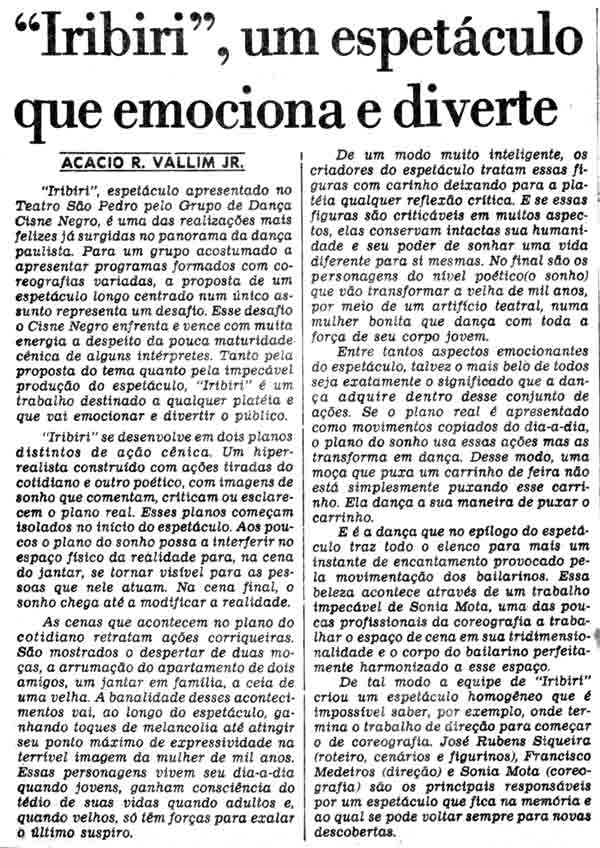
“IRIBIRI um espetáculo que emociona e diverte”

ACACIO R. VALLIM JR.

O Estado de São Paulo — 28 Maio 1982

A contemporary review by Acacio R. Vallim Jr. described IRIBIRI as one of the most successful productions to emerge in the São Paulo dance scene. It emphasised the challenge of creating a long-form work around a single subject, the combination of hyperrealist everyday action with poetic dream imagery, and the transformation of ordinary physical actions into dance.

The review also highlighted the work of Sônia Mota in relation to the three-dimensional use of stage space and the relationship between the dancer’s body and that space, while identifying Francisco Medeiros, José Rubens Siqueira and Sônia Mota as central to the production’s creation.

Wlamir Napoli and Ricardo Viviani in IRIBIRI — Photo João Caldas

The complete review, its surviving image documentation and transcription are preserved separately as IRIBIRI — Review Acacio R. Vallim Jr..

Research / Development Context

A contemporary article in Visão, dated 5 April 1982 and written by Rui Fontana Lopez, documents IRIBIRI during its preparation approximately one month before the documented premiere. The article records the production as a new artistic experiment for Grupo de Dança Cisne Negro and describes the company moving beyond its established format of programmes composed of separate choreographies towards a long-form work based on an enredo and roteiro.

The article records the collaboration of theatre director Francisco Medeiros, choreographer Sônia Mota, José Rubens Siqueira and composer Flávia Calabi in the development of the new production. Medeiros describes the intended exploration of two interconnected worlds: everyday life and individualism, and the projections, desires and fantasies carried within people. The article also records the planned contrast between Baroque music and incidental music by Flávia Calabi, supporting contrasting choreographic languages by Sônia Mota, with José Rubens Siqueira developing the visual conception.

The source also provides evidence of the rehearsal process and the professional conditions of the company at the time. It records intensive daily rehearsals leading towards the May premiere and describes a production structure supported through official funds, monetary donations and donations of materials, while the dancers combined performance-related income with teaching or other professional activities.

The complete article transcription and its documentary context are preserved separately as Visão — Rui Fontana Lopez — O Cisne Negro e sua ‘rentrée’.

Premiere Programme / Development Notes

The surviving premiere programme contains several handwritten pages documenting the final development of IRIBIRI. One page records the scene sequence and performer allocations described above. Another, dated Domingo de Páscoa — 11 de abril 1982, records a late-night working meeting concerning the music and development of the production.

The note records that the group found, almost by chance, the final music for the Noite section, identified there in relation to the theme of the “Noite”. It describes the meeting as continuing until approximately four in the morning and mentions Sônia’s daughter Júlia in connection with her need to leave because of the following day’s schedule.

The writer then reflects on the way the production had developed through “descobertas, casuais, coincidências, acasos, encontros”, describing discovery, coincidence and encounters as characteristic of the making of IRIBIRI. This is valuable primary evidence of the collaborative and exploratory nature of the creative process.

The same note records that, from the first meeting concerning the roteiro, Ricardo and Francisco Medeiros (“Chico”) had been thinking about a Bach suite for solo cello. Sônia subsequently brought a record containing a Bach solo cello suite to the meeting. The coincidence between the music already being considered and the record she brought is recorded as part of the development process.

The Bach cello suite became part of the Epílogo. Its presence in the final work is particularly significant in relation to the technical and choreographic demands of the closing section and to the company’s ability to translate the musical structure into highly developed movement.

The note concludes with the premiere entry: “Segunda-feira 10 maio 1982 (Estreia)”, followed by “Conseguimos!!!”

Ricardo Viviani and the Development of IRIBIRI

Ricardo Viviani’s formal credit in the production remains Performer. The surviving handwritten working notes nevertheless place him repeatedly within the scene structure and close to the principal creative process. His name appears across numerous scenes, including the Freira, Mulher lenta, Zaga, Filha, Flautista, Executivo, Cabeludo and O Homem do Céu material, as well as in the final ensemble.

The notes also place Ricardo in direct working proximity to Francisco Medeiros and Sônia Mota during the development of the production, particularly in relation to the musical process documented in the 11 April 1982 note. This does not change the formal authorship or production credits, but it provides evidence of a more substantial creative working relationship than the simple category of “performer” alone conveys.

According to Ricardo Viviani’s recollection, Hulda Bittencourt brought him into Grupo de Dança Cisne Negro specifically in connection with IRIBIRI. Hulda was an energetic and accomplished figure in São Paulo’s dance scene, and Ricardo recalls that his experimental and avant-garde ideas, following his recent experience at the Jacob’s Pillow Dance Festival, were part of the context for his invitation. A surviving recommendation letter dated 14 April 1982 from Liz Thomson and Bessie Schönberg provides documentary context for his Jacob’s Pillow experience and belongs with the primary-source record of this period.

This recollection is retained as Ricardo’s personal account rather than presented as an independently established fact. The surviving working documents, however, provide independent evidence that his role within the production extended across numerous scenes and that he participated directly in discussions at the centre of the production’s development.

Relationship

IRIBIRI was produced by and presented through Grupo de Dança Cisne Negro, with Ricardo Viviani participating as a performer. The production is directly related to the archival record for Cisne Negro Dança.

The surviving April 1982 note also mentions Júlia, Sônia Mota’s daughter, in connection with the demanding rehearsal schedule. Ricardo later collaborated with Júlia in a separate commissioned project during the football World Cup in Brazil, creating Carnaval da Dorotéia in Frankfurt, an intervention presenting different Brazilian Carnival cultures and the continental scale of Brazil to young people and schools. Surviving photographs and a flyer documenting the Frankfurt project are preserved in the archive as Carnaval da Dorotéia.

The 5 April 1982 Visão article is directly related to this production record as contemporary pre-premiere documentation. It provides evidence of the development and rehearsal of the work before its documented premiere on 10 May 1982 and is preserved separately as Visão — Rui Fontana Lopez — O Cisne Negro e sua ‘rentrée’.

The contemporary review is preserved as a separate Reception / Critical Documentation record: IRIBIRI — Review Acacio R. Vallim Jr.


Primary Source / Documentation

The production record is supported by surviving photographic documentation, a script, a souvenir programme, the premiere programme with handwritten development notes, programme/poster/flyer material and contemporary press documentation.

The surviving premiere programme is particularly important because it preserves both formal production information and working-process material. Its handwritten pages provide scene sequence, performer allocations, development notes, musical decisions and a dated account of the final weeks before the premiere.

The 5 April 1982 Visão article provides contemporary evidence concerning the development of the production before its premiere. It establishes a contemporary chronology for the rehearsal process and documents the artistic intentions, collaborators and working conditions surrounding the creation of IRIBIRI.

The 14 April 1982 recommendation letter from Liz Thomson and Bessie Schönberg provides additional primary-source documentation concerning Ricardo Viviani’s recent Jacob’s Pillow experience immediately before the IRIBIRI period.

Archival Material

19810131 — script, 19820405Visão article, 19820411 — handwritten development note concerning music and the final stages of creation, 19820414 — recommendation letter from Liz Thomson and Bessie Schönberg concerning Ricardo Viviani’s Jacob’s Pillow experience, 19820427 — souvenir programme, 19820510 — premiere programme with handwritten scene sequence, performer allocations and development notes; poster; flyer, 19820526 — contemporary review, 19820405Visão article, “Companhia — Um novo passo — O Cisne Negro e sua ‘rentrée’.”, by Rui Fontana Lopez; pre-premiere documentation of the development of IRIBIRI. Preserved separately as archival record Visão — Rui Fontana Lopez — O Cisne Negro e sua ‘rentrée’.

Archival Image References

The following legacy image and document references are retained from the original record for future migration. Their current availability is not assumed; the files can be moved to the current media structure while preserving their archival identification.

Principal photograph:
8205iribiri01m.jpg

Current principal photograph:
1982_8205iribiri01M-1024×766.jpg — Ricardo Viviani performing O Homem do Céu

Original programme:
programscaninsideM.jpg

IRIBIRI logo / programme image:
82iribirilogo.gif

O Estado de São Paulo logo:
estadao.png

Review scan:
820528estadaoS.jpg

Review thumbnail:
820528estadaoT.jpg

Review image referenced in the earlier record:
820526iribirireviewestadaoS.jpg

Jacob’s Pillow recommendation letter:
1982_0414pillowrecommendation.jpg


Contribution / Significance

IRIBIRI documents an important stage in Ricardo Viviani’s professional work with Grupo de Dança Cisne Negro and in the company’s development of long-form dance theatre. The production integrated dance, theatrical action, everyday movement and poetic imagery, and brought choreography, direction, dramaturgical conception, scenography, costumes, music and performance into a sustained single work.

The newly documented premiere-programme material significantly strengthens the historical record. It preserves not only the final sequence of scenes and performer allocations but also evidence of how the work was being constructed, discussed and resolved in the weeks immediately before its premiere.

For Ricardo Viviani, the material provides unusually detailed evidence of his participation in the work. While his formal credit remains performer, his repeated presence across the scene structure, his involvement in the musical discussions documented in the April note and his recollection of being brought into the company specifically for this production place him within an important working network surrounding the creation of IRIBIRI.

Assessment / Relevance

This record provides documentary evidence of Ricardo Viviani’s participation in a substantial early-1980s production and preserves the wider network of artists, technicians, producers and collaborators involved in the work. The surviving documentation connects the production with pre-premiere reporting, detailed working notes and contemporary critical reception.

The combination of formal programme credits, scene-by-scene handwritten allocations, rehearsal/development notes, photographs and contemporary press material makes IRIBIRI one of the more extensively reconstructable productions in this period of the archive.

Post Scriptum

September 2026: This record was substantially revised following examination of the surviving premiere programme and its handwritten notes. The new material establishes the scene sequence, confirms additional name spellings and provides direct evidence of the final stages of the production’s development. The formal production credits have been retained separately from the working notes.

Keywords

IRIBIRI; Grupo de Dança Cisne Negro; Ricardo Viviani; Sônia Mota; Sonia Mota; Francisco Medeiros; José Rubens Siqueira; Flávia Calabi; Hulda Bittencourt; Dany Bittencourt; Rui Fontana Lopez; Visão; São Paulo dance; Theatro São Pedro; 1982; dance theatre; choreography; performance; Brazilian dance; rehearsal; production development; O Homem do Céu; Jacob’s Pillow.


External Links

Cisne Negro Dança

Internal Links

Cisne Negro Dança

IRIBIRI — Review Acacio R. Vallim Jr.

Visão — Rui Fontana Lopez — O Cisne Negro e sua ‘rentrée’

Carnaval da Dorotéia


Archival Note: This page forms part of an ongoing personal archive documenting Ricardo Viviani’s professional work and activities over more than four decades. Names and other personal information appear where relevant to the documented work or collaboration. If you believe that information concerning you has been published incorrectly or should be reconsidered, please contact me.