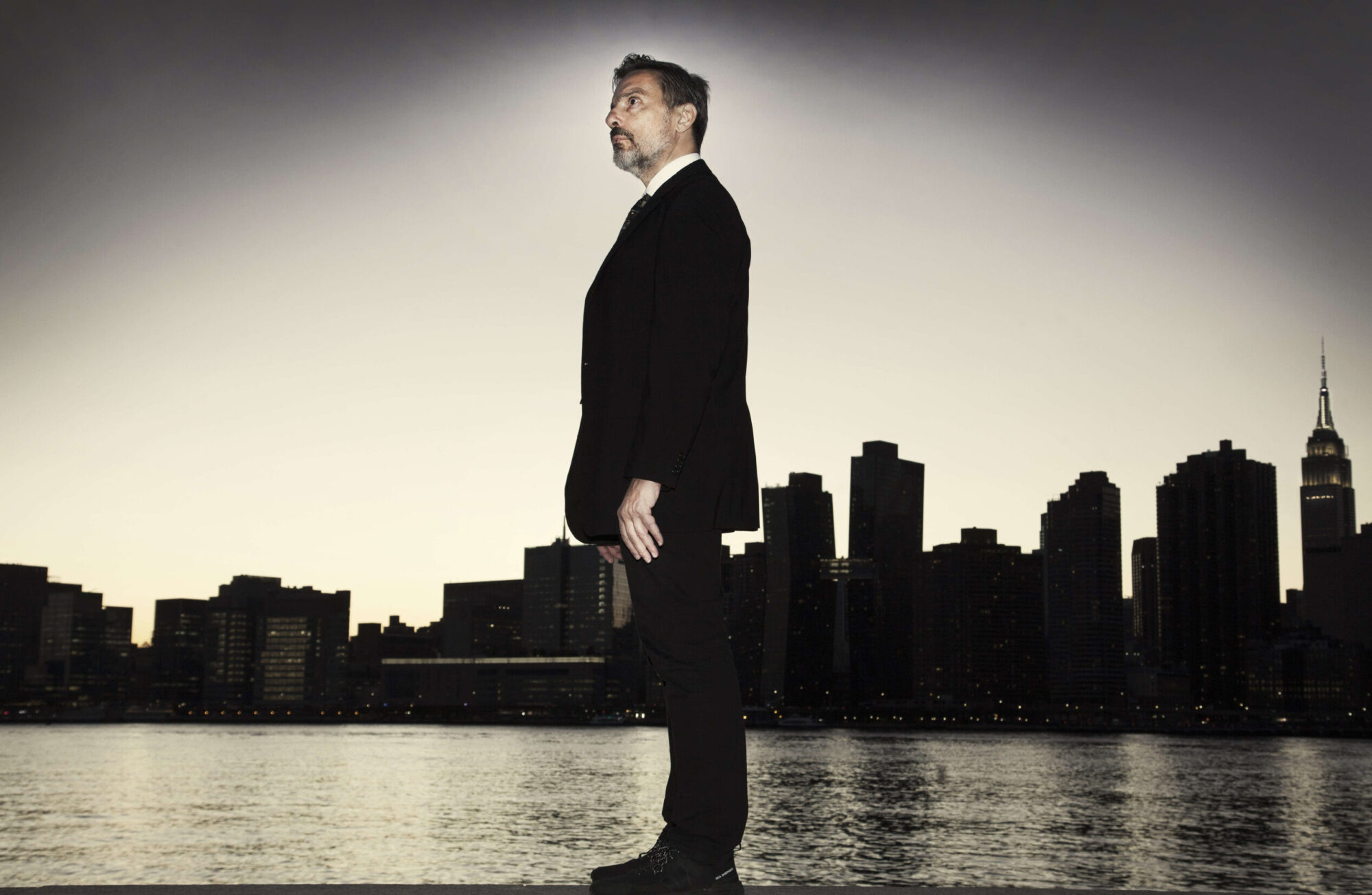
The Artistic Drive of Jean Cébron
Dance Oral History in a Network of Change
Jean Cébron (1927-2019) was a dancer, choreographer, and dance educator.
Juan Allende-Blin 94 is a Chilean contemporary composer, scholar, and publisher.
These men were in their early twenties when they met in 1948.
Their creative collaboration started as Allende-Blin saw Cébron in Kurt Jooss’ politically charged “The Green Table” in Santiago del Chile.
Back in Germany in the 1950s, artists that were exiled during WW II like Kurt Jooss, were confronted with hostile cultural attitudes that remained in place after the Nazi regime. Against that climate, they persevered. In a recent oral history interview, Allende-Blin recounts their efforts to create art that captured and expressed contemporary sensibilities. Their drive and resilience during the 1960s paved the way to the blossoming of original forms of dance-making in Germany.
One of the challenges of documenting artistic production in connection with political and cultural change is making the network of relationships explicit. The mapping and networking of documents under open international standards is one approach to create visibility to developments over time. In this presentation,
Ricardo Viviani will propose a visual model and notation ontologies to present this study case. The goal is to leverage the power of semantic web to create Web3 applications to network knowledge in dance.
This presentation was given at the 2022 Dance Studies Conference in Vancouver, Canada.
#strategies_of_reconciliation, #transnational_activism, #queer_activism, #archive, #historiography, #semantic_web, #dance_knowledge_management
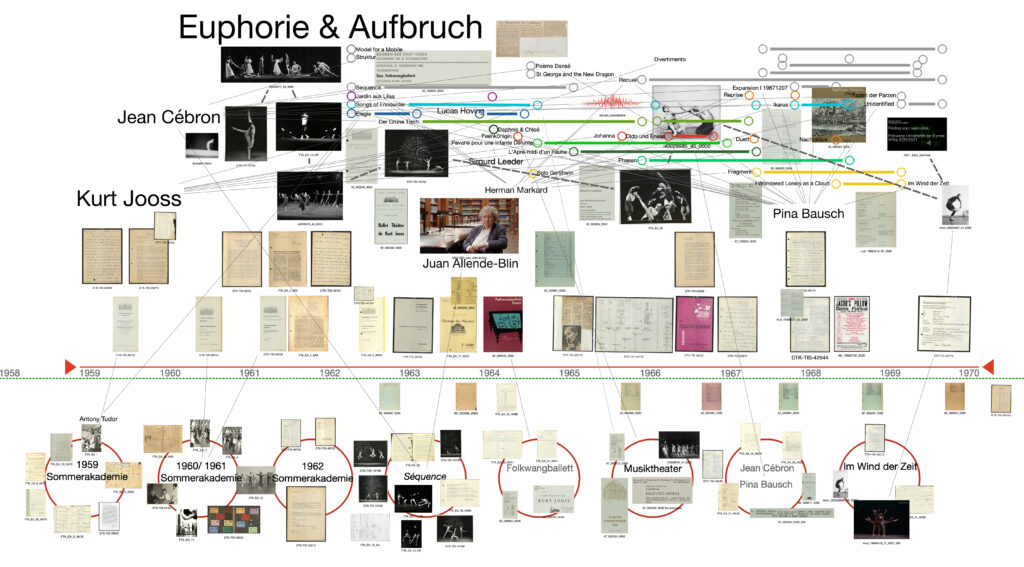
Euphorie und Aufbruch Timeline — Sorting and grouping of 99 Documents (Viviani 2020)
Type: Publication · Research / Historisation Project Date: September 2022 Context:Tanzen/Teilen – Sharing/Dancing: Jahrbuch TanzForschung 2021 Role: Ricardo Viviani – Author · Researcher · Project Collaborator Co-authors: Anja K. Arend · Thomas Thorausch Project:Euphorie und Aufbruch — A History of Dance 1959–1969 Publisher: transcript Verlag
Sharing the Material is Sharing the Knowledge / Tanzwissen teilen im Verbund documents an experimental approach to sharing and connecting dance-archival material across institutional collections. The chapter emerged from the research project Euphorie und Aufbruch, a collaboration between the Pina Bausch Foundation, the Deutsches Tanzarchiv Köln and the Folkwang Tanzarchiv / Folkwang Universität der Künste.
The chapter begins from a basic problem of dance heritage: an archive cannot contain the whole of dance. What survives is always partial, shaped by the histories of collection, preservation, description and institutional selection. The project therefore explored what might become visible when material from different archives is brought into relation rather than presented as separate institutional holdings.
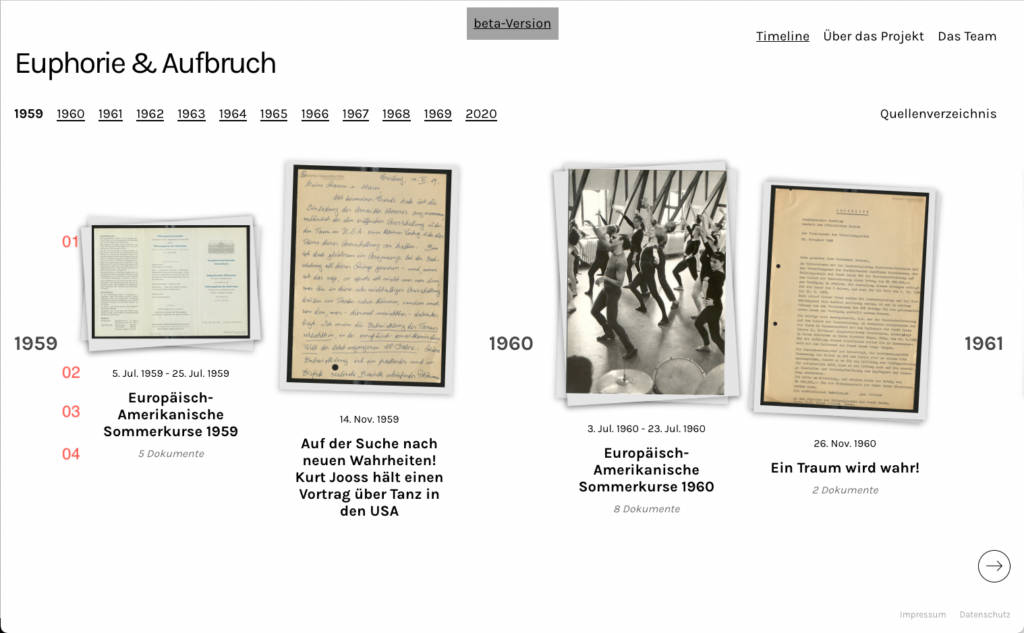
For the pilot project, a selection of 99 archival documents from the three participating collections was organized around relationships between people, works, events, places and time. The resulting digital environment used a chronological timeline as a principal point of access, while also making connections between heterogeneous materials more visible.
The chapter considers archival knowledge as something that can emerge through relationships among documents, people, works and historical circumstances. In this perspective, sharing material between institutions can also become a way of sharing knowledge and making previously separated holdings meaningful in relation to one another.
A central question concerns the particular demands of dance archives. Dance is not exhausted by the documents that record it: movement, practice, embodied knowledge and changing relationships are difficult to represent through conventional archival description alone. The project therefore explored conceptual models including CIDOC CRM and FRBRoo as possible structures for relating heterogeneous information across collections.
Oral History provided another layer of connection. Ricardo Viviani’s interview with composer Juan Allende-Blin brought personal testimony and experience into dialogue with archival records. Within the project, Oral History provided a perspective through which documentary material could be connected with lived historical experience.
The wider project also included an educational strand documented through Finding Your Own Voice. Historical photographs and other archival materials were used as impulses for observation, analysis and choreographic work. Students transformed observations from archival material into concepts and choreographic assignments, bringing archival research into a contemporary artistic context.
Taken together, the chapter presents the archive as an interconnected knowledge environment rather than as a collection of isolated objects. Its concern is not simply how to preserve material, but how relationships between collections, documents, people and experience can make different forms of historical knowledge accessible.
Archival Material:
Published German chapter; project documentation; visual research materials; timeline documentation; selection of 99 archival documents; Oral History interview with Juan Allende-Blin; Finding Your Own Voice teaching materials; related research notes.
Type: Publication · Research / Historisation Project · Archival Activation Period: 2018–2021 Location: North Rhine-Westphalia, Germany Role: Researcher · Oral Historian · Project Collaborator · Educator Partners: Pina Bausch Foundation · Deutsches Tanzarchiv Köln · Folkwang Tanzarchiv / Folkwang Universität der Künste
Euphorie und Aufbruch — A History of Dance 1959–1969 was a collaborative research and development project involving three dance archives in North Rhine-Westphalia: the Pina Bausch Foundation, the Deutsches Tanzarchiv Köln and the Folkwang Tanzarchiv. The project explored ways of connecting archival collections and making relationships between dispersed materials accessible through a shared digital environment.
The project focused on the period from 1959 to 1969, a formative decade in the development of dance and the artistic environment surrounding Pina Bausch. A selection of archival materials from the participating collections was brought together to create a shared historical view rather than separate institutional narratives.
Archival Activation
A selection of 99 archival documents — 33 from each participating archive — formed the basis of an interactive chronological timeline. The project made relationships between people, works, events, places and time more visible across the participating collections.
The project also addressed a broader question for dance archives: how can archival structures represent an art form whose primary material is movement, and how can historical relationships become accessible without reducing dance to isolated documents?
Visual Research
Euphorie und Aufbruch Timeline — Sorting and grouping of 99 Documents (Viviani 2020)
Visual organization of the archival material became an important part of the research. The documents were also approached through comparison and juxtaposition, allowing historical relationships, aesthetic developments and recurring patterns to become visible in ways that complement conventional textual description.
This visual approach treated the archive as a field for observation as well as documentation. It supported attention to the movement and artistic qualities that may be difficult to communicate through text alone.
Oral History
The project also explored digital models for connecting heterogeneous archival information, including CIDOC CRM and FRBRoo. Oral History added another layer to the archival record through an interview with composer Juan Allende-Blin.
The interview connected personal testimony with the documentary record and contributed another perspective on the people, works and circumstances represented in the project.
Finding Your Own Voice
Within the project, Ricardo Viviani taught the semester-long course Finding Your Own Voice at Folkwang Universität der Künste. Students worked with historical photographs and other archival material and used their observations as impulses for contemporary choreographic work.
The course took place remotely during the COVID-19 pandemic. Students submitted their work as video, creating a further context in which archival observation, choreography and the moving image could be brought together.
Archival Material:
Project documentation; timeline material; selected archival documents; visual research; Oral History interview with Juan Allende-Blin; Finding Your Own Voice teaching material; publication material.
In this workshop, the professional choreographer and oral-historian Ricardo Viviani together with Sarah Walker, a fellow oral-historian will explore in which ways the awareness of non-verbal communication elements influence the outcome of an interview.
We are always communicating with our bodies. From postures to the placement of the body in space, these elements are constantly sending messages. By being aware of which non-verbal elements are important to observe, the interviewer can help the narrator feel more comfortable. A narrator that feels comfortable with the situation is freer to talk.
Of great importance are also the signals sent by the interviewer during an interview. Appropriate clothing that respects and eases the power structures at play during an interview, postures, gestures, help to engage the narrator. The body of the interviewer is just as important as the body of the narrator.
The analysis of video interviews can also benefit from the knowledge of non-verbals. Spoken language can acquire different colors and weights according to the complex interplay of non-verbals. Most oral-historians can adjust transcripts accordingly. This workshop will help to describe how these non-verbals are at play during the interview, thus helping to articulate the reasons for adjustments.
The workshop will consist of a theoretical introduction, examples that will be played out by the workshop leaders, followed by simulating situations and analyzing them. A group exchange of experiences will round-up this session.
Type: Presentation · Oral History Date: 17 October 2019 Context: Oral History Association Annual Meeting, Pathways in the Field: Considerations for those Working In, On, and Around Oral History Location: Sheraton Salt Lake City Hotel, Salt Lake City, Utah, USA Panel: Oral History in Artistic Mediums Role: Presenter · Researcher Affiliation: FernUniversität in Hagen
Panel Participants:
Ricardo Viviani
Kenneth Horowitz
Daniel Horowitz Garcia
In the winter of 1980/81, I was awarded a scholarship to study at a dance studio located at 400 Lafayette Street in New York City. The name of this studio was Dancerschool. The studio was part of the life work of Dennis Wayne, a star dancer of the 1970s. His company was called “Dancers”, just the word “Dancers”. The simplicity of that name indicates that what they do should suffice. The art speaks for itself.
The title Just Call Us Dancers comes from this memory. It is therefore both a reference to that particular moment in my own formation and a question about what can be communicated by the practice itself, before it is translated into explanatory language.
Just Call Us Dancers — Oral History in the Performing Arts was a presentation about Ricardo Viviani’s pathway from dance and choreography into Oral History and about the methodological questions that arise when oral history is applied to a predominantly non-verbal art form.
The presentation was deliberately personal. Using slides that included images from Viviani’s early years as a dancer, it traced a path that began with his unexpected discovery of dance while studying Biology at the University of São Paulo. During university strikes, he encountered a dance group forming in the Faculty of Architecture (FAU). The group, composed of amateur dancers, chose the deliberately grand institutional name Corpos de Baile. What began as a moment of curiosity became a professional artistic trajectory.
A year or two later, Viviani entered the Escola de Comunicações e Artes — Escola de Arte Dramática (ECA-EAD) at the University of São Paulo to study Theatre Direction, as a dance programme was not available there in 1979. His teachers directed his attention toward non-verbal communication, giving him a way of thinking about performance beyond spoken language.
This formation took place during the Brazilian Military Regime. Viviani observed how music, theatre and dance could contain several layers of meaning and how artists developed forms capable of communicating around censorship. Learning to create and read these layers of meaning became useful to him as a choreographer and remained part of his artistic practice.
The presentation then followed the longer development of this interest: from early choreography and a continuing attention to non-verbal communication, through years of artistic practice and further study, to Viviani’s later decision to investigate these questions more systematically.
Alongside his work as a choreographer, Viviani returned to formal study through Cultural Sciences (Kulturwissenschaften) at FernUniversität in Hagen. He regarded this as continuing education rather than a break from his artistic practice. Through these studies he encountered Oral History and recognized a methodological correspondence with questions he had carried through his artistic life: how can knowledge embedded in lived practice be investigated, articulated and placed within a historical context?
The presentation argued that dancers can be unusually difficult interview subjects because dance contains forms of knowledge that are not primarily verbal. Studio communication can be pragmatic, affective, metaphorical and inseparable from movement. The challenge for the interviewer is therefore not simply to ask dancers to explain what they know, but to create conditions in which aspects of their experience can become narratable.
A related question concerned the role from which knowledge is acquired. In an institutional dance environment, dancers experience creative processes according to their position within the theatre structure. Their memories therefore contain not only individual recollection, but knowledge shaped by their particular role, relationships and responsibilities.
The presentation also introduced the idea that apparently simple biographical questions can open onto much wider historical contexts. A question such as “How did you start to dance?” may begin as a personal biography and lead toward histories of education, cultural identity, political circumstances and artistic formation. The interview becomes a space in which these unexpected connections can emerge.
One example from Viviani’s Oral History work concerns a dancer’s account of learning ballet in Dublin during the 1970s. What begins as a question about entering dance opens onto questions of cultural identity and the experience of studying ballet within a context shaped by the colonial relationship between Ireland and the United Kingdom. Such moments demonstrate how the apparent simplicity of a life-history question can reveal wider historical structures.
The presentation therefore positioned Oral History not simply as a means of collecting memories, but as a form of inquiry in which the specific knowledge of the interviewer and the artistic field can help open questions that might otherwise remain inaccessible.
Archival Material:
Presentation slides; presentation PDF; conference programme; research notes; related Oral History interview material; documentation of subsequent work on non-verbal communication in interviewing.
Conference submission — Common Dance, Uncommon Stories, Dance Studies Association Conference 2019
Type: Presentation · Individual Paper Date: 9 August 2019 Context: Dance Studies Association Conference Dancing in Common Location: Evanston, Illinois, USA Role: Presenter · Researcher Affiliation: FernUniversität in Hagen, Germany
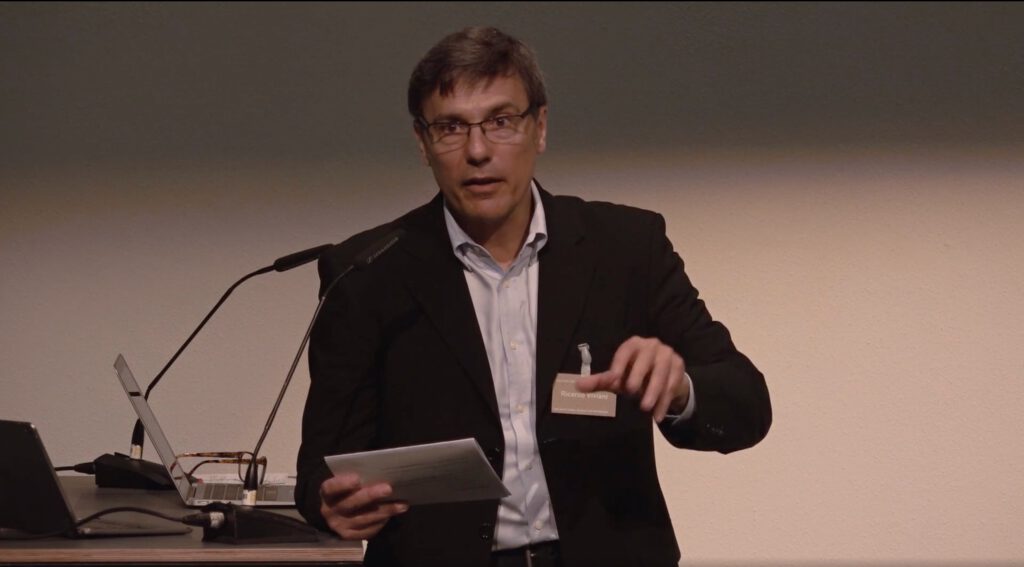
Common Dance, Uncommon Stories — Oral History epistemology for dance explored how Oral History might be approached within the particular conditions of dance practice and a dance artist’s archive.
The presentation considered how people involved in dance may hold different experiences of the same work, and how these experiences can become part of its historical record. It focused on the relationship between embodied knowledge, oral narration and memory, with particular attention to the roles people occupy within theatrical dance.
The idea of the “paradoxical body” provided one point of departure: the body transformed through choreography carries traces of experience that may not be fully accessible through conventional documentation.
The presentation also considered the specific character of speaking about dance. Language in and around the studio can be pragmatic, affective or metaphorical, and can remain closely connected to movement and context. The interview was therefore approached as a situation in which dance experience can become a historical narrative.
Time and memory formed another part of the inquiry. The experience of a dance event and the later moment of the interview are not the same. The presentation considered how these different temporal positions shape the narratives through which dance is remembered.
Type: Presentation / Performance / Conversation Date: 25 May 2019 Context: The Whole Life: Archives and Reality, Haus der Kulturen der Welt, Berlin Institution: Pina Bausch Foundation Role: Presenter / Researcher
Participants:
Barbara Kaufmann
Azusa Seyama
Marc Wagenbach
Ismaël Dia
Ricardo Viviani
[im]materiality explored the difficulty of documenting and transmitting dance, an art form whose primary expression is ephemeral and performative. Presented by the Pina Bausch Archives within the congress The Whole Life: Archives and Reality at Haus der Kulturen der Welt in Dresden, the contribution combined a live rehearsal, conversation and video material.
The presentation began with a live rehearsal of a solo from Pina Bausch’s Wiesenland, performed by Barbara Kaufmann and Azusa Seyama. The audience was invited to observe a process normally taking place privately in the studio. The rehearsal was followed by a conversation concerning the creation, perception and transmission of the solo, with particular attention to the experiences of the dancers who had created, learned and transmitted the work.
The discussion questioned the assumption that transmitting choreography means transmitting movement alone. It examined what else may pass from one dancer to another: ways of working, practices of knowing, forms of recognition, relationships, anecdotes, identities and understandings of the creative process. It also asked what is inevitably forgotten in each transmission, and what remains inaccessible in physical documentation such as photographs, videos and written records.
Here, embodied knowledge was primarily shown and made perceptible rather than explicitly articulated as a methodology. The live rehearsal provided a situation in which the audience could encounter the transmission of dance as a living practice, while the subsequent discussion began to articulate the questions surrounding what is known, transmitted and lost.
The presentation became an early point of departure for Ricardo Viviani’s continuing investigation into the relationship between Oral History and embodied knowledge. In the following years, this work developed toward approaches in which practitioners are actively guided to find explicit language for aspects of their knowledge that are normally embedded in artistic practice.
The presentation concluded by considering Oral History as a way of opening new perspectives on the complex networks of knowledge surrounding dance practice: who knows what, who knows how, and who knows why.
Archival Material:
Presentation script; audiovisual documentation; related archival material concerning Wiesenland and its transmission.
There was a black cat named Pino. Pino was the companion of a friend who lived in a loft on White Street in Tribeca, NYC. His name was Manuel Alum. A dancer, Manuel was a charismatic and hypnotic performer. He was utterly committed to his art, to a fault.
I met Manuel at the Jacob’s Pillow Dance Festival in 1980; some years later I joined his performing tribe in NYC. I call it a tribe because for many of us dancers, performing becomes more than a profession. Dance becomes a lifelong obsession to show the non‑dancing world what a transformation this art can trigger in people. We are in the tribe.
Manuel Alum had a friend nicknamed Pina. They most likely met many years before in Italy. They were both members of the tribe. I don’t know if Pina liked Pino, or if that matters at all. Exactly 30 years ago, Manuel gathered the three of us to celebrate our birthdays — hers in that evening and mine past midnight.
A curious twist of fate intertwines our tribes again. I now work creating history from the memories of other extraordinary members of her tribe — to document her legacy. She triggered transformation on many levels and for many people. This is a joy and a privilege. Happy birthday, Pina Bausch.