Ricardo Viviani is a director and choreographer based in Wuppertal, Germany. He was born in São Paulo in 1960, studied Ballet at the Balé Stagium, Joffrey Ballet School NYC, improvisation, composition and choreography with Rolf Gelewski, David van Thiegen, Kirk Nurok and with the legendary Bessie Schoenberg, and was on scholarship programs at various dance institutions in Brazil and USA. He also studied Biology at the University of São Paulo, Theater Direction at the Escola de Comunicação e Artes at the USP and currently studying 'Kulturwissenschaften' (Cultural Sciences) at the Fernuniversität in Hagen.
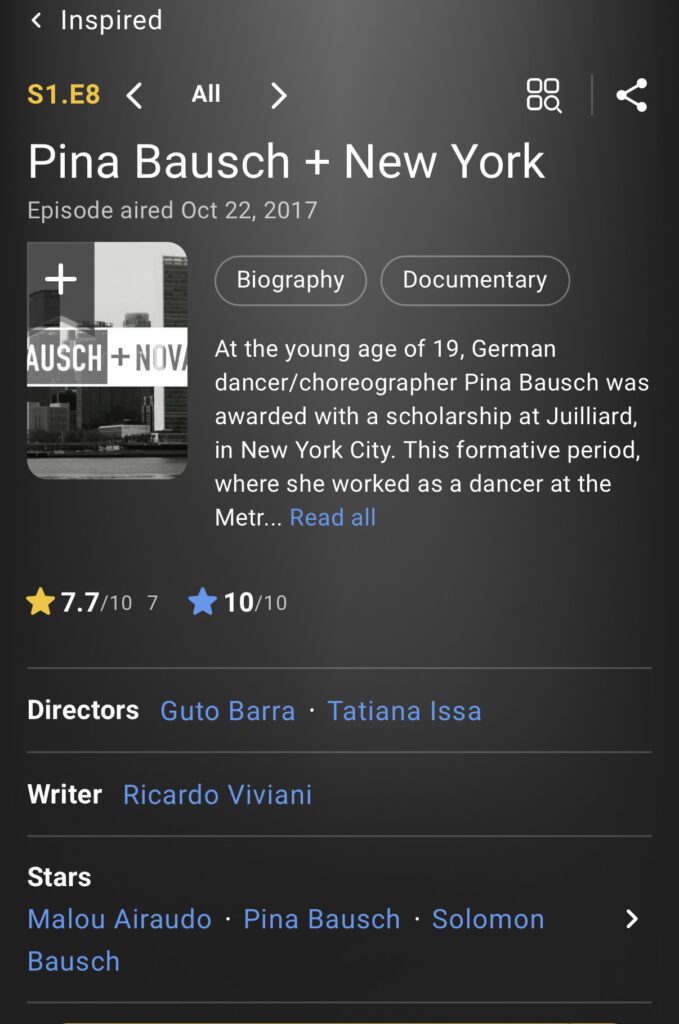
Type: Publication · Documentary Film · Oral History Date: 2017 Context:Pina Bausch + New York, part of the series Geografia da Arte Role: Script Writer · Researcher Production: Producing Partners NYC in collaboration with the Pina Bausch Foundation Broadcast: Arte1, Brazil Locations: New York · Chicago · Woodstock · Wuppertal · Essen
Pina Bausch + New York explored the formative relationship between Pina Bausch and New York through archival research, Oral History and conversations with artists and people connected to her experiences in the United States.
The project was Ricardo Viviani’s first major project at the Pina Bausch Foundation after joining the institution in 2016. It brought together his new role as a researcher at the Foundation with experiences from his own history as a dancer and choreographer in the New York dance environment.
Viviani had first met Pina Bausch personally in New York after performances of Viktor at the Brooklyn Academy of Music. Bausch stayed with dancer Manuel Alum at his loft in TriBeCa, together with her son. Viviani was part of Alum’s performing circle and had known him since his own years at Jacob’s Pillow.
This encounter revealed connections between Viviani’s own formation in the New York dance scene and Bausch’s formative experiences in the United States. When the documentary research began, these intersections became a starting point for tracing the people, places, teachers and artistic encounters connected to Bausch’s early development.
Research
The research extended across a wide range of dance and performing-arts archives and personal networks. Viviani worked with the archives of the Pina Bausch Foundation and the Deutsches Tanzarchiv Köln, as well as collections and institutions in the United States including the 92nd Street Y, Jacob’s Pillow, the New York Public Library’s Dance Collection and the archives of Juilliard School.
At the 92nd Street Y, where Pina Bausch had danced in New York for the first time, Viviani encountered an institution that was also part of his own history as a choreographer, having received a grant and presented work there. At Jacob’s Pillow, he returned to an archive and community he had known since 1980, when he was a scholarship student there, and worked with longtime archivist and curator Norton Owen.
The research also included conversations with dance scholars and critics including Mark Franko and Deborah Jowitt, as well as tracing places, people and artistic networks connected to New York in the late 1950s and early 1960s. Viviani also drew on his own study with Alfredo Corvino and his knowledge of the New York dance environment.
Oral History
The documentary developed an Oral History-based account of Pina Bausch’s formative relationship with New York. Interviews and archival research brought together memories of artists, teachers, collaborators and other witnesses, allowing aspects of Bausch’s early artistic development to be reconstructed through personal testimony and historical sources.
The resulting material provides a record of experiences and encounters that are not always visible in conventional accounts of Bausch’s biography, including the teachers, artistic communities and cultural environments that she encountered in New York and the United States.
Production
The opportunity to produce the interviews arose through an independent coincidence. Rolf Salomon Bausch received a request to collaborate with a New York production company developing a series about artists and geographical places. This led to a collaboration between Producing Partners NYC and the Pina Bausch Foundation.
Interviews and filming subsequently took place in Chicago, New York, Woodstock, Wuppertal and Essen. Although the production company was based in New York, the resulting series was produced for the Brazilian cable channel Arte1.
Producing Partners, led by Tatiana Issa and Guto Barra, was responsible for the production on the New York side.
Archival Material:
Film and production documentation; research notes; Oral History interviews; archival research material; correspondence and production material where preserved; related documentation concerning Pina Bausch’s relationship with New York.
Representative documentation of Ricardo Viviani’s long-running choreographic work for the Märchen zur Weihnachtszeit at Theater Hagen.
Type: Recurring Practice · Dance Education · Young Audiences · Choreography · Theatre Period: approximately ten years — documented through individual production records Institution: Theater Hagen, Hagen, Germany Role: Choreographer · Dance Educator Audience: Children · Families · School groups · Young audiences Status: Historical record · recurring institutional practice documented through individual productions and contemporary press
Record / Description
For approximately a decade, Ricardo Viviani was repeatedly engaged as choreographer for the Märchen zur Weihnachtszeit at Theater Hagen, contributing dance and choreography to a continuing series of productions for children, families and school audiences.
This recurring body of work is best understood as a distinct strand of Viviani’s practice rather than as a collection of unrelated individual productions. The productions combined theatre, music and dance and were presented as major seasonal events for young audiences at Theater Hagen.
The individual productions are documented separately in the archive. This record preserves the larger institutional and artistic relationship: the repeated creation of choreography for young audiences within the Christmas-period programme of Theater Hagen.
The Recurring Practice
The Märchen zur Weihnachtszeit occupied a particular position in the cultural life of Theater Hagen. Contemporary reporting describes the Christmas fairy tale as a long-established pre-Christmas tradition for schools in the region and records audiences drawn from several generations.
A contemporary report from November 2012, on Die Prinzessin auf der Erbse, stated that approximately 30,000 people of all generations were expected to see the production before Christmas, including numerous school classes. The report also describes the Christmas fairy tale as part of the pre-Christmas “curriculum” for many regional schools. It specifically discusses Ricardo Viviani’s choreography and its effect on the predominantly young audience.
The figure of 30,000 is retained here as a contemporary reported expected attendance figure for the 2012 production, not as a calculated cumulative audience figure for the entire period.
Dance and Choreography
Viviani’s role within the series was specifically choreographic. Contemporary Theater Hagen publications and press material repeatedly identify him as choreographer, including documentation for Hänsel und Gretel, Kalif Storch and König Drosselbart.
The 2012 contemporary review of Die Prinzessin auf der Erbse gives additional evidence of the artistic character of this work. It describes Viviani’s choreography as contributing to the atmosphere of the production and specifically connects his choreographic approach with the imagination of a child.
This recurring engagement therefore provides substantial evidence for the development of dance as an integral component of Viviani’s work for young audiences, within large-scale theatrical productions rather than only within dedicated educational workshops.
Young Audiences / Dance Education
The Theater Hagen Märchen work is an important part of the broader Dance Educator strand in Ricardo Viviani’s archive. The audience was not incidental: the productions were conceived and programmed specifically for children, families and school groups.
The Theater Hagen programme for Hänsel und Gretel explicitly describes the responsibility of presenting fairy tales to thousands of children entering the theatre space for the first time and experiencing the performance with all their senses. The production credits Ricardo Viviani with choreography.
The recurring Märchen practice therefore represents a different but complementary form of dance education from workshop-based projects such as Carl & children in Kleve or Carnaval da Dorotéia in Frankfurt: here, children encountered dance through professional theatre productions designed specifically for young audiences.
Production History
The individual production records currently documented in the archive include the Theater Hagen Christmas-period fairy-tale productions for which Ricardo Viviani’s choreographic involvement is recorded. These records should remain the principal sources for individual production facts, dates, collaborators, premieres and production details.
The broader production history includes, among others, Die Prinzessin auf der Erbse, Der Froschkönig, Hänsel und Gretel, Kalif Storch and König Drosselbart, alongside other productions documented in the existing Theater Hagen production records.
Public Reception / Contemporary Documentation
The surviving press material provides unusually valuable evidence of the scale and cultural position of the Märchen series.
In November 2012, TV58.de reported on Die Prinzessin auf der Erbse and described an expected audience of approximately 30,000 people of all generations, including numerous school classes. The article emphasizes the long-established relationship between the Christmas fairy tale and regional schools and discusses Viviani’s choreography as an important part of the production.
In November 2013, Lokalkompass Hagen reported on the Märchenwerkstatt for Der Froschkönig, identifying Ricardo Viviani as choreographer and describing the public workshop as an opportunity to see the production process and meet members of the creative team.
Contemporary material for Hänsel und Gretel, Kalif Storch and König Drosselbart further documents Viviani’s continuing choreographic role in the series.
Institutional Context
The importance of the Märchen series lies not only in the individual productions but also in its institutional continuity at Theater Hagen. The recurring format connected professional theatre-making with a large and returning young audience, including organised school attendance and family performances.
The available documentation indicates that the theatre treated these productions as an important part of its relationship with younger audiences, while the recurring engagement of Viviani established continuity in the choreographic language of the series.
Contribution / Significance
The Theater Hagen Märchen series represents a substantial body of work in Ricardo Viviani’s development as a choreographer working with young audiences.
It demonstrates that his work with children and families extended beyond isolated educational projects into sustained professional theatre practice, where choreography formed part of large-scale productions experienced by school groups, families and multigenerational audiences.
The contemporary evidence of large attendance, repeated school participation and the theatre’s stated responsibility toward first-time young theatre visitors gives this strand particular relevance to the archive’s developing Dance Educator / Young Audiences history.
Assessment / Relevance
This recurring Theater Hagen practice is one of the strongest pieces of evidence for a long-term young-audience dimension in Viviani’s career.
It should therefore be read alongside, rather than merged with, his school-based dance education projects, cultural mediation projects and later young-audience activities. Together these records establish a broader professional strand in which dance functions as artistic creation, communication and access to culture for younger generations.
Archival Material
Surviving and identified documentation includes: individual Theater Hagen production records; Theater Hagen season programmes and theatre newspapers; contemporary press coverage; Märchenwerkstatt documentation; production photographs and other surviving visual material; and the broader Theater Hagen production list.
The 30,000 figure is retained specifically as the contemporary reported expected audience for the 2012 production Die Prinzessin auf der Erbse. It should not currently be presented as a cumulative attendance figure for the entire approximately ten-year period.
Keywords
Theater Hagen · Märchen zur Weihnachtszeit · Christmas fairy tale · young audiences · children · families · school groups · dance education · Dance Educator · choreography · children’s theatre · family theatre · cultural education · Die Prinzessin auf der Erbse · Der Froschkönig · Hänsel und Gretel · Kalif Storch · König Drosselbart · Ricardo Viviani
This record documents the recurring institutional and artistic practice of Ricardo Viviani’s work as choreographer for the Märchen zur Weihnachtszeit at Theater Hagen. Individual productions remain the primary records for production-specific facts and should not be duplicated here. Contemporary press and institutional publications are used to document the scale, continuity and young-audience context of the series. Attendance figures are retained according to their original documentary meaning and are not converted into cumulative estimates without further evidence.
„Ein Kind, dem nie Märchen erzählt worden sind, wird ein Stück Feld in seinem Gemüt behalten, das in späteren Jahren nicht mehr angebautwerden kann.“ Johann Gottfried von Herder, Schriftsteller, Philosoph und Theologe der Aufklärungszeit
Unermüdlich erzählen wir deshalb auf der Bühne Märchen – immer in der Verantwortung, dass tausende Kinder zum allerersten Mal den Theaterraum betreten und mit allen Sinnen dem Bühenerlebnis entgegenfiebern.
In diesem Jahr präsentieren wir ein Märchen, das zu den meist erzählten gehört – aber auch zu den meist umstrittenen: Eltern bringen aus sozialer Not ihre beiden Kinder tief in den Wald und hoffen, dass Hänsel und Gretel dort verloren gehen.
Auf ihrem Irrweg gelangen die ausgestoßenen Kinder an das Lebkuchenhaus einer Menschen fressenden Hexe. Mit List können sich beide befreien und kehren mit reichlich Schmuck und Nahrung zurück zum Elternhaus.
Entgegen der Haltung der 70er Jahre, die das Erzählen der Volksmärchen in Frage stellte, werden wir uns gemeinsam mit den jungen Gästen hinein stürzen in diese Geschichte über böse und gut, dumm und schlau, traurig und lustig, hungrig und satt, dunkel und hell, unglücklich und glücklich.
Analysis of Blue Danube using Life Forms — Ricardo Viviani 2015
Type: Presentation Proposal · Lecture-Demonstration Date: 31 July 2015 Context: Artistic Research / Dance Creation Location: Frankfurt am Main, Germany Role: Choreographer · Researcher Status: Proposal · Never presented
Morphogenesis in Dance The Shaping of Artistic Creation
This lecture-demonstration proposal asks: “What gives shape to things?”
Three approaches to observing creation
Three approaches to observe the process of creation.
Format: Lecture / performance
In this lecture-performance, three theoretical models of morphogenesis are exposed and a live example is performed.
1. What is Morphogenesis?
What gives shape to things?
Morphogenesis is the process that determines how biological forms are differentiated and organized. A right or a left limb has the same genetical materials; why and how it takes one form or another is not biologically fully explained yet.
Performance undergoes similar processes: the coding and rules of genetics as in the modes of communication, the materials and mechanics of genes in the instruments and scores, dance steps and the bodies, are present in the same way. The moment of decision that differentiates and piles up a cell in one way or another, and the combination of one movement next to another, has been the subject of theories in the recent past.
Three approaches to this issue are presented here, from biology, from quantum physics applied to Jungian psychology, and from performance studies.
1.1 Chreode
A neologism created by biologist Conrad H. Waddington in his book The Strategy of the Genes from 1957, chreode (chre — necessary and hodos — path) is explained by using an analogy that uses gravity as an easy-to-relate phenomenon in the physical world: a ball rolling along a path. The theory of chreode provides for self-organisation, natural temporal framework and variation of form.
1.2 Attractors
In combining chaos theory with Jungian Archetypes, psychologist John R. Van Eenwyk creates a possible model that inverts causation and lends to behavior with posterior causation. The future pulls creation as opposed to being pushed from the past. Creativity in this sense, most likely, operates freed from natural time.
1.3 Viscosity
Portuguese philosopher José Gil introduces the concept of “viscosity” to explain movement choices in his article “O Corpo Paradoxal” (Paradoxical Body) in his book Movimento Total – O Corpo e a Dança from 2001. According to his postulate, dance is channeled through paths of lower viscosity that are sensed by the dancer in the act of dancing.
2. Observing Morphogenesis in Performance
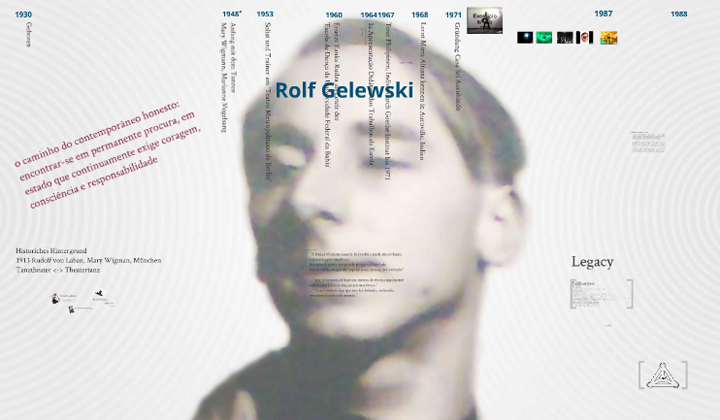
Rolf Gelewski — presentation material
In dance, morphogenesis can be observed both in the rehearsal room by observing specific interactions of the choreographer and dancer, but also in performance by restricting some parameters and concentrating the observation on specific variables.
To access the creation moment, this presentation will use a methodology developed by German dance pedagogue Rolf Gelewski. Gelewski is a disciple of Mary Wigman in the analytical genealogy of Rudolf von Laban.
Rolf Gelewski was a dancer and educator born in 1930 in Berlin. Acclaimed by the press in the 1950s as a new Harald Kreuzberg, he was sent by Mary Wigman to establish the first contemporary dance education program in the University of Salvador, Bahia, Brazil in the 1960s. His later pedagogical work structured a methodology to access the creative impulse in a dance yoga-like meditation system. His influence also reaches the Auroville community in India. Gelewski was killed in a car accident in 1986.
3. Summary
Models for explaining morphogenesis in performance transcend the natural sciences toolkit; still, it can be observed and described. This lecture-demonstration proposes three approaches to observe this phenomenon.
After exposing these theories, a short dance piece will be performed to enable an observation under the aspects of morphogenesis of a moment of creation. This dance piece — Blue Danube — presents a frame that constrains the observable phenomenon of improvisation in three parameters: Force, Speed and Timing.
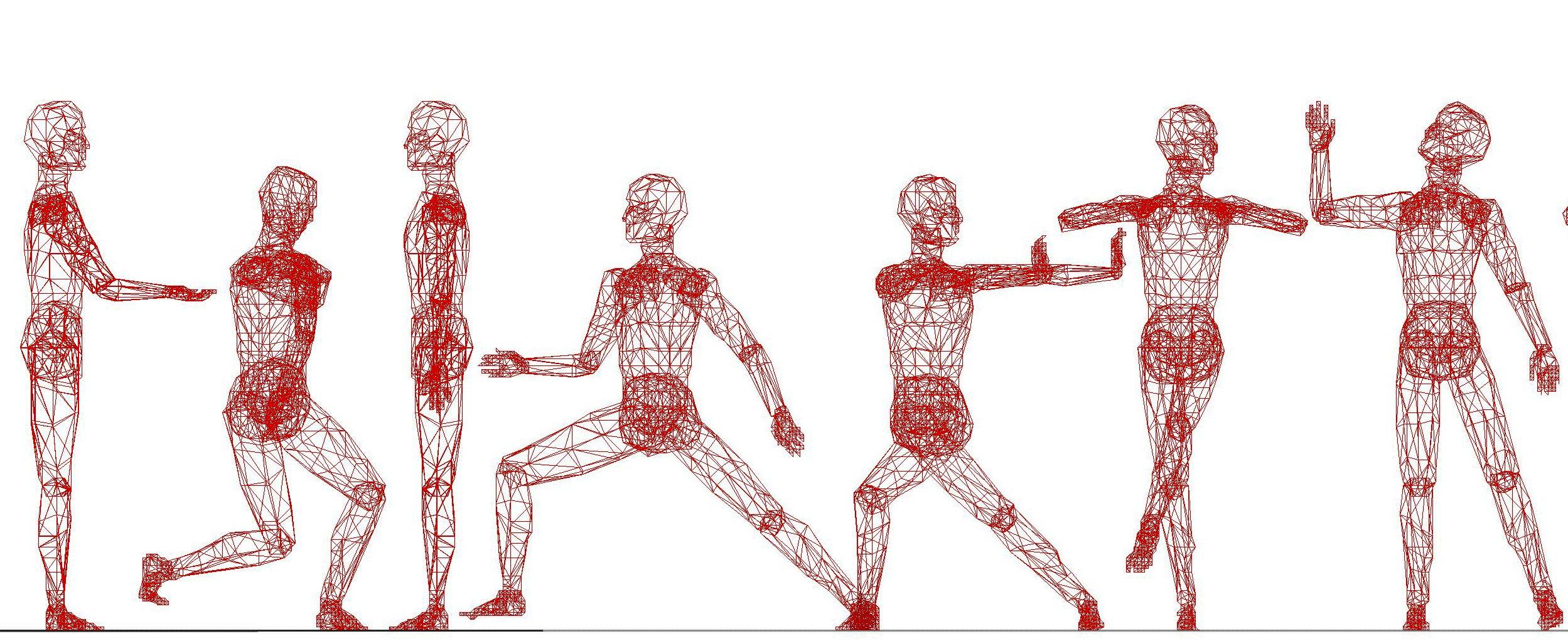
The proposal also used Life Forms for the visual analysis of human movement. The software became an important tool in Viviani’s choreographic work and was used intensively in several productions in the early 2000s.
Later Development
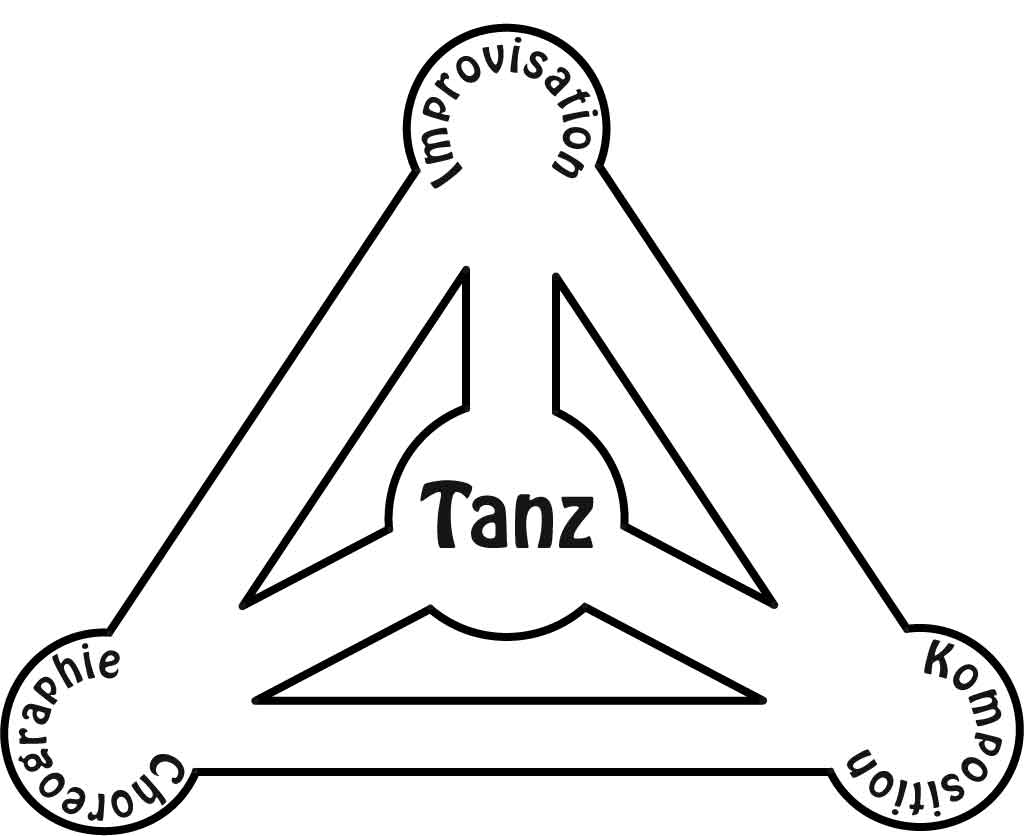
A working vocabulary that developed from this line of inquiry later became important in Viviani’s thinking about dance creation, particularly the distinctions between improvisation, choreography and composition. These distinctions belong to later work and are not presented here as a completed triad in the 2015 proposal.
Formal Requirements
The original proposal specified the following technical requirements:
Stage dimensions: minimum 8 meters wide, 2 meters deep
Equipment: video projector and computer for PowerPoint, and PA system for music playback
Archival Material:
Lecture-demonstration proposal, version 1.0 EN, 31 July 2015; PDF handout; presentation images; Life Forms analysis; related Blue Danube documentation.
Rolf Gelewski — Ricardo Viviani presentation, 11 May 2015
Type: Presentation · Research Date: 11 May 2015 Context: Research into Rolf Gelewski and dance pedagogy Format: Prezi presentation Role: Researcher · Presenter Subject: Rolf Gelewski (1930–1988)
Rolf Gelewski — A Biographical Presentation
On 11 May 2015, Ricardo Viviani prepared a Prezi presentation devoted to the life and work of Rolf Gelewski. The presentation formed part of his research into Gelewski’s place within dance pedagogy and his relevance to Viviani’s own artistic formation.
The presentation is preserved as a record of the research activity itself. The Prezi remains the principal document.
Archival Material:
Prezi presentation dated 11 May 2015; presentation images; research notes; related references to Gelewski.
‘Dance is at the bottom of the food chain.’ (William Forsythe 2009)
Neuroscientists, philosophers, and also dance academics of all sorts have been trying to figure out what it is: what do dancers know that other people can’t grasp? Unless they’ve been through the mill of arduous training and rehearsing, they have no way of knowing it. Call it embodied knowledge, somatic intelligence and so forth, it is rarely articulated by dancers, so there’s little understanding of it outside the dancer’s circle. It is a secret. A secret not by intention but by virtue of its nonverbal nature.